RELATED CONTENT : International Cooperation

  • November 20, 2026
    In this episode, Amal El Ouassif examines how the EU’s expanded use of the “safe third country” concept could shift responsibility for asylum claims to countries beyond its borders.She ex ...
  • Authors
    Abla Zidani
    November 19, 2026
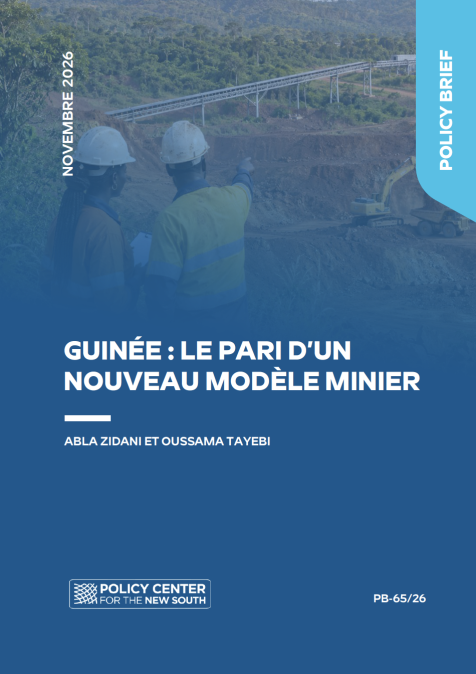
    La Guinée détient plus d’un tiers des réserves mondiales de bauxite et, en 2023, elle en est devenue le premier producteur mondial, devant l’Australie. La bauxite, ressource indispensable à la production d’aluminium, est jugée stratégique par la Chine, les États-Unis et l’Union européenne. Après une phase d’ouverture aux investisseurs sous Alpha Condé, la politique minière du pays a changé de logique avec Mamadi Doumbouya : il ne s’agit plus seulement d’attirer les capitaux, mais au ...
  • Authors
    November 16, 2026
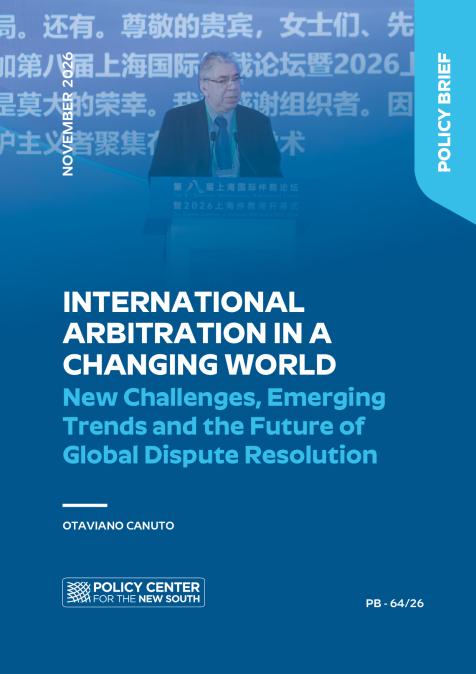
    How can international arbitration preserve its core principles of neutrality, party autonomy and enforceability while adapting to a world increasingly characterized by geopolitical fragmentation, technological disruption and competing regulatory interests? Meeting this challenge demands a collective effort, bringing together arbitral institutions, national courts, governments, international organizations, academics and practitioners. It requires openness to institutional innovation, ...
  • Authors
    Bambang Brodjonegoro
    November 12, 2026
    This Opinion was originally published in asiapathways-adbi.org When G20 leaders meet in Miami next month, the discussions are expected to focus on how to sustain growth in a world marked by economic fragmentation, supply chain disruptions, fiscal pressures, and geopolitical uncertainty. Yet the global economy’s success depends not only on G20 members, but also on the many developing countries outside the group. Strengthening regional cooperation is a practical way to bridge thi ...
  • Authors
    Patrick Kabanda
    November 10, 2026
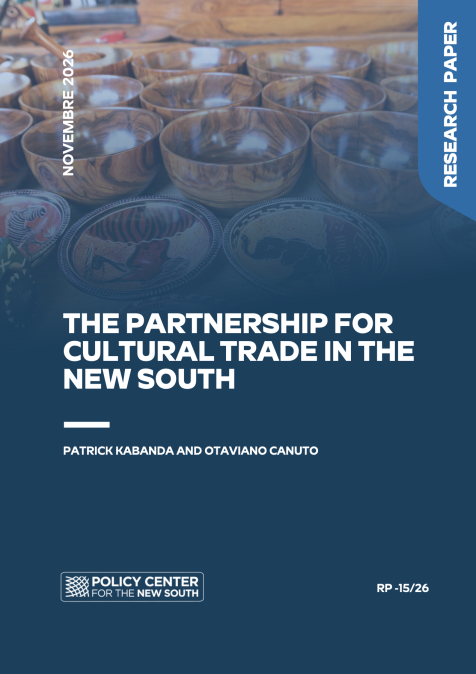
    Cultural trade is a dynamic engine for economic diversification in the New South. Despite decades of diversification rhetoric, however, this sector remains underrealized. Thus, many countries across Africa, Latin America and the Caribbean, Asia, and the Middle East are still commodity-dependent, even though the global creative economy has grown roughly eightfold since 2002, to surpass $2 trillion—that figure, moreover, does not even account for the nonmonetary benefits that merit co ...

  • November 9, 2026
    Cette interview examine les perspectives d’une éventuelle adhésion du Maroc à l’OCDE à l’horizon 2040, en revenant sur les conditions économiques, institutionnelles et réglementaires qu’un tel processus pourrait impliquer. Elle met en perspective les réformes engagées par le Royaume, le...
  • Authors
    Giovanna Rinaldo
    November 4, 2026
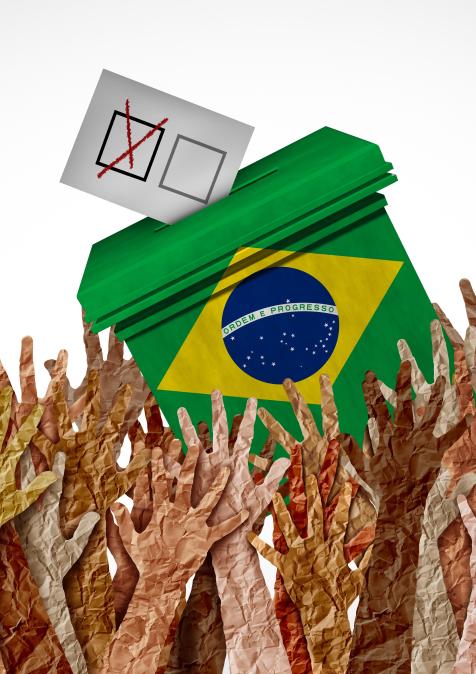
    Brazil’s presidential election, which concluded on October 25, 2026, was above all a digital battle. This is nothing new; the impact of social media on elections has been widely analyzed since Barack Obama's 2008 win marked a turning point for digital campaigning worldwide. Almost two decades later, social media is an entirely different breed, with a life of its own – and still very little regulation within electoral politics. The danger, however, is that digital players now also in ...
  • Authors
    Rahma Ibenachehab
    Mehdi Ibrahim Assifar
    November 3, 2026
    The Climate-Care Nexus Policy Workshop, organized within the framework of the IDRC-funded project “Climate-Care Nexus: Adapting Care Systems to Climate and Migration Pressures in North and West Africa”, is a policy and research dialogue bringing together public decision-makers, international organizations, and leading experts to examine the evolving relationship between climate change, migration, and care systems. The workshop positioned the climate-care nexus as a critical pol ...
  • Authors
    Bambang Brodjonegoro
    November 2, 2026
    This policy note was published as part of the T20 U.S. 2026 Workstreams, under the workstream “Fostering Trade and People-Centered Economic Growth,” which brings together policy experts to develop recommendations for G20 policymakers. The Group of Twenty (G20) accounts for most of the world’s output, yet its decisions shape the prospects of 174 United Nations Member States without G20 membership, among them the great majority of least developed countries and small states. Many ...
  • Authors
    October 29, 2026
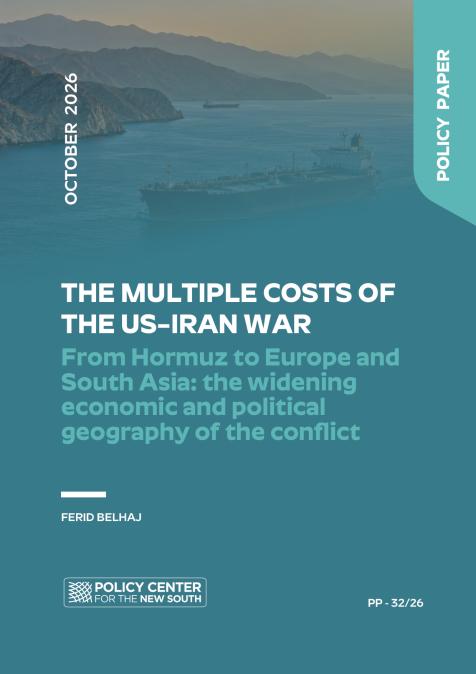
    Wars are decided by those who hold military power, but their costs are increasingly borne by those who have little or no voice in the decisions that start them. The US–Iran war shows this imbalance very clearly. Its economic consequences have gone far beyond the battlefield and have disrupted energy markets, trade routes, food supplies, public finances and investment in the Gulf, Europe, Africa and Asia. The most striking feature of the conflict, however, is not only the size of the ...
  • October 23, 2026
    In this episode, Mehran Haghirian explores the global economic consequences of disruptions in the Strait of Hormuz, beyond oil and gas. He examines their impact on trade, fertilizer suppl ...