Publications /
Annual Report
Book / Report
Back
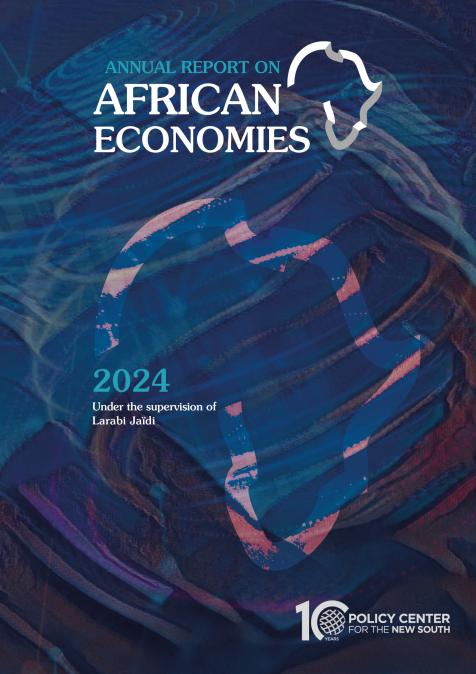
Annual Report on African Economies 2024
Authors
Under the supervision of
July 12, 2024

The 2024 Annual Report on the African Economy is dedicated to monetary and financial issues on the Continent. There are three reasons for this choice.

African economies are exposed to macro-financial instabilities partly generated by global monetary and financial turbulence.

The Continent’s currencies and financial systems are engaged in very different dynamics, where routine methods and daring, if not risky, practices coexist.

The question of the architecture of the international financial system is on the agenda. It aims to bring international financial instability under control by improving market transparency, monitoring - without curbing - the destabilizing thrust of financial innovation, regulating the burgeoning competition between traditional currencies and virtual currencies, promoting financial «justice» in international flows and transfers, and fostering greater responsibility on the part of both private and public players in preventing and managing turbulence so that it does not degenerate into a systemic crisis.

This threefold observation developed in the introductory Panorama justifies the PCNS’s choice to devote this new version of the Economic Report to African finance themes, divided between the three sections that structure the Report’s organization.

RELATED CONTENT

  • Authors
    Sous la direction de
    September 21, 2023
    Cette édition du Rapport économique de l’Afrique est construite autour d’une thématique d’une grande actualité : les conséquences des incertitudes et des risques aussi bien sanitaires que climatiques et sécuritaires sur les économies du continent. L’exercice est d’autant plus légitime que la recomposition de l’ordre mondial questionne la place du continent à l’échelle planétaire, sur les plans économique, social et environnemental. L’économie mondiale est confrontée à des défis glo ...
  • August 28, 2023
    Le secteur informel joue un rôle crucial dans le développement économique et social du Maroc en tant que filet de sécurité pour de nombreux travailleurs. Cependant, sa concentration dans de petites entreprises qui manquent de moyens de production sophistiqués peut entraver la croissance...
  • Authors
    August 17, 2023
    Défis et opportunités économiques en Afrique : Renforcer la stabilité financière pour un développement durable L’Afrique est un continent qui connaît de nombreux défis économiques et sociaux, mais aussi de grandes opportunités de développement. Pour réaliser son potentiel, le continent a besoin de renforcer sa stabilité financière, c’est-à-dire sa capacité à faire face aux chocs internes et externes qui peuvent affecter sa croissance et son développement. (Figure 1) La stabilité f ...
  • July 20, 2023
    Artificial intelligence (AI) is playing an increasingly important role in our daily lives. Having experienced considerable growth in recent years, artificial intelligence corresponds to technologies capable of processing hybrid sources, particularly unstructured data. Complex tasks are thus delegated to increasingly autonomous technological processes, capable of driving economic and social development. In current African society, AI is becoming more popular and seeking to cover all ...
  • July 18, 2023
    Le secteur informel est une composante essentielle de l'économie marocaine, employant une large partie de la population, mais nuisant à la productivité, aux recettes fiscales de l’État et à la croissance économique à long terme. Sur la base de la définition adoptée dans cette étude et qui définit les travailleurs informels comme étant ceux qui ne sont pas couverts par les régimes contributifs de sécurité sociale de la Caisse nationale de sécurité sociale (CNSS) et d ...
  • Authors
    Zakaria Elouaourti
    July 1, 2023
    This paper was originally published on erf.org.eg   The digital divide in the financial sector has occurred through the development of financial technologies. These latest “FinTech” refers to technological innovations that have emerged in the financial system in recent years, which are the new channels for providing financial services. These innovations have disrupted traditional financing models by making financial transactions more secure and by reducing spatiotemporal ...
  • Authors
    Gladys Lopez-Acevedo
    Marco Ranzani
    Nistha Sinha
    Adam Elsheikh
    June 23, 2023
    This report was originally published on openknowledge.worldbank.org The long-standing informality debate in the Middle East and North Africa (MENA) Region has taken on a new urgency as it looks for a pathway to more socially inclusive growth that is less reliant on fossil fuels. This is occurring against a backdrop of subpar labor market outcomes, further growth setbacks, and deteriorating fiscal and current account de ficits in the aftermath of the COVID-19 pandemic—and in the wak ...