Publications /
Annual Report
Book / Report
Back
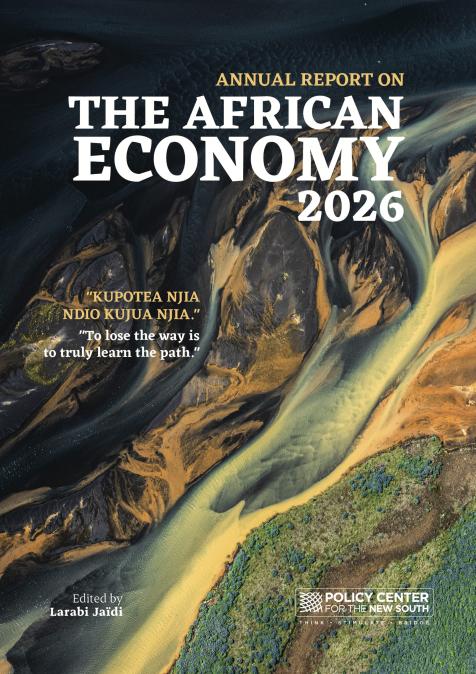
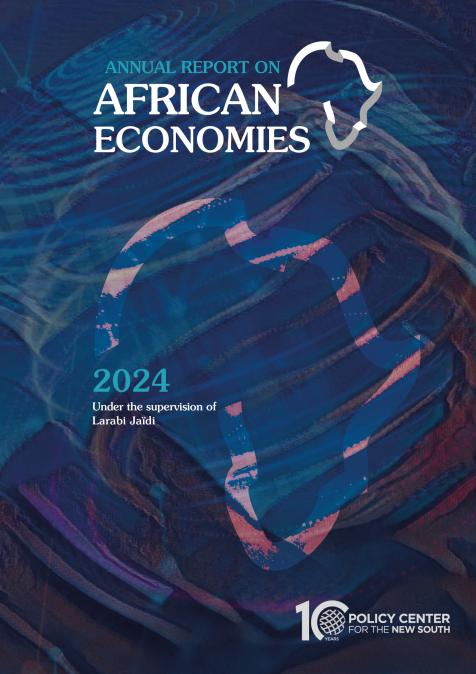
Annual Report on African Economies 2024
Authors
Under the supervision of
July 12, 2024

The 2024 Annual Report on the African Economy is dedicated to monetary and financial issues on the Continent. There are three reasons for this choice.

African economies are exposed to macro-financial instabilities partly generated by global monetary and financial turbulence.

The Continent’s currencies and financial systems are engaged in very different dynamics, where routine methods and daring, if not risky, practices coexist.

The question of the architecture of the international financial system is on the agenda. It aims to bring international financial instability under control by improving market transparency, monitoring - without curbing - the destabilizing thrust of financial innovation, regulating the burgeoning competition between traditional currencies and virtual currencies, promoting financial «justice» in international flows and transfers, and fostering greater responsibility on the part of both private and public players in preventing and managing turbulence so that it does not degenerate into a systemic crisis.

This threefold observation developed in the introductory Panorama justifies the PCNS’s choice to devote this new version of the Economic Report to African finance themes, divided between the three sections that structure the Report’s organization.
RELATED CONTENT

  • June 26, 2026
    Au Maroc, la problématique des jeunes NEETs (Ni en emploi, ni en études, ni en formation) constitue une urgence nationale, alimentée par 300 000 abandons scolaires annuels. Face à ce défi, le modèle de l'École de la Deuxième chance nouvelle génération (E2C-NG) a démontré sa pertinence en affichant un taux d'insertion exceptionnel de 81 %.Cependant, ce succès institutionnel repose intégralement sur un tissu associatif local aujourd'hui fragilisé. L'analyse inédite des donné ...
  • June 26, 2026
    In Morocco, the issue of young NEETs (Not in Employment, Education, or Training) is a national emergency, fueled by 300,000 students dropping out of school each year. In response to this challenge, the “New Generation Second Chance School” (E2C-NG) model has proven its effectiveness by achieving an exceptional employment rate of 81%.However, this institutional success rests entirely on a local network of organizations that is now under strain. A previously unpublished analysis of da ...
  • June 24, 2026
    Africa, Latin America, and the Caribbean have both the potential and the desire to transform their people's lives through Green Industrial Policy. Yet they have long been constrained by structural obstacles embedded in the international system. The current rupture in that system, which ...
  • Authors
    June 8, 2026
    The energy shock caused by the war between the United States and Israel and Iran has highlighted the need for Africa to refine more of its own crude oil. Africa is a net hydrocarbon exporter, but remains stuck in the old colonial economic model: it mostly exports raw materials and imports refined products. Africa exports about 2.6 billion barrels of crude oil every year, and imports about 1.4 billion barrels of refined products. This is a problem for two reasons. First, Africa ...
  • Authors
    Karim El Mokri
    Idriss El Abbassi
    June 8, 2026
    Le monde du travail est engagé dans un processus de mutation sans précédent. La quatrième révolution industrielle, portée par l’intelligence artificielle (IA) et la robotisation, a été le point de commencement d’une ère nouvelle où les repères économiques et sociaux se redéfinissent à une vitesse inédite. Ces technologies suscitent un engouement légitime et offrent des perspectives prometteuses, mais requièrent une vigilance accrue face aux incertitudes qui les entourent.Bien que, à ...
  • June 1, 2026
    Cette interview met en lumière le rôle central du secteur textile et de l’habillement dans l’économie marocaine, tant en matière d’emploi que d’exportations. Notre économiste, Mr. Fahd Azeroual revient sur son évolution historique, ses principaux défis, notamment la dépendance aux impor...
  • May 29, 2026
    This Paper was originally published on tandfonline.com This paper examines how reductions in transportation costs reshape regional economic and environmental outcomes in Morocco. We simulate a reduction in delivered (purchasers’) costs via a transport-margin efficiency improvement – implemented as a margin-saving technical change in the transport sector – within a province-level Spatial Computable General Equilibrium (SCGE) framework. Simulating a 1% decline in transport costs, ...
  • Authors
    May 22, 2026
    This paper, the fourth in a research series on services-led growth in the Global South, examines Egypt’s potential for growth and economic transformation through the integration of services into Global Value Chains (GVCs). It employs a new taxonomy that classifies services into Knowledge Services (KS), Enabling Services (ES), and Local Services (LS) and applies OECD 2025 Trade in Value-Added (TiVA), Trade in Employment (TiM), and input-output databases to benchmark Egypt against Mor ...
  • Authors
    May 15, 2026
    This paper is the third in a series of country and comparative studies that together comprise a research program on services as drivers of economic growth and structural transformation in the Global South. The paper analyzes the pattern of Tunisia's services-led economic growth from 2012- 2022 using a specialized three-category framework: knowledge services (KS), enabling services (ES), and local services (LS). Using data from the OECD Trade in Value Added (TiVA), Trade in Employmen ...