Publications /
Policy Brief
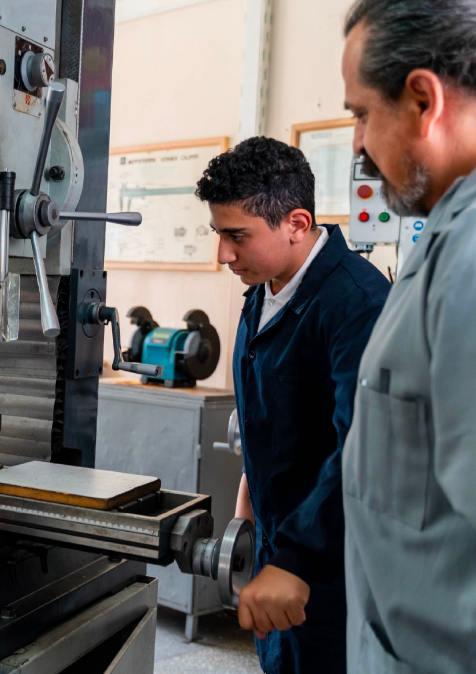
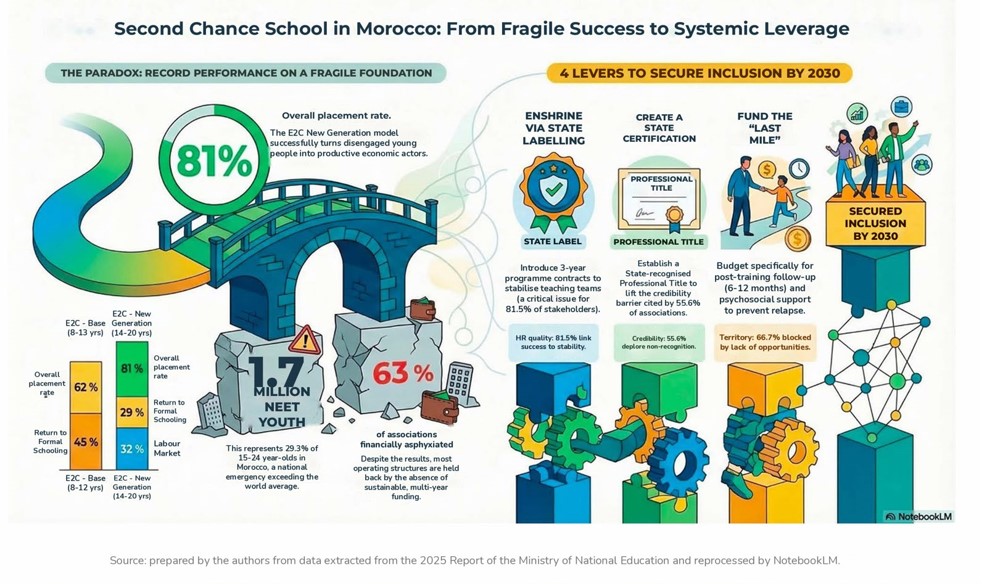
In Morocco, the issue of young NEETs (Not in Employment, Education, or Training) is a national emergency, fueled by 300,000 students dropping out of school each year. In response to this challenge, the “New Generation Second Chance School” (E2C-NG) model has proven its effectiveness by achieving an exceptional employment rate of 81%.
However, this institutional success rests entirely on a local network of organizations that is now under strain. A previously unpublished analysis of data collected from
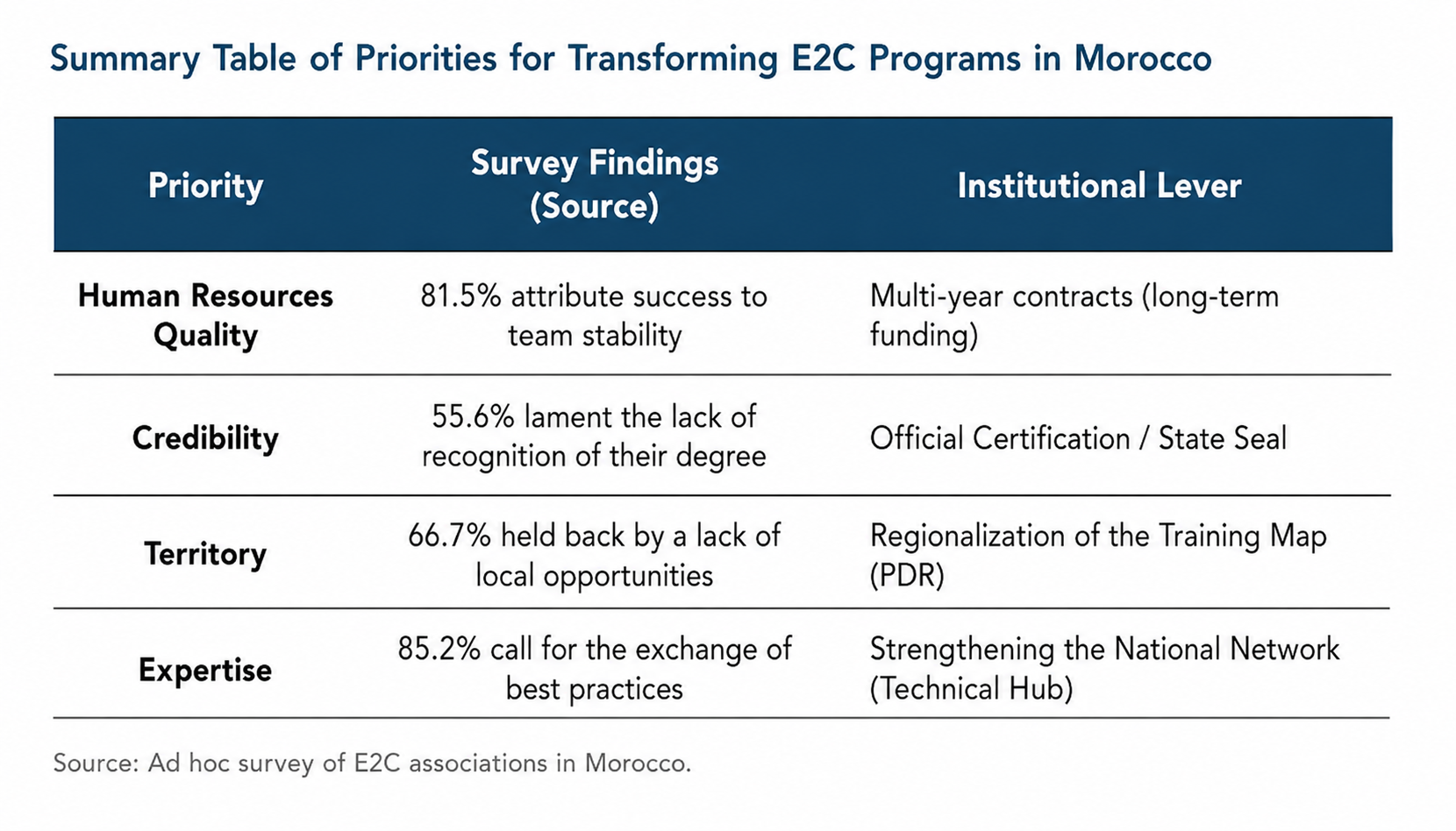
A survey of 27 partner organizations reveals a major contradiction: while the educational approach is effective, the business model is precarious. 63% of the organizations are held back by a lack of sustainable funding, and 55.6% face the lack of official recognition of their degrees, which hinders graduates’ career advancement.
This Policy Brief calls for an immediate paradigm shift to safeguard these gains and achieve the 2030 goals. It recommends four priority areas for action:
Ensuring the model's sustainability through multi-year performance-based program contracts (certification),
The creation of a state certification to enhance the credibility of educational pathways in the eyes of employers,
Funding for the “last mile,” including post-training follow-up and psychosocial support,
Professionalizing the sector by designating the National Network as a technical hub for expertise and training.
I. CONTEXT: THE ONGING CHALLENGE OF YOUNG NEETS AND SCHOOL DROPOUTS
In Morocco, despite structural efforts and progress driven by the 2022–2026 National Education Roadmap, the loss of youth human capital remains a systemic crisis. The education system continues to face the persistent challenge of school dropout, a key precursor to the NEET phenomenon (Not in Employment, Education, or Training), which threatens the inclusion goals of the New Development Model.
The reality of this challenge in Morocco revolves around three key observations:
A massive dropout crisis at critical junctures: national indicators remain alarming, with 300,000 students leaving the Moroccan school system prematurely each year. This dropout occurs at critical points in their educational journey: while the dropout rate is kept to 1.5% in elementary school, it jumps alarmingly to 8.5% in middle school (a vulnerable transition phase, particularly in rural areas), and remains high at 7.4% in high school. In fact, the ministry estimates that between 5% and 10% of students require alternative educational options capable of adapting to their specific learning paces.
The critical mass of young Moroccan NEETs: As a direct and alarming consequence of this dropout rate, 29.3% of young Moroccans find themselves in the NEET category, representing a pool of approximately 1.7 million young people aged 15 to 24. This rate, which is well above the global average (expected to exceed 20% by 2025 according to the ILO), illustrates a largely untapped human and economic potential, the social cost of which to the kingdom is considerable.
Beyond the statistics lies a deep psychosocial divide: on-the-ground expertise, highlighted by the work of the MedNC network, shows that the apparent “disinterest” of these young Moroccans in vocational training or employment masks a more complex reality. Often living in precarious circumstances,
These young people are experiencing a decline in their ability to envision their future. A sense of lack of recognition and alienation from institutions leads to social withdrawal. The NEET phenomenon in Morocco can therefore no longer be analyzed solely through a socioeconomic lens: it highlights urgent needs in the areas of social capital, mental health, and psychosocial well-being.
Thus, for Morocco, the challenge is no longer simply to provide technical “remedial training,” but to offer restorative environments capable of rebuilding trust, institutional ties, and self-esteem. Any public policy aimed at social integration must incorporate this need to listen in order to succeed. It is precisely at this vital intersection that the Moroccan model of the Second Chance School (E2C) demonstrates its full relevance.
II. THE SECOND CHANCE SCHOOL (E2C): AN EFFECTIVE INSTITUTIONAL SOLUTION
Faced with the social crisis posed by young NEETs and school dropouts, Morocco has not limited itself to palliative measures. The kingdom has developed a robust, inclusive, and well-structured institutional response: the Second Chance School (E2C).
Driven by strong political will (Royal Vision, Framework Law 51.17, and the 2022–2026 Roadmap), this initiative reflects a major paradigm shift: moving from a simple “catch-up” approach to a genuine strategy for socio-economic integration. The Moroccan model stands out for its flexibility and is structured around two complementary programs: the basic E2C program (remedial education for 8- to 13-year-olds) and the New Generation E2C (E2C-NG) program, which spearheads the integration of 14- to 20-year-olds through work-study programs.
The results of the 2024–2025 campaign confirm that the model has reached a respectable level of maturity and performance, establishing itself as a true “catalyst for integration.”
A trend toward massification and a highly inclusive mission
The program successfully achieved its goal of expanding its geographic reach thanks to the commitment of the nonprofit sector (281 partner organizations and nearly 1,500 facilitators and trainers). The network has evolved from a pilot phase into a dense national network.
In 2025, the E2C program serves 20,236 beneficiaries, including 6,480 girls. It also demonstrates its strong commitment to inclusion by reintegrating the most vulnerable groups: 480 young people with disabilities, 624 street children, and 150 young migrants.
Figure 1
Rapid Expansion of the Network of New Generation E2C Centers (2014–2025).
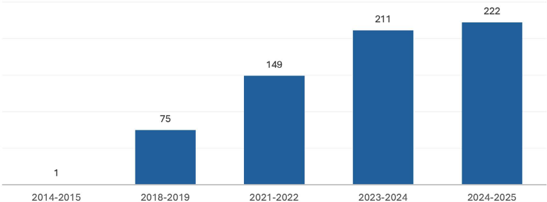
Note: "An exponential scale-up aligned with the Roadmap's strategic goal of reaching 400 centers and 80,000 learners by 2030."
2. Convincing results: an exceptional employment rate
The effectiveness of a public policy for young NEETs is measured by its ability to produce positive outcomes. In this regard, the E2C model—and particularly its “New Generation” version—demonstrates internal and external returns that far exceed traditional standards for remedial programs. In addition to academic achievements (more than 4,500 students earning the Brevet and 758 earning the CEP in 2025), the program’s greatest success lies in reconnecting participants with the job market and formal education.
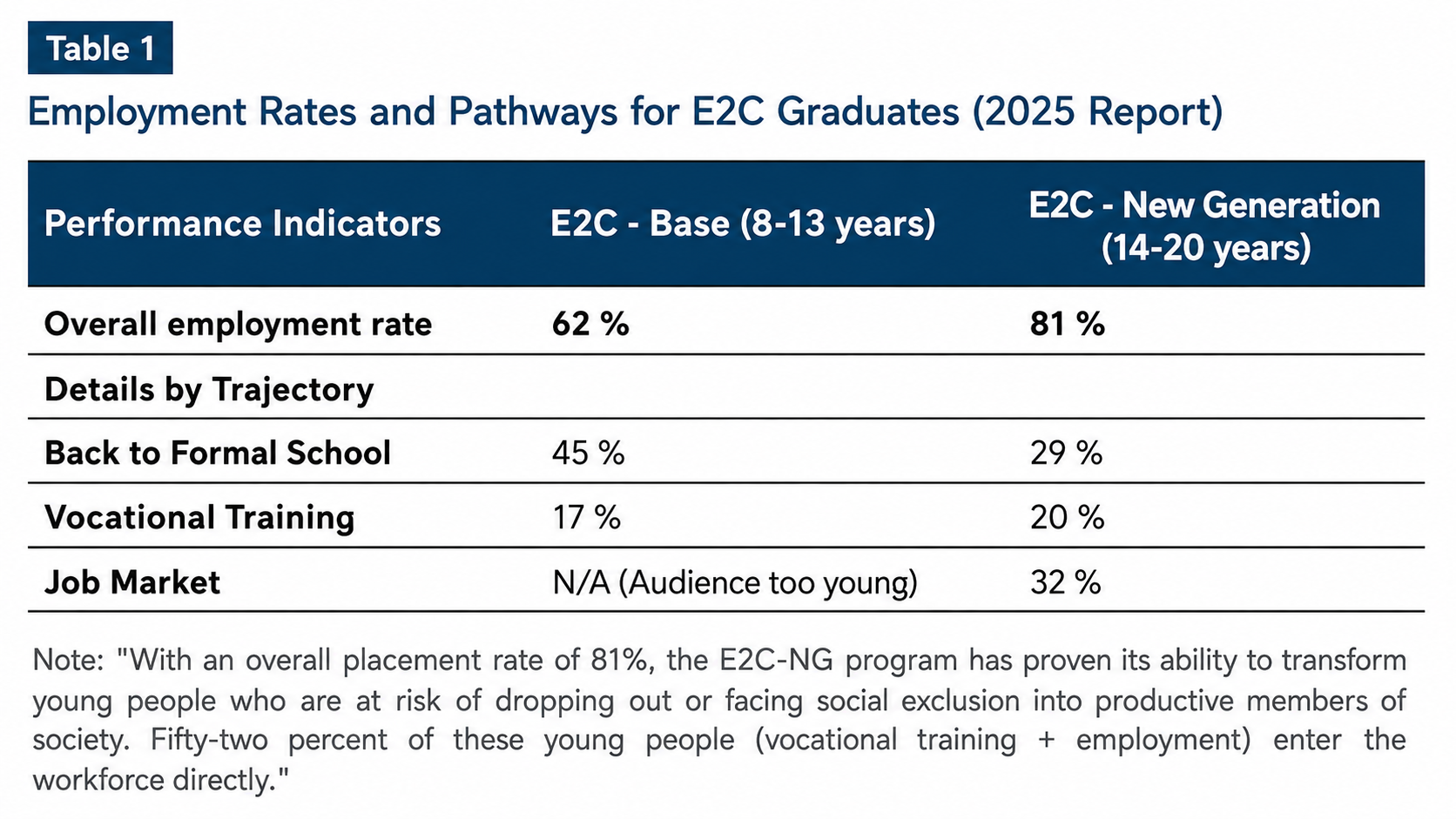
These impressive macro-level results demonstrate the institutional validity of the Moroccan E2C model. However, such an institutional framework relies entirely on the operational capacity of the delegated partner associations. As revealed by the field analysis (see Section 3), these outcomes conceal a social-sector reality that is often under strain, requiring urgent adjustment to ensure the sustainability of this 81% employment integration rate.
III. INTERNATIONAL TRENDS AND LESSONS LEARNED
The success of the Moroccan model (81% placement rate for E2C-NG) is not an isolated phenomenon, but part of a global trend in which second-chance schools are becoming the cornerstone of policies aimed at integrating NEET youth. An analysis of leading models provides essential insights for replicating this success in Morocco.
France: The Power of Certification and Government Recognition
The French model, with more than 120 centers, is based on dedicated funding and a rigorous certification process.
In France, funding is not based on precarious grants, but on multi-year public commitments. The certification program ensures consistent quality throughout the country. This supports Morocco’s recommendation to shift from a “resource-based” approach to a “performance-based” approach certified by a national label.
Germany and Italy: The Tripartite Model (School-Business-Community)
These countries have integrated E2C into the very fabric of their economies. In Germany, the program is inextricably linked to on-the-job training, while in Italy, local governments (regions) are the primary funders and decision-makers.
Successful integration depends not only on educational training, but also on early involvement by businesses. Morocco must strengthen its partnerships with the CGEM and professional associations so that businesses are not merely the final destination, but active participants in training (work-study programs).
Catalonia (Spain) and Portugal: Agility and Local Roots
In Spain and Portugal, the E2C is a community-based program managed in close collaboration with local governments. The programs are short-term, flexible, and tailored to the immediate needs of the local market (e.g., tourism in the Algarve or small-scale manufacturing in Catalonia).
The E2C cannot operate as an administrative “silo.” As the Moroccan survey highlights (66.7% of associations cite the lack of regional opportunities as a problem), training offerings must be decentralized and aligned with the Regional Development Plans (RDPs).
The Netherlands: The Importance of Soft Skills and Long-Term Follow-Up
The Dutch model is characterized by massive investment in soft skills (self-confidence, punctuality, conflict resolution) and post-training follow-up that can last up to 24 months.
For a NEET population marked by difficult life experiences, the “discontinuity” in support following certification poses a major risk. This justifies the creation of an “Integration Package” in Morocco to fund “last-mile” follow-up.
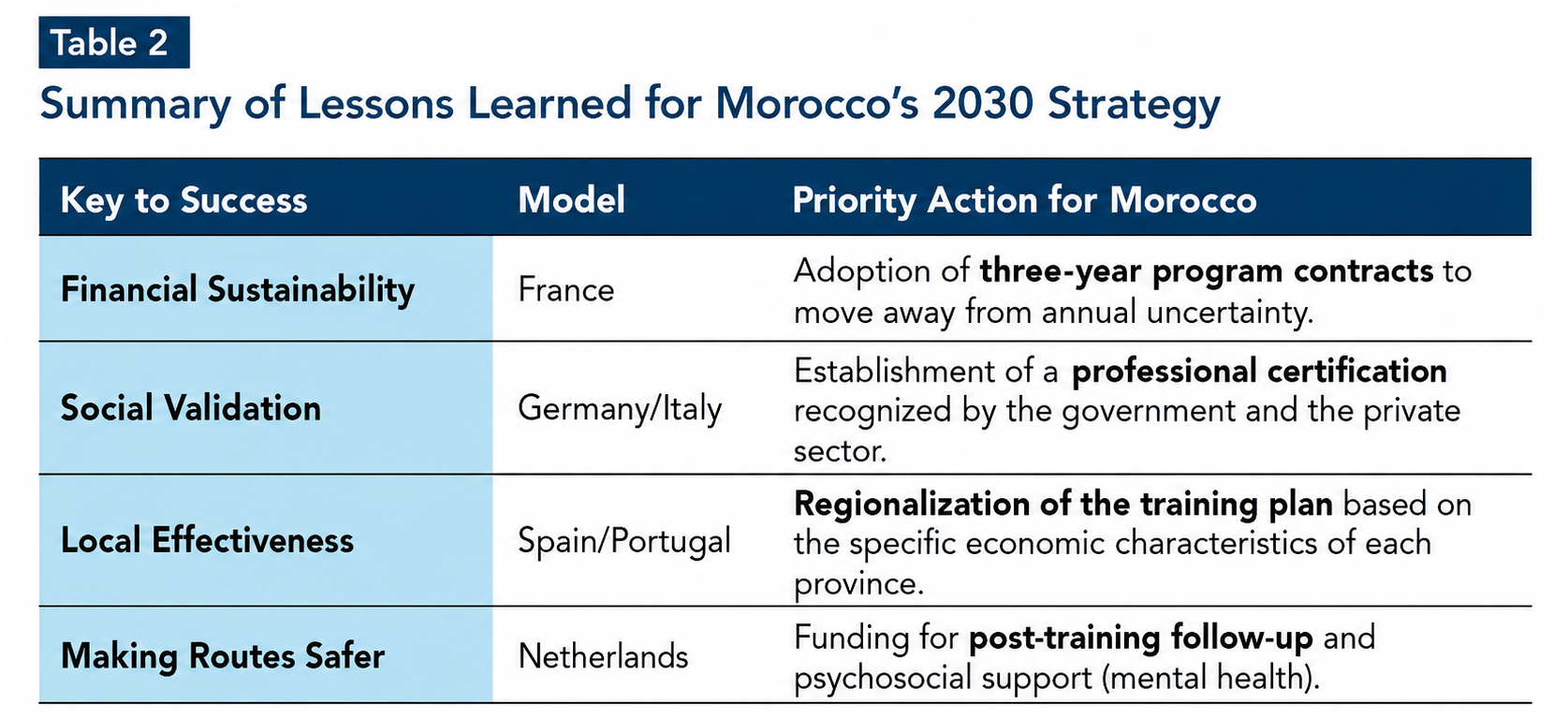
International analysis shows that the countries that have succeeded in drastically reducing their NEET rates are those that have transformed E2C from a “civil society” initiative into a delegated public service mission, equipped with a clear regulatory framework and national recognition of learning pathways.
IV. THE REALITY ON THE GROUND: CHALLENGES AND EXPECTATIONS OF NONPROFIT ORGANIZATIONS
While macro-institutional statistics show an overall integration rate of 81% for the New Generation (E2C-NG), this achievement is entirely due to the social engineering and resilience of the partner organizations. Analysis of the database derived from a survey of 27 implementing organizations in the E2C-Morocco network reveals a mixed picture on the ground: the “miracle” of inclusion comes at the cost of significant strain on resources.
Operational Challenges: Day-to-Day Survival in the Face of Precariousness
For the organizations audited, managing an E2C center is often like an obstacle course, where social engineering clashes with material hardship.
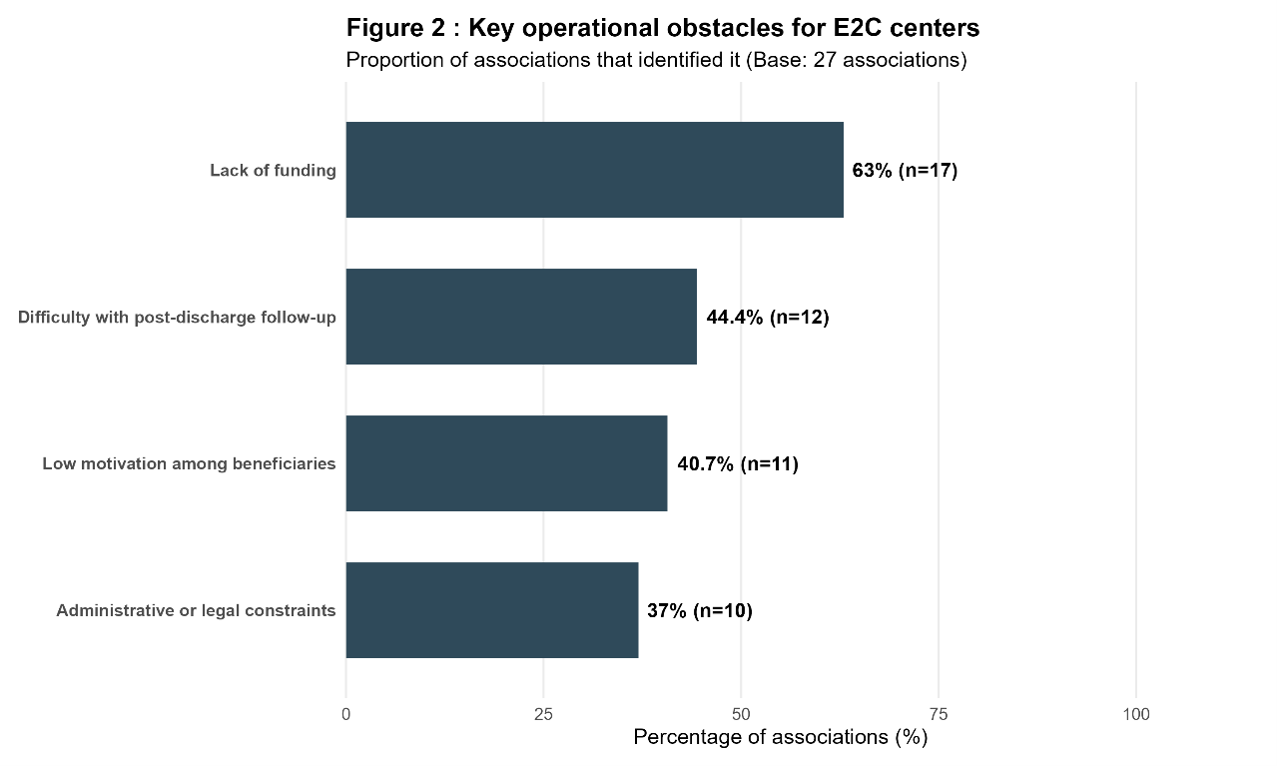
As shown in Figure 2 below, the obstacles identified are not cyclical but systemic:
1.1. Financial Strain: A Major Obstacle to Professionalization
The findings are clear: 63% of organizations (17 out of 27) identify “lack of funding” as the primary obstacle to their work.
This budgetary uncertainty has a ripple effect on the quality of services provided:
Team instability: While 81.5% of organizations consider the stability of the teaching staff to be a key factor for success, a lack of funding makes it difficult to retain qualified instructors, who are often poached by the private sector or the OFPPT once they have been trained.
Inability to plan: “just-in-time” management—which relies on grants that are often paid late or on one-off projects (from funders)—prevents organizations from planning for long-term training cycles.
1.2. The Challenge of Post-Training Follow-Up
The second major obstacle, cited by 44.4% of the organizations (12 out of 27), concerns “difficulties with follow-up after discharge.”
This figure highlights a flaw in the current economic model: funding generally covers technical training (the time the young person spends at the center), but rarely covers employment placement services (the time spent placing the young person and securing their job).
For NEETs, whose lives have been marked by turmoil, the abrupt end of support immediately after certification often leads to a relapse. The lack of resources dedicated to follow-up (employment counselors) turns this crucial stage into a bottleneck.
1.3. The Mental Burden of Remobilization
Finally, we must not underestimate the difficulty of the educational task. 40.7% of the organizations (11 out of 27) are struggling with “low motivation among beneficiaries.”
Unlike a traditional training center, an E2C must first “rehabilitate” before “training.” The teams devote considerable energy to psychosocial rehabilitation and addressing peripheral obstacles (family problems, addiction, housing), often without the necessary specialized staff (social workers, psychologists) due to budget constraints.
In summary, the Moroccan E2C model currently relies on a form of “implicit subsidy” provided by the overinvestment of nonprofit organizations. This situation is not sustainable. Ensuring the long-term sustainability of integration outcomes requires securing the economic model, which will make it possible to fund not only training but also post-training follow-up and psychosocial support.
2. Barriers to Integration: The "Last Mile" Challenge
While organizations are able to re-engage and train young people (as evidenced by exam pass rates), the transition to employment faces formidable external barriers. The survey reveals that the main obstacles stem not so much from the young people’s profiles (skills, motivation) as from the economic and institutional environment into which they are trying to integrate.
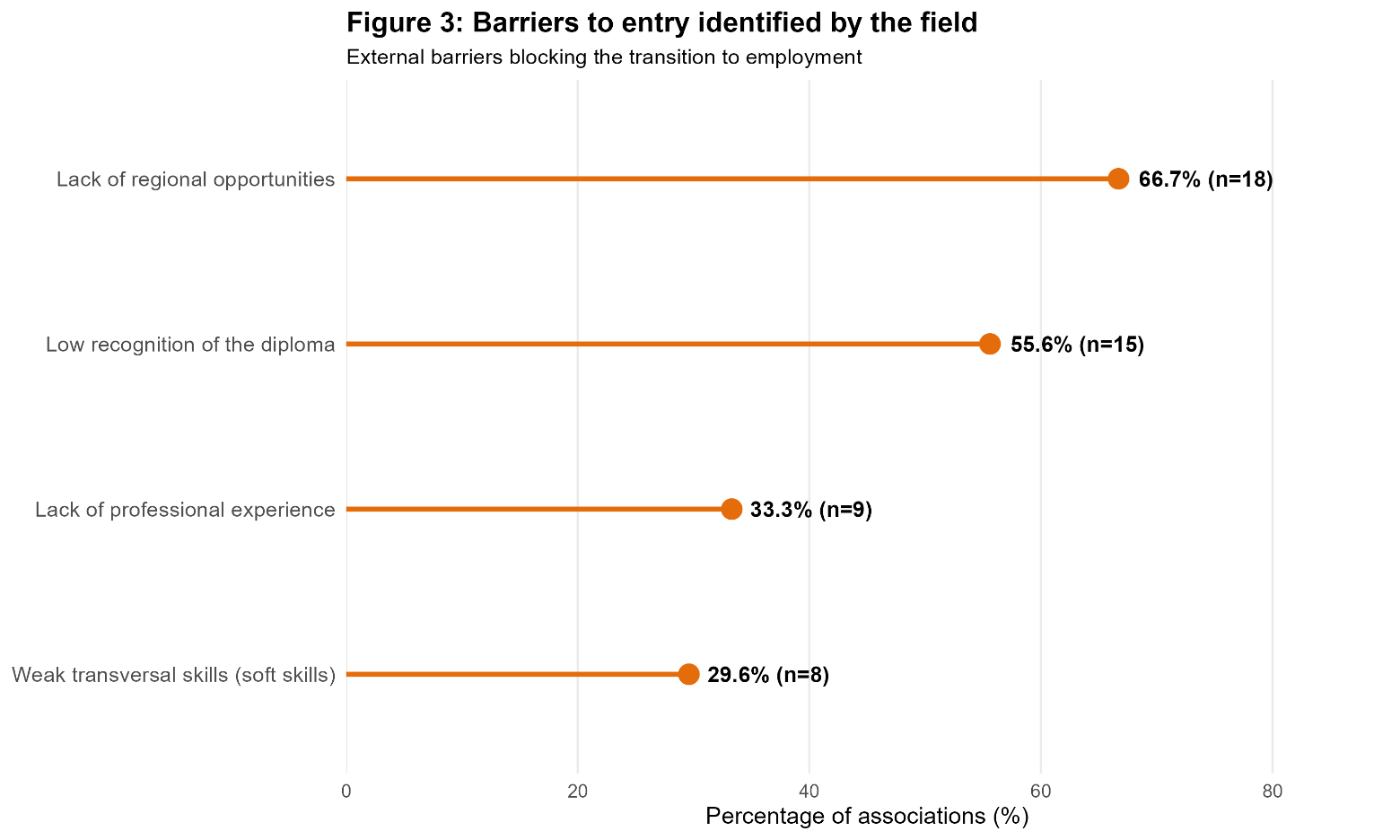
As shown in Figure 3 below, two major obstacles dominate the concerns of those working in the field:
2.1. The Territorial Divide: A Crisis of Local Absorption
The verdict from the field is clear: for 66.7% of the organizations (18 out of 27), the biggest obstacle is the “lack of regional opportunities.”
This figure highlights a critical economic reality: the E2C program does not operate in a vacuum. In isolated rural or suburban areas, the availability of training—no matter how high-quality it may be—is hampered by the weakness of the local economic base. It is not enough to simply provide training; it is more important that the region be capable of absorbing these new skills. This underscores the urgency of aligning the E2C training offerings with the Regional Development Plans (RDPs).
2.2. The Deadlock of Recognition: The Invisible Degree
The second obstacle, cited by 55.6% of the organizations (15 out of 27), is purely institutional: the “low recognition of the degree.”
This is a major point of contention. Despite acquiring real-world skills, E2C graduates face a credibility gap with employers, who favor traditional certifications (OFPPT, Ministry of Education, etc.).
This situation creates a sense of injustice among young participants. Without a certification that is officially recognized by the government and accepted by the private sector (CGEM), the E2C program risks being perceived as a dead-end rather than a stepping stone.
2.3. A lack of experience and interpersonal skills: secondary but real obstacles
Although less significant than structural barriers, “lack of professional experience” (33.3%) and “weak soft skills” (29.6%) remain challenges for about one-third of nonprofit organizations. This underscores the need to strengthen work-based learning (internships, work-study programs) and soft skills training to bridge the gap with corporate expectations.
In summary, the “last-mile” bottleneck is not an educational failure, but a failure in recognition. The system produces competent young people (as evidenced by the low level of criticism regarding soft skills), but the job market does not “see” them, due to a lack of sufficient local opportunities or degrees that are recognized for their true value.
3. The Keys to Success: Tailored and Targeted Engineering
Despite structural vulnerabilities and institutional barriers, the organizations in the E2C network are achieving remarkable results in helping people enter the workforce. How? The survey reveals a local, pragmatic, and agile “formula” based on three fundamental pillars identified by an overwhelming majority of stakeholders on the ground.
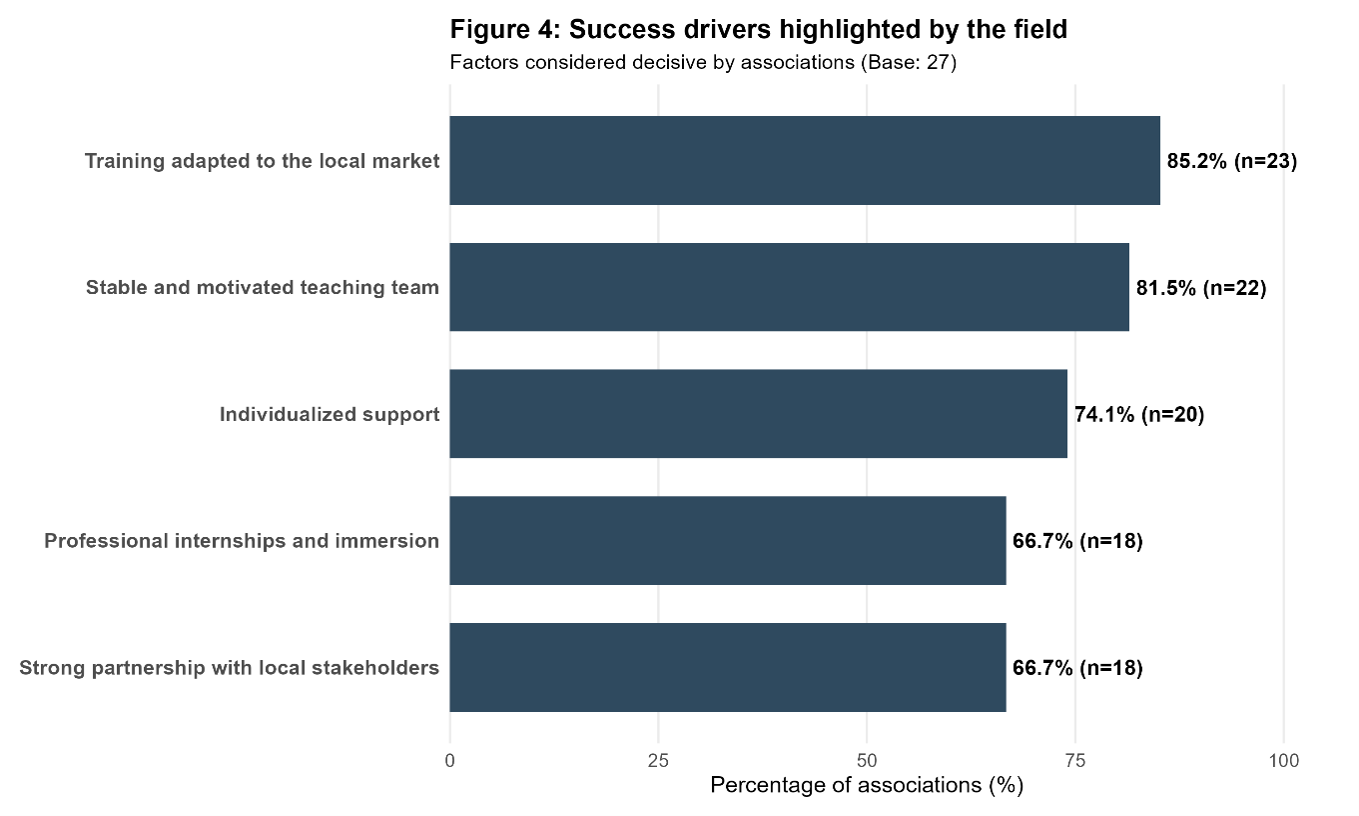
As shown in Figure 4, the success of E2C does not lie in large-scale infrastructure, but in people and community engagement.
3.1. Economic Pragmatism: Aligning Training with Regional Needs
The key success factor, cited by 85.2% of the organizations (23 out of 27), is tailoring “training programs to the local market.”
Unlike national curricula, which can sometimes be rigid, E2C centers tailor their educational offerings in real time to meet the needs of the local economy in their service area. This flexibility allows them to partially mitigate the challenges of the job market by targeting specific niches (service-sector jobs, local crafts, and modern agriculture).
3.2. The Importance of Human Capital and Team Stability
For 81.5% of respondents (22 out of 27), the cornerstone of the program is a “stable and motivated teaching team.”
In the context of intensive psychosocial work with at-risk youth, the relationship of trust that develops between the young person and their mentor is a key factor in helping them get back on track.
This key to success is directly threatened by a lack of funding (as identified in Section 3.1). This presents a strategic paradox, because without a sustainable budget, maintaining this team stability would be a managerial feat.
3.3. The “individualized” approach: rehabilitation before reintegration
Finally, 74.1% of the organizations (20 out of 27) confirm that the key lies in “individualized support.”
The E2C does not simply impart knowledge from the top down; it works with students to develop a life plan. This holistic approach, which takes into account social, psychological, and professional factors, is the antidote to the anonymity of the traditional school system that previously excluded these young people.
Thus, E2C’s approach is based on an individualized and context-specific methodology. It works because it is local, people-centered, and tailored to the specific needs of the participants it serves. Any attempt at mass implementation (scaling up) that ignores these characteristics in order to impose industrial standards would risk reducing its effectiveness.
4. The Vital Role of Networking: The Need for Professionalization
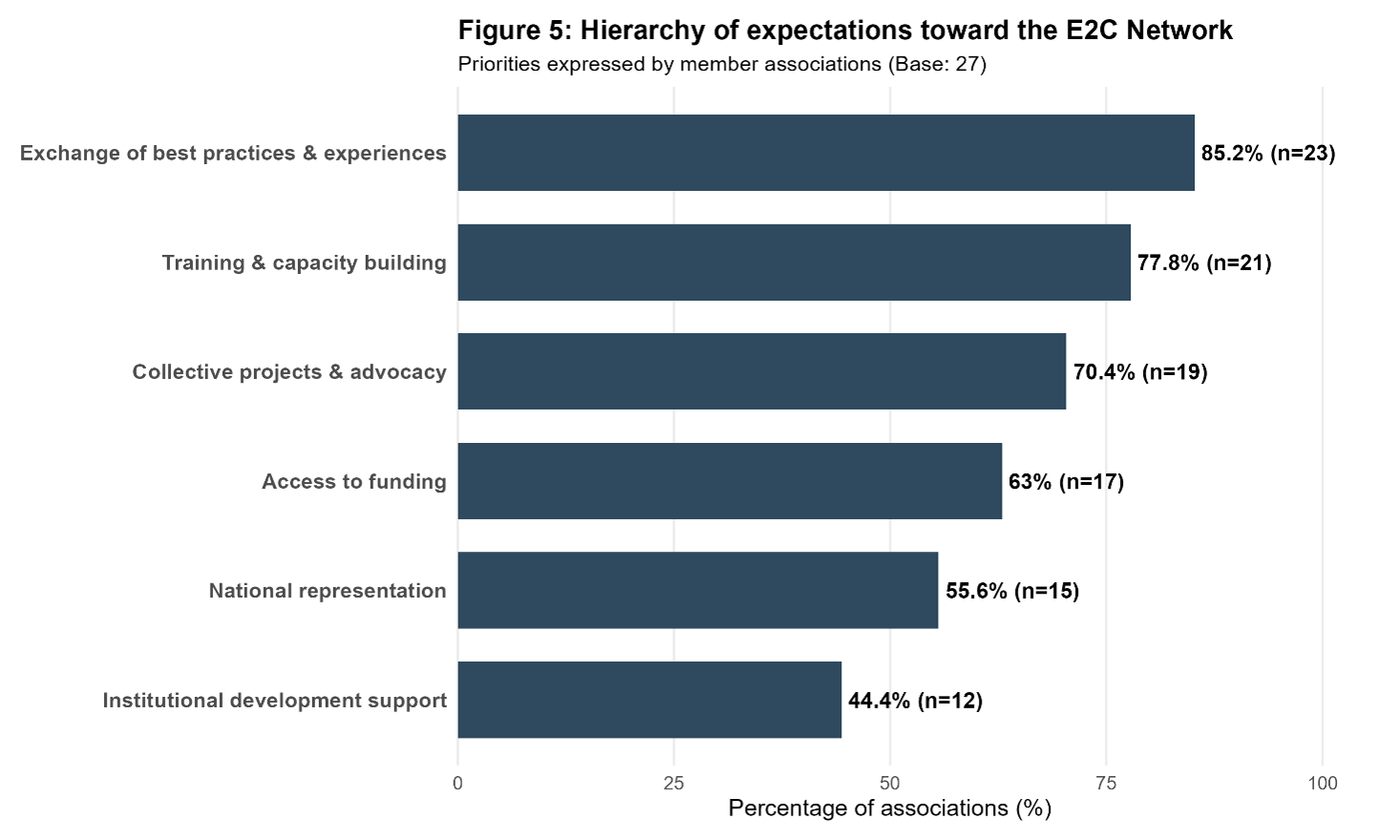
Isolation is the primary risk factor for local nonprofit organizations. Given the complexity of supporting young NEETs, these organizations refuse to operate in isolation. The survey highlights a massive demand for coordination with the E2C-Morocco Network. And contrary to popular belief, the top priorities are not financial, but rather technical and educational, as illustrated in Figure 5:
4.1. The Thirst for Collective Intelligence
The top priority, cited by 85.2% of the organizations (23 out of 27), is the ability to “share best practices and experiences.”
Those working on the ground are aware that they are often reinventing the wheel, each working in isolation. They expect the network to serve as a “hub” of knowledge, allowing them to build on successes (e.g., how to manage addiction, how to approach a company) and avoid the pitfalls others have already encountered.
4.2. The Need for Up-Skilling
In second place (77.8%, or 21 organizations) is the request for “training and capacity building.”
The teams are well aware of the increasing technical nature of their work. They no longer want to approach job placement “by gut feeling” but are asking for professional tools: instructional design, project management, and psychosocial support techniques. The Network is seen as a corporate university capable of providing this continuing education.
4.3. The Paradox of Funding
It is striking to note that “access to new funding opportunities” ranks only fourth (63%), behind collective projects and advocacy (70.4%).
This finding does not mean that organizations do not need money (this is their number one obstacle; see section 3.1). It means that they view the Network not simply as a “bank teller window,” but as a means of building credibility. They understand that it is through professionalization and collective action (advocacy) that they will ultimately secure sustainable funding.
Thus, the message to the E2C-Morocco Network and donors is clear. The organizations are not asking for assistance, but rather for technical support. They are ready to shift from a “volunteer-based” approach to a “social service delivery” model, provided that the Network provides them with the necessary framework, tools, and certification.
V. STRATEGIC AND OPERATIONAL RECOMMENDATIONS
To successfully achieve the scale-up outlined in the 2022–2026 Roadmap and reach the goal of 80,000 beneficiaries by 2030, it is imperative to ensure the sustainability of the E2C model. The following recommendations reflect both the ministry’s institutional vision and feedback from the field provided by the audited organizations.
Recommendation 1: “Protect” the business model through certification
The data shows that financial instability is the number one obstacle for 63% of organizations. It directly threatens the stability of teaching teams, which 81.5% of stakeholders identify as the primary factor for success.
In response to these findings, several strategic actions can be taken, specifically:
- Implement the "E2C Morocco Label": make the awarding of this label conditional on performance criteria (employment outcomes, educational quality) rather than on the resources or means available.
- Multi-year contractual agreements: replace unpredictable annual subsidies with three-year program contracts for certified centers, based on the actual unit cost (estimated at 15,000 MAD per young person per year). This would enable associations to retain and support their expert trainers.
Recommendation 2: Establish a “State Certification” program for successful candidates
For 55.6% of organizations, the lack of recognition of the degree is a major obstacle to entering the workforce. While the skills are indeed acquired, their “signaling value” in the labor market remains insufficient.
These factors underscore the need to strengthen institutional recognition of the E2C pathway and call for the implementation of the following measures:
Create an E2C professional certification, developed in collaboration with professional associations (notably the CGEM) and industry associations, in partnership with the government. This certification should be formally recognized as equivalent in collective bargaining agreements,
Systematize pathways: formalize agreements with the Office of Vocational Training and Employment Promotion so that the recognition of prior learning (RPL) is automatic for E2C graduates who wish to continue on to a technician or specialized technician level.
Recommendation 3: Fund the “last mile” and psychosocial support
44.4% of the centers report difficulties in providing structured post-training follow-up. Furthermore, the mental health aspect—which has been particularly emphasized by the MedNC network—appears to be crucial for preventing participants from dropping out of the program and ensuring their long-term integration.
These factors underscore the importance of ongoing, comprehensive support that extends beyond the strictly educational period.
With this in mind, several courses of action can be taken:
Establish an “integration package” by including in public funding a budget line specifically dedicated to post-release follow-up (over a period of 6 to 12 months). The goal is to recognize that the mission is not limited to training but also includes supporting participants as they take their first steps in the workplace.
Strengthen life skills and psychosocial support by expanding access to clinical psychologists shared across the region and by reinforcing psychosocial skills modules within the curriculum, in order to establish a sustainable safety net.
Recommendation 4: Designate the National Network as a “Center of Expertise”
Organizations are expressing a massive need for expertise and support: 85.2% want to strengthen the exchange of best practices, and 77.8% are calling for greater access to continuing education.
These expectations call for a more robust organizational structure for technical support at the national level.
To meet these expectations, the following actions are recommended:
Entrust the E2C-Morocco Network with a strategic mission: the government should support the Network not merely as a coordinating body, but as a full-fledged technical agency, working in collaboration with its partners (notably MedNC), tasked with:
- Train the trainers and strengthen instructional design,
- Harmonize and digitize monitoring and evaluation tools,
- Map regional economic opportunities in order to support centers located in areas with low economic vitality, particularly in response to the challenges cited by 66.7% of rural organizations.
Bibliographic References
Ministry of National Education, Preschool Education, and Sports (2025). Progress Report on the Second Chance School (E2C) Programs & Educational Monitoring 2021–2025. Rabat, Morocco.
Ministry of National Education, Preschool Education, and Sports (2024). Curriculum Framework and Teaching Kit for the Second Chance School—New Generation. Directorate of Non-Formal Education.
E2C-Morocco Network (2025). Ad-hoc Survey of Partner Organizations: Needs, Barriers, and Drivers of Success.
CSMD (2021). The New Development Model: Unleashing Potential and Restoring Trust. Special Commission on the Development Model, Rabat.
CSEFRS (2015). Strategic Vision for the 2015–2030 Reform: Toward a School System Based on Equity, Quality, and Advancement. Higher Council for Education, Training, and Scientific Research.
HCP (2022). Young NEETs in Morocco: An Analysis of Determinants and Profiles. High Commission for Planning, Rabat.
OECD (2017). Youth in the MENA Region: How to Engage Them, OECD Publishing, Paris, https://doi.org/10.1787/9789264278721-fr.https://doi.org/10.1787/9789264278721-fr
ILO (2024). Global Youth Employment Trends 2024: Preventing Social Exclusion. International Labor Organization, Geneva.