Publications /
Policy Paper

Back
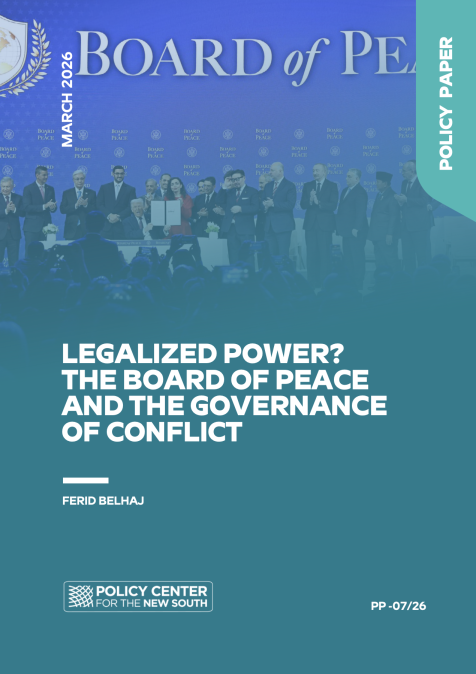
Legalized Power? The Board of Peace and the Governance of Conflict
Authors
March 30, 2026

This essay examines the establishment of the Board of Peace as a test case in contemporary peace governance and hegemonic experimentation. While the Board, politically activated in early 2026 and formally anchored in a resolution of the United Nations Security Council, benefits from derivative legality under the UN Charter, its legal foundation remains constitutionally fragile, its mandate ambiguously constrained, and its accountability architecture underdeveloped, notwithstanding explicit Security Council authorization.

Moving beyond a binary assessment of legality versus illegality, the essay situates the Board of Peace within a broader historical pattern of incremental institutional creation in international relations. Drawing on comparative examples such as the G7/G8, the Shanghai Cooperation Organization, and ASEAN’s late-stage legal codification, the analysis shows that many influential international arrangements emerged through crisis-driven political practice before hardening into legally constituted organizations, or, in some cases, evolving into parallel governance centers that diluted the authority of their parent institutions.

From a realist perspective—augmented by insights from critical legal realism—the Board of Peace is best understood as a legalized instrument of power management operating through international law while simultaneously testing its limits. Under President Donald Trump’s second administration, the Board reflects a broader hegemonic impulse: not an outright rejection of legality per se, but a strategic preference for flexible, sponsor-driven governance mechanisms that can bypass procedural constraints, re-center the agenda-setting power of the United States, and externalize political risk. It is an example of selective implementation of the so called ‘rules-based international order’. In this sense, the Board carries an inherent tension: while formally authorized by the Security Council, it has the potential to compete with it, gradually displacing deliberative multilateralism and potentially replacing it with executive-style peace and security management.

Yet the Israeli–Palestinian context, which is the departure point and original rationale of the Board of Peace, imposes non-derogable constraints. Occupation, self-determination, and the two-state framework cannot be neutralized by managerial governance without legal and political consequences. The sustainability of the Board will therefore depend less on its founding moment (adoption of UN Security Council resolution 2803) and more on its capacity to evolve from hegemonic expediency into rule-constrained institutional practice oriented toward ending occupation rather than stabilizing it. Absent such evolution, the Board risks entrenching questionable governance without sovereignty, hollowing out Security Council authority, and accelerating the drift toward fragmented, plurilateral peace and security management under hegemonic sponsorship.

Finally, it is important to clarify that this essay is not a polemical critique of the Board of Peace as a political stunt, nor a personalized indictment of the ad-hoc and visibly fragile governance mechanics surrounding a sui generis leader-centric governance experiment. While the legal and institutional shortcomings of the Board are acknowledged, the purpose of this analysis is neither to dismiss the initiative outright nor to adjudicate its immediate political legitimacy. Rather, the Board of Peace is treated as an analytical entry point: a contemporary case through which to examine the varied pathways by which international groupings and organizations come into being, evolve, and acquire authority. The essay’s central concern is structural and comparative: how crisis-driven arrangements, informal clubs, hegemon-sponsored mechanisms, and restraint-based regional orders differ in their relationships to legality, power, and endurance, and what these differences reveal about the changing architecture of international governance in an era of fragmentation.
RELATED CONTENT

  • Authors
    Fadoua Ammari
    May 12, 2025
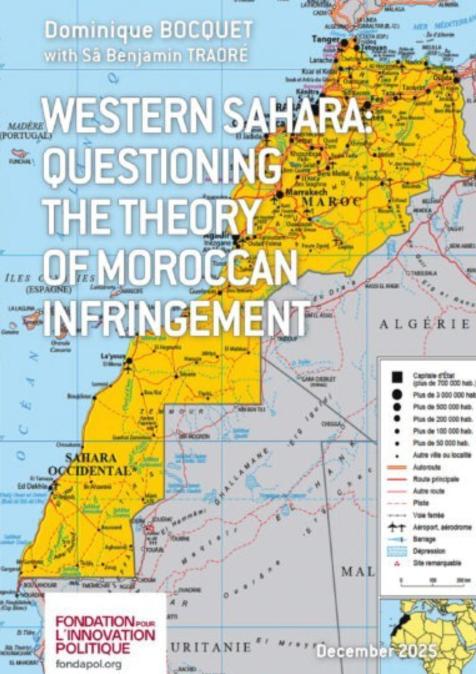
    This Policy Brief explores the potential evolution of the United Nations’ stance on the Moroccan Sahara issue in light of recent diplomatic developments. It builds on the reaffirmed U.S. support for Morocco's proposed Autonomy Plan, which has played a key role in broadening international consensus in favor of a pragmatic resolution. Despite positive signs within the Security Council, the UN-led process remains stalled, largely due to persistent divisions among member states and th ...
  • Authors
    Fadoua Ammari
    April 30, 2025
    Ce Policy Brief examine les perspectives d’évolution de la position des Nations Unies sur le dossier du Sahara marocain à la lumière des récentes dynamiques diplomatiques. Il s’appuie sur la réaffirmation du soutien américain au Plan d’autonomie proposé par le Maroc, qui a contribué à élargir un consensus international en faveur d’une solution pragmatique. Malgré des signes positifs au sein du Conseil de sécurité, le processus onusien demeure bloqué, notamment en raison de divisions ...
  • November 1, 2024
    La résolution 2756 (2024), adoptée le 31 octobre par le Conseil de sécurité des Nations-Unies a réaffirmé les paramètres des précédentes résolutions en « se félicitant de la dynamique récemment créée et demandant instamment qu’elle soit mise à profit. Malgré des tentatives de l’Algérie d'altérer cette solution en y introduisant un appel au ‘’monitoring’’ des droits de l'homme, le Conseil a maintenu l'intégrité de la résolution. Deux membres permanents se sont distingués lo ...
  • July 12, 2024
    The European Elections of 2024 were marked by a significant surge in sovereigntist parties at the expense of liberals and greens, while moderate right and left-wing parties also made notable gains. Despite the substantial wins and losses during this election, no single bloc emerged with the overall majority of 361 seats in the European Parliament. The impression from the new political balances emerging from the 2024 elections is that the European People's Party, which won the electo ...
  • Authors
    May 28, 2024
    As the Bretton Woods institutions and the UN approach their eightieth anniversaries, they face challenges to their foundational principles of multilateralism. The rise of plurilateralism through regional financing institutions and organizations like the AIIB, BRICS, G20, and G7, is reshaping global governance. These shifts demand urgent reforms to the governance structures of the International Monetary Fund and the World Bank, to reflect the interests of emerging economies. Without ...
  • Authors
    August 4, 2023
    Twenty-Four Hours June 23-24, 2023. Over those days, Russia, the sanctioned world power, was not destabilized by the nuclear enemy in Washington, but by one man, who made his wealth serving food to school children and soldiers. A caterer who attempted a revolution. A bald man, who apparently wore wigs during his days off, as the Russian secret police claimed to have discovered when they searched his home in St Petersburg. The photos of the wig-wearing Yevgeny Prigozhin were shown o ...
  • May 24, 2023
    La création, par l’ONU, en 2006, du Conseil des droits de l’Homme (CDH) et la mise en place, une année après, de l'Examen périodique universel (EPU), ont constitué une avancée significative dans le processus de promotion de la protection des droits de l'Homme dans le monde. Désormais, et sans aucune distinction, tous les États sont régulièrement assujettis à cet examen qui couvre l’ensemble des droits individuels et collectifs ainsi que les libertés fondamentales consacrés par les I ...
  • April 25, 2023
    بمناسبة اليوم الدولي للتعددية والدبلوماسية من أجل السلام، قررنا تخصيص الحلقة إلى إفريقيا ومبدأ تعددية الاطراف في سياق اوضاع السلم والأمن الهشة في منطقة الساحل وانتشار عدم الاستقرار في البحيرات الافريقية الكبرى، بالإضافة إلى عجز مجلس الأمن التابع للأمم المتحدة عن مواجهة الحرب المستمرة ال...