Publications /
Book / Report

Back
Africa Economic Symposium (AES) 3nd edition - SUMMARY REPORT
Authors
General rapporteur Mahmoud Arbouch
September 2, 2025

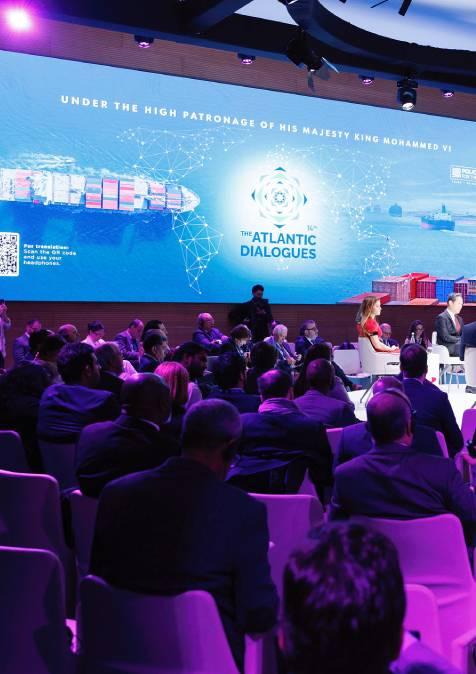
The Africa Economic Symposium (AES) has firmly established itself as one of the flagship annual events of the Policy Center for the New South, alongside the Atlantic Dialogues and the African Peace and Security Annual Conference (APSACO). Now in its third edition, AES continues to provide a unique platform for economists, policymakers, and academics from across the continent and beyond to exchange perspectives on the pressing macroeconomic and structural challenges facing Africa. Its mission remains to foster rigorous, evidence-based debates that inform policymaking and support long-term strategies for Africa’s development in an era of uncertainty. 

The 2025 edition, convened under the theme “Bold Moves amid Global Shifts,” explored the difficult policy trade-offs confronting African governments as they navigate a volatile global environment. The continent’s recovery from COVID-19 has been uneven, while debt pressures, supply chain disruptions, and geopolitical tensions weigh heavily on fiscal and economic resilience. Structural challenges such as persistent unemployment, low productivity, and the exclusion of Africa’s youth continue to hinder inclusive growth, even as policymakers are called upon to adapt to deep systemic uncertainty. 

The symposium underscored that many African states are increasingly resorting to short-term stabilization measures—such as accumulating reserves and postponing reforms—that may provide immediate security but risk delaying the structural transformation urgently needed. Against this backdrop, AES 2025 called for a careful balance between fiscal prudence, social investment, and the pursuit of sustainable growth, placing emphasis on reforming governance, improving macroeconomic management, and accelerating structural change. 

The discussions highlighted the urgent need to rethink Africa’s economic strategies in a shifting global order. From debt sustainability and the role of central banks to the promise of financial innovation, digital inclusion, and new instruments such as central bank digital currencies, the symposium emphasized that policy choices must align with long-term transformation goals. The debates also explored the opportunities and challenges of regional integration, trade connectivity, and development finance, all of which are essential levers for Africa’s resilience and prosperity. 

As in previous editions, the Annual Report on African Economies was launched alongside the symposium, offering an in-depth analysis of the continent’s macroeconomic dynamics and structural transformation pathways. More than just a publication, the report reflects the collective intellectual effort of leading scholars and practitioners, providing evidence-based insights to guide decision- makers. Together, the symposium and the report reinforced the Policy Center for the New South’s commitment to fostering forward-looking economic thinking that moves beyond short-term headlines to tackle Africa’s enduring challenges.


RELATED CONTENT

  • Authors
    March 25, 2026
    Les conflits armés ont toujours des coûts économiques exorbitants, sans parler des pertes humaines. Le coût de la guerre est difficilement chiffrable.  Il dépend de la durée de l'enlisement et des « à-côtés ».  En fait, les conséquences économiques, tout comme les causes des conflits armés sont toujours complexes à appréhender. Les risques liés aux conflits génèrent de nombreuses incertitudes économiques, directement perceptibles dans les contraintes budgétaires, ...
  • March 18, 2026
    Le premier sommet des BRICS, tenu à l’initiative de la Russie en 2009, sera suivi de 16 autres, le dernier étant celui de Rio dont les travaux se sont déroulés les 6 et 7 juillet 2025. Jusqu’en 2022, un seul élargissement est intervenu, celui accueillant l’Afrique du Sud, transformant les BRIC en BRICS. À partir de 2023, en revanche, trois sommets, ceux de 2023, 2024 et 2025, vont se solder par la transformation des BRICS en BRICS+5, accueillant 5 nouveaux pays membres, en ...
  • March 18, 2026
    The first BRICS summit, convened at Russia's initiative in 2009, would be followed by sixteen more, the most recent being the Rio summit held on July 6 and 7, 2025. Until 2022, only one enlargement had taken place — the admission of South Africa, which turned BRIC into BRICS. From 2023 onward, however, three consecutive summits — 2023, 2024 and 2025 — transformed BRICS into BRICS+5, admitting five new member countries and introducing a new “partner country” status that now groups ni ...
  • Authors
    March 13, 2026
    While acknowledging the centrality of security tensions and potential conflict in the Gulf, this essay intentionally sets aside a detailed treatment of military and hard-power dynamics, concentrating instead on the geoeconomic logics of capital, infrastructure, energy, and connectivity, through which Gulf states now articulate power in a fragmented world order.It examines the emergence of a new tripartite or three-pillar power configuration in the Gulf, arguing that Saudi Arabi ...
  • March 13, 2026
    Dans cet épisode, nous examinons comment la finance climat peut catalyser la transition énergétique en Afrique, en mobilisant des instruments innovants et des partenariats public-privé pour soutenir des projets durables, tout en surmontant les défis d’accès au capital et d’infrastructur...
  • Authors
    March 12, 2026
    Historically, manufacturing has served as the primary pathway to economic development, offering strong scale economies, learning-by-doing effects, and the capacity to generate the foreign exchange necessary to import capital goods and technology. However, advances in robotization and artificial intelligence (AI) are fundamentally undermining manufacturing’s traditional role, making it increasingly skill- and capital-intensive while limiting its ability to absorb labor. Thi ...
  • March 10, 2026
    بمناسبة اليوم العالمي لحقوق المرأة في 8 مارس، يتناول هذا اللقاء وضعية المرأة القروية في المغرب والتحولات التي عرفها دورها في التنمية الاقتصادية والاجتماعية خلال السنوات الأخيرة. كما يسلط الضوء على مساهمتها الكبيرة في الأنشطة الفلاحية والأسرية، رغم أن جزءاً مهماً من عملها يظل غير مرئي أو...
  • Authors
    Jonathan Berkshire Miller
    March 10, 2026
    At the Atlantic Dialogues in December 2025, I argued that a period was underway in which trade and security could no longer be analytically or practically separated. Assessments have solidified in recent months regarding the emergence of a geoeconomic world order. Geoeconomics was a gradual transition from a purely geopolitical focus on military force, to an emphasis on economics to gain competitive advantage. It is no longer a transitional phase, but an emerging structural componen ...