Podcasts

Back

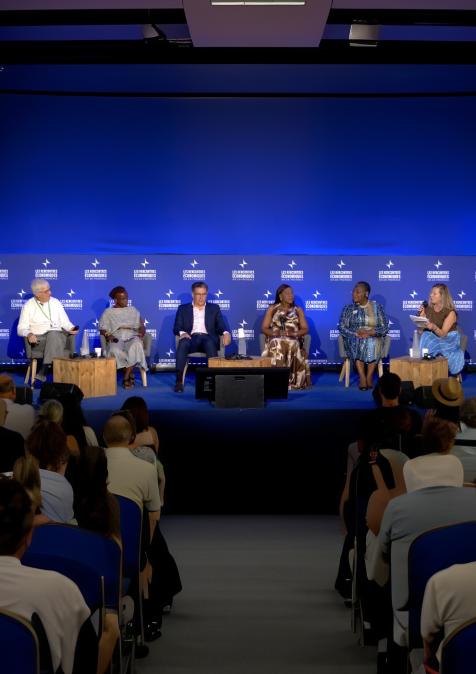
Leadership Talks : Repenser les think tanks : comment les voix du Sud global peuvent remodeler les débats politiques

29
April 2026
Par Helmut Sorge & Aude Darnal

Ce podcast du Policy Center for the New South, enregistré dans le cadre de la série Leadership Talks, met en évidence les biais des think tanks internationaux, encore largement dominés par des perspectives occidentales. Il insiste sur la nécessité de renforcer la représentation des chercheurs du Sud global pour enrichir les débats et proposer des approches plus ancrées dans les réalités locales. Il souligne enfin le rôle d’une nouvelle génération d’experts et l’importance des réseaux et stratégies de communication pour accroître leur influence.

RELATED CONTENT

  • October 23, 2025
    The UN’s funding crisis, fueled by unpaid contributions and expanding mandates, is worsening as U.S. disengagement strains peacekeeping and development efforts, particularly in Africa. This shift also strengthens rivals like China and Russia and raises deeper questions about the legitim...
  • October 23, 2025
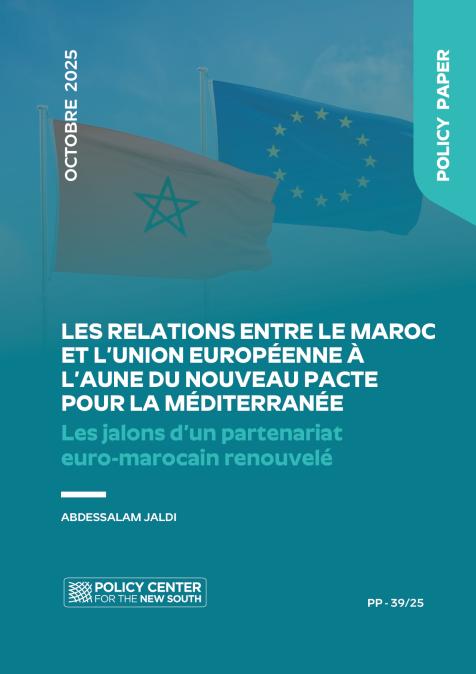
    Depuis plus de trente ans, les relations entre le Maroc et l’Union européenne (UE) se caractérisent par un équilibre entre pragmatisme politique, ouverture économique et convergence stratégique. Le processus de Barcelone de 1995 a marqué le début d’une coopération euro-méditerranéenne renforcée, consolidée par l’Accord du Statut avancé en 2008 et le Partenariat euro-marocain de prospérité partagée, faisant de l’UE le principal partenaire économique du Royaume. Dans un contexte régio ...
  • Authors
    Khadija Mamouni
    September 30, 2025
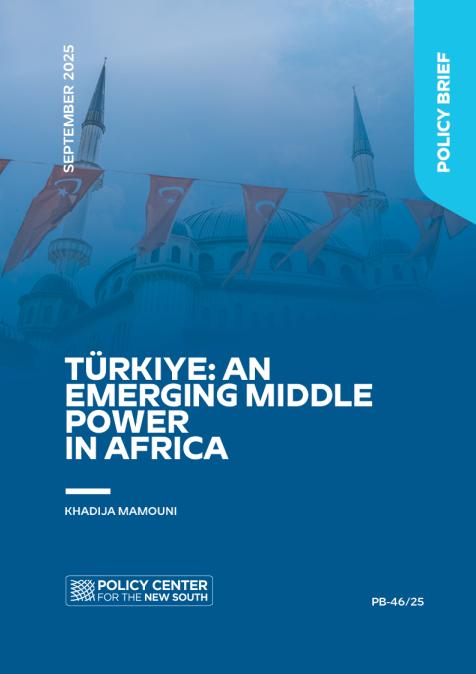
    This article analyzes the role played by Türkiye as an emerging “middle power”[1], in Africa over the last two decades. It argues that a certain discontinuity can be identified in Türkiye’s foreign policy approach in Africa. The approach has shifted from short-term involvement with African nations to more focused, constructive, vision-oriented partnerships. In addition, Türkiye’s gradual rapprochement with Africa began with a soft-power approach through a humanitarian, cultural, and ...
  • Authors
    June 18, 2025
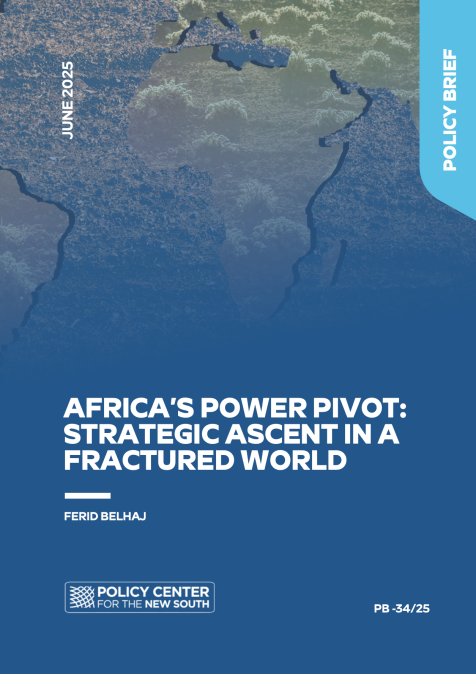
    In 2000, The Economist dismissed Africa as the “Hopeless Continent”—a label reflecting a broader system of marginalization rooted in colonial legacy and post-Cold War neglect. This essay offers a realist reappraisal, arguing that Africa’s growing strategic relevance is not the result of benevolence, but of structural necessity.Amid a fracturing global order and the rise of transactional geopolitics under Trump 2.0’s Bessent Doctrine, Africa has become indispensable: rich in critical ...
  • September 01, 2023
    In this podcast, we are joined by Dr. Len Ishmael, editor and co-author of the book “Aftermath of War in Europe: The West VS. the Global South?”. Dr. Ishmael delves into the groundbreakin ...
  • August 15, 2023
    يخصص مركز السياسات من أجل الجنوب الجديد حلقة برنامجه الأسبوعي "حديث الثلاثاء" لمناقشة العلاقات الروسية الافريقية في ظل النسخة الثانية من قمة روسيا – أفريقيا مع أسامة الطيبي، باحث في العلاقات الدولية بمركز السياسات من أجل الجنوب الجديد. أصبحت القمم ومنتديات التعاون الية من اليات تعزيز تو...
  • April 14, 2023
    Geographical proximity, historical ties, and cultural and social exchanges largely account for Italy’s enduring engagement with the Maghreb. Abdessalam Jaldi, International Relations Spec ...
  • April 10, 2023
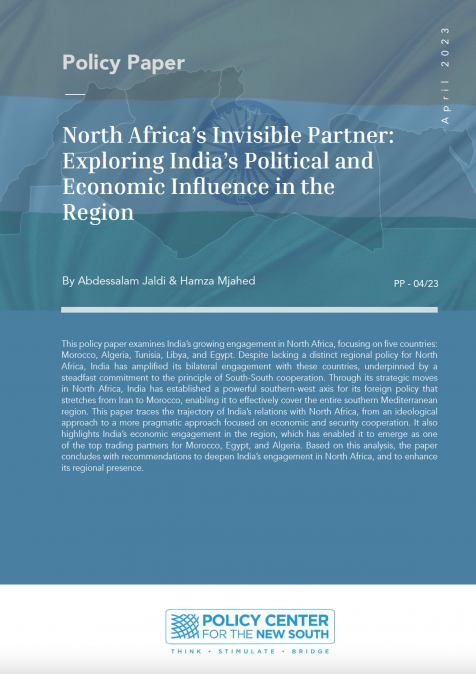
    This policy paper examines India’s growing engagement in North Africa, focusing on five countries: Morocco, Algeria, Tunisia, Libya, and Egypt. Despite lacking a distinct regional policy for North Africa, India has amplified its bilateral engagement with these countries, underpinned by a steadfast commitment to the principle of South-South cooperation. Through its strategic moves in North Africa, India has established a powerful southern-west axis for its foreign policy that stretch ...