Podcasts

Back

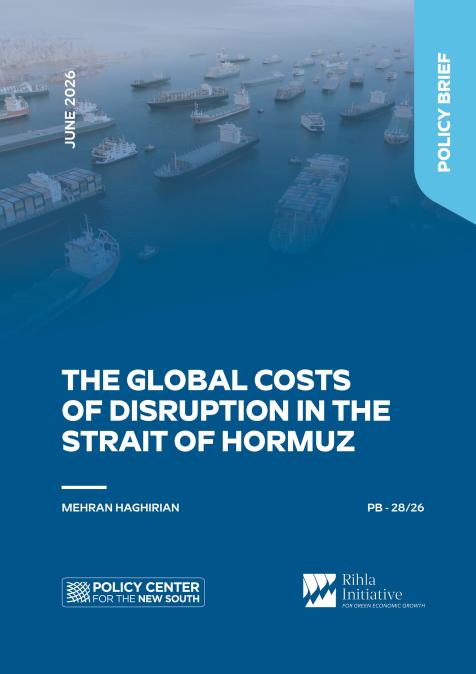
The Global Costs of Disruption in the Strait of Hormuz

In this episode, Mehran Haghirian explores the global economic consequences of disruptions in the Strait of Hormuz, beyond oil and gas. He examines their impact on trade, fertilizer supplies, and food security, highlighting the vulnerabilities of African and other developing economies. The discussion also considers how regional cooperation and stronger economic ties can help build resilience to future shocks.

RELATED CONTENT

  • October 23, 2026
    In this episode, Mehran Haghirian explores the global economic consequences of disruptions in the Strait of Hormuz, beyond oil and gas. He examines their impact on trade, fertilizer suppl ...
  • Authors
    October 13, 2026
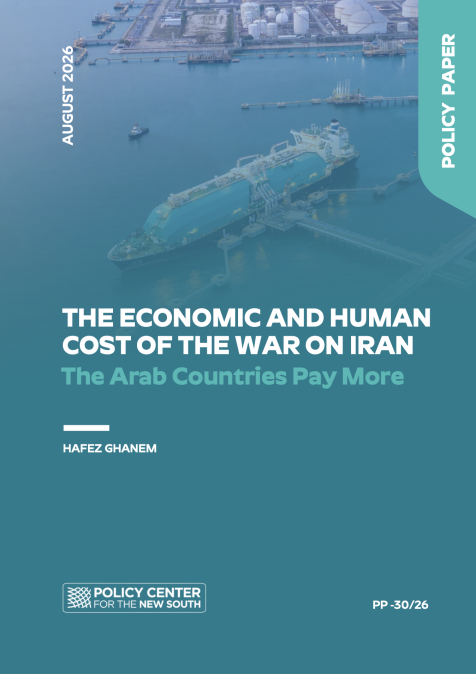
    “Every gun that is made, every warship launched, every rocket fired signifies in the final sense, a theft from those who hunger and are not fed, those who are cold and are not clothed.”President Dwight Eisenhower, April 16, 1953 This paper examines the economic and human impacts of the first six months of the Iran war—from February to the end of August 2026—on Iran’s Arab neighbors and compares these impacts with those on the three countries directly involved—Iran, Israel and t ...
  • Authors
    September 14, 2026
    Le déclenchement de la Guerre en Iran et le blocage du détroit d’Ormuz ont eu des conséquences majeures sur un grand nombre de marchés mondiaux de matières premières. Si l’attention médiatique s’est logiquement portée sur le pétrole et le gaz naturel, ainsi que sur l’aluminium, en raison de la forte dépendance de l’offre de ce métal aux prix de l’énergie, le soufre, comme l’hélium, l’éthylène, le propylène ou l’urée, a également été pris dans les rets de ce conflit. Loin d’être une ...
  • Authors
    September 14, 2026
    The outbreak of the war in Iran and the closure of the Strait of Hormuz have had major consequences for a large number of global commodity markets. While media attention has understandably focused on oil and natural gas, as well as on aluminum – owing to the strong dependence of that metal’s supply on energy prices – sulfur, like helium, ethylene, propylene, or urea, has also been caught up in the fallout of this conflict. Far from being a marginal commodity, it is essential to the ...
  • Authors
    August 13, 2026
    The renewed instability in the Middle East has exposed Africa's continued vulnerability to external energy shocks. Shipping disruptions through the Strait of Hormuz, the maritime chokepoint through which roughly one-fifth of global oil and LNG supplies transit, have once again demonstrated that African fuel security remains highly dependent on geopolitical developments beyond the continent. While many African economies have traditionally relied on refined petroleum imports from Gulf ...
  • Authors
    Mehran Haghirian
    June 15, 2026
    This article draws in part on perspectives shared by members of the Rihla Initiative for Green Economic Growth, whose regional insights helped inform the sections on how the costs of the war are being felt across the Global South. The war on Iran and in the Gulf has made it impossible to treat the Strait of Hormuz as a regional issue. The disruption around the Strait has moved through the world economy in concrete ways, from higher fuel bills and pressure on food and fertilizer ...
  • June 5, 2026
    Driven by its mission to reflect on and analyze the major geopolitical, economic, and societal transformations shaping the contemporary world, and with a view to contributing to knowledge-sharing and disseminating the main outcomes of its research program, the Policy Center for the New South regularly publishes collective volumes addressing issues of particular importance to Morocco, Africa, and the broader Global/New South. In this spirit, the Center has recently released two volum ...
  • Authors
    December 10, 2021
    Addressing the increasing demands for water, energy, and food requires a coherent methodology to ensure that  societies have access to them and that conflict over them is avoided. For example, agriculture and food production  require water and energy; energy production also requires water and, in some instances, agricultural products.  Water distribution and treatment can be very energy intensive. Therefore, the benefits of approaching the Water- Energy-Food (WEF) nex ...