Redesigning Global Finance

January 30, 2025

In this episode of Redesigning Global Finance, we explore the evolving landscape of global financial governance, focusing on how institutions like the IMF, World Bank, and regional development banks are adapting to new economic realities and global crises. The episode examines how financial systems must evolve to support the Sustainable Development Goals (SDGs) and highlights the transformative role of digital technologies such as cryptocurrencies, blockchain, AI, and fintech in reshaping financial infrastructure and promoting financial inclusion. At the same time, it addresses the regulatory, security, and governance challenges these innovations present. The discussion centers on the urgent reforms needed to ensure financial resilience, aligning capital flows with sustainable development in emerging markets, and the changing role of traditional financial institutions in the face of rising digital finance.
Speakers
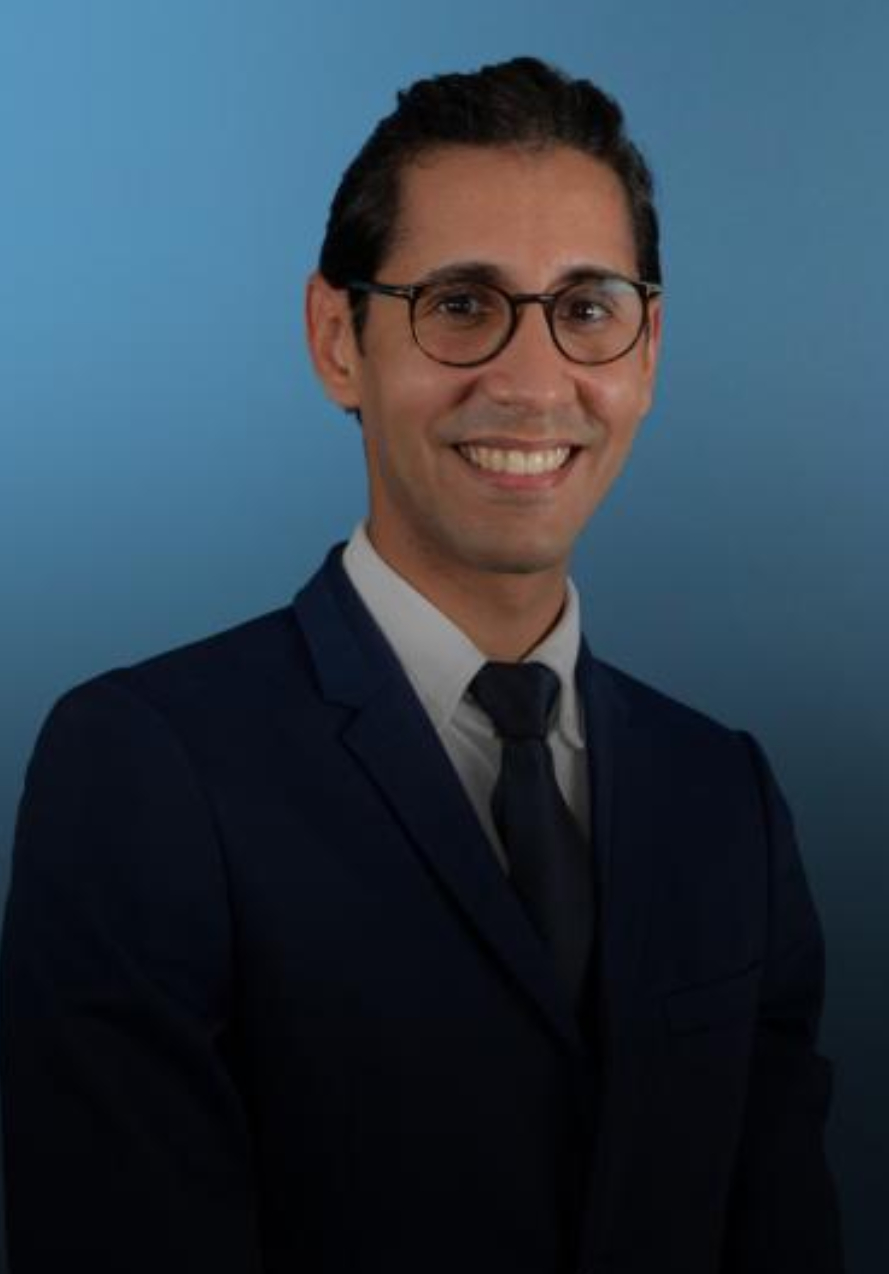
Ahmed Ouhnini
Economist, Policy Center for the New South
Ahmed Ouhnini is an Economist at the Policy Center for the New South. His research area covers agricultural economics, human and social development. Previously, he has worked as a researcher at the Paris School of Economics (PSE) and has also a record of working in consulting services in Morocco. Ahmed holds an engineering Diploma in Agriculture and Rural Development from the National School of Agriculture of Meknes and a Master’s Degree in Law, Economics and Management from the Paris 1 Pantheon Sorbonne Institute of Development. ...
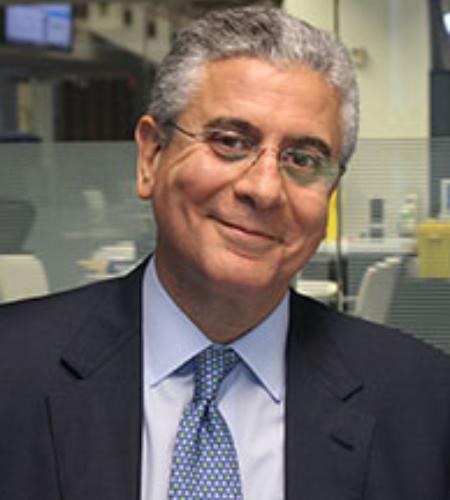
Ferid Belhaj
Senior Fellow
Ferid Belhaj took up the position of World Bank Vice President for Middle East and North Africa on July 1, 2018. Prior to this, he served as the Chief of Staff of the President of the World Bank Group for 15 months. From 2012 to 2017, Mr. Belhaj was World Bank Director for the Middle East, in charge of work programs in Lebanon, Syria, Jordan, Iraq and Iran, based in Beirut, Lebanon. In this capacity, he led the Bank’s engagement on the Syrian refugee crisis and its impact on the region, including the creation of new financing instruments to help countries hosting forcibly displaced people; the ramping up of the Bank drive towards the reconstruction and recovery of Iraq during and after the ISIS invasion and the scaling up of the Bank's commitments to Lebanon and Jordan. Befo ...
Masood Ahmed
President of the Center for Global Development
...

RELATED CONTENT

  • Authors
    Fadoua Ammari
    September 12, 2025
    The Atlantic Initiative, announced by King Mohammed VI in November 2023 to provide landlocked Sahelian countries with access to the Atlantic Ocean via Moroccan territory, promises to profoundly reshape the bilateral relationship between Rabat and Nouakchott. This research paper examines how this unprecedented project creates new strategic opportunities while raising shared challenges for Morocco and Mauritania. Diplomatically, the rapprochement around the Atlantic Initiative unfolds ...
  • September 11, 2025
    Ce travail apporte un éclairage critique sur l'alignement des dispositifs publics d'orientation des étudiants marocains à l'étranger avec les ambitions de développement du pays. Il interroge la capacité de ces mécanismes à transformer la mobilité étudiante d'une potentielle "fuite des cerveaux" en un véritable "gain de cerveaux". S'appuyant sur une étude de cas qualitative, nous avons mené une analyse de contenu systématique (cartographie) de 204 programmes promus par le ministère d ...
  • September 8, 2025
    In this episode, we explore how today’s trade regime shapes inequality through a Southern lens. The conversation sheds light on blind spots in mainstream debates, the resurgence of industrial policy in the North, and the tools Southern countries need to reclaim policy space within globa...
  • Authors
    September 4, 2025
    This policy brief analyzes the first 100 days in office of Chancellor Friedrich Merz, which have been marked by an assertive foreign policy, ambitious security reforms, and a shift toward economic pragmatism. Merz has sought to reestablish Germany as a ‘leading middle power’, emphasizing closer European coordination, renewed transatlantic engagement, and unwavering support for Ukraine. However, his approach to the Gaza conflict, characterized by alignment with U.S. positions and rel ...
  • Authors
    September 3, 2025
    Estimates based on last year’s U.S. imports, by Maia G. Crook (from JPMorgan) indicate that the average effective U.S. tariff rate is currently 16%, and is expected to rise to 20% by the end of 2025. This represents an increase from 13% mid-year and 2.3% in 2024 (Figure 1). Effective tariff rates are a measure of the degree of protection a tariff structure offers to the value added provided by each sector to a country’s final product, taking into account both the tax on final g ...
  • Authors
    Jorge Arbache
    September 2, 2025
    This Opinion was originally published in Project Syndicate However politically convenient narratives about the United States "abandoning" manufacturing may be, the reality is more complex and less gloomy than many assume. In fact, US manufacturing has not disappeared, but it did internationalize as American companies pursued higher-value opportunities at home. ...
  • Authors
    September 2, 2025
    This paper argues that the Middle East has become the crucible of twenty-first-century imperial politics, exposing the collapse of legal universality and the resurgence of coercive empire. Through the archetypes of Hammurabi and Nebuchadnezzar, it analyzes how states invoke law rhetorically while practicing domination through siege, spectacle, and exclusion.The United States, China, Türkiye, Israel, Iran, the European Union, and the Gulf monarchies all oscillate between Hammurabian ...
  • August 29, 2025
    This episode explores the intersection between value chains and the environment, examining how sustainable practices, green innovation, and environmental challenges are reshaping producti ...