Redesigning Global Finance

January 30, 2025

In this episode of Redesigning Global Finance, we explore the evolving landscape of global financial governance, focusing on how institutions like the IMF, World Bank, and regional development banks are adapting to new economic realities and global crises. The episode examines how financial systems must evolve to support the Sustainable Development Goals (SDGs) and highlights the transformative role of digital technologies such as cryptocurrencies, blockchain, AI, and fintech in reshaping financial infrastructure and promoting financial inclusion. At the same time, it addresses the regulatory, security, and governance challenges these innovations present. The discussion centers on the urgent reforms needed to ensure financial resilience, aligning capital flows with sustainable development in emerging markets, and the changing role of traditional financial institutions in the face of rising digital finance.

Speakers
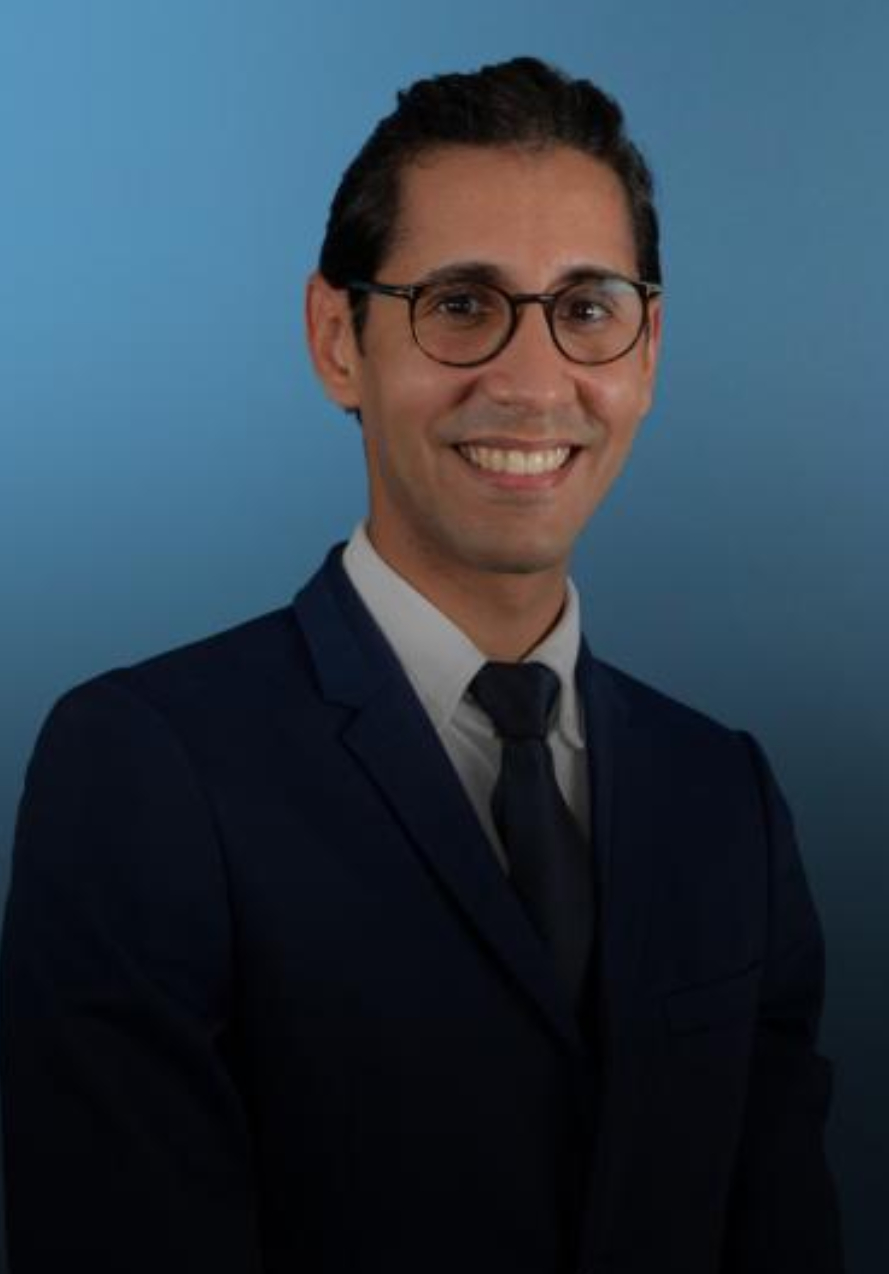
Ahmed Ouhnini
Economist, Policy Center for the New South
Ahmed Ouhnini is an Economist at the Policy Center for the New South. His research area covers agricultural economics, human and social development. Previously, he has worked as a researcher at the Paris School of Economics (PSE) and has also a record of working in consulting services in Morocco. Ahmed holds an engineering Diploma in Agriculture and Rural Development from the National School of Agriculture of Meknes and a Master’s Degree in Law, Economics and Management from the Paris 1 Pantheon Sorbonne Institute of Development. ...
Ferid Belhaj
Senior Fellow
Ferid Belhaj took up the position of World Bank Vice President for Middle East and North Africa on July 1, 2018. Prior to this, he served as the Chief of Staff of the President of the World Bank Group for 15 months. From 2012 to 2017, Mr. Belhaj was World Bank Director for the Middle East, in charge of work programs in Lebanon, Syria, Jordan, Iraq and Iran, based in Beirut, Lebanon. In this capacity, he led the Bank’s engagement on the Syrian refugee crisis and its impact on the region, including the creation of new financing instruments to help countries hosting forcibly displaced people; the ramping up of the Bank drive towards the reconstruction and recovery of Iraq during and after the ISIS invasion and the scaling up of the Bank's commitments to Lebanon and Jordan. Befo ...
Masood Ahmed
President of the Center for Global Development
...

RELATED CONTENT

  • August 28, 2025
    This Paper was originally published on tandfonline.com The gender gap in education remains a concern for Moroccan policymakers and researchers, yet it is rarely measured quantitatively. This study examines differences in reading and mathematics performance between girls and boys, both at the national level and by place of residence, using PIRLS (2016, 2021) and TIMSS (2015, 2019) data covering 21,129 students. The Blinder-Oaxaca decomposition method is applied to distingui ...
  • August 28, 2025
    Alors que l’ordre mondial bascule vers un système multipolaire, l’Afrique se trouve face à un tournant décisif. Comment éviter la marginalisation et tirer parti de ses atouts stratégiques ? Entre partenariats concurrentiels des grandes puissances, montée du Sud global et élargissement d...
  • Authors
    Fadoua Ammari
    August 28, 2025
    L’Initiative Atlantique, annoncée par le Roi Mohammed VI en novembre 2023, visant à offrir aux pays sahéliens enclavés un accès à l’océan Atlantique via le territoire marocain, promet de redessiner en profondeur la relation bilatérale entre Rabat et Nouakchott. Cet article examine comment ce projet inédit crée de nouvelles opportunités stratégiques tout en soulevant des défis partagés pour le Maroc et la Mauritanie. Sur le plan diplomatique, le rapprochement autour de l’Initiative A ...
  • Authors
    August 27, 2025
    La parution de la dernière édition (la 74ème) de la Statistical Review of World Energy (SRWE, 2025) est une bonne occasion de faire le point sur certaines grandes tendances du monde de l’énergie. Dans cette note, nous nous centrerons sur le continent africain. Tous les chiffres ci-dessous sont extraits de ce document et portent sur l’année 2024, sauf indication contraire. Les chiffres de la SRWE portent sur les énergies qui font l’objet d’échanges commerciaux, ce qui inclut les éner ...
  • Authors
    Gabriela Keseberg Dávalos
    August 26, 2025
    The author of this opinion, Gabriela Keseberg Dávalos, is a 2013 alumna of the Atlantic Dialogues Emerging Leaders Program.On August 17, 2025, Bolivians did what once seemed unthinkable: they voted the Movement for Socialism (MAS) out of power, after almost two decades of dominance. For a country where last-minute surprises are the political norm, this outcome feels extraordinary. But the verdict is clear: MAS, the party that defined Bolivia’s politics for an entire generation, ...
  • Authors
    Cuong Le Van
    August 26, 2025
    This paper develops a continuous-time optimal control model to analyze the economic effects of the U.S. administration’s newly imposed “reciprocal tariffs,” which are determined by bilateral trade deficits. The model focuses on a small, open developing economy integrated into global value chains and facing limited policy space. We demonstrate how reciprocal tariffs, endogenously linked to the trade balance, affect production, consumption, capital accumulation, and overall welfare. W ...
  • August 22, 2025
    History offers ample instances in which the veneer of fairness in international relations has worn away, revealing with unsentimental clarity the crude mechanics of power. The contemporary global trade architecture, promoted for decades by the United States as a virtuous system of open markets, a rules-based order, and reciprocal gains, is merely the latest in a long lineage of such illusions. ...
  • August 22, 2025
    This episode explores the opportunities and challenges of achieving deeper economic integration under the African Continental Free Trade Area (AfCFTA). We discuss the potential for boosting intra-African trade, industrialization, and investment flows. The conversation highlights the nee...
  • Authors
    August 19, 2025
    The multilateral, rule-based trading system underpinned by the World Trade Organization (WTO) has been undermined by the unilateral imposition of U.S. tariffs. Crucially, the foundational principle of non-discrimination among WTO members has been abandoned. While many countries have attempted to negotiate with the U.S. to resolve tariff disputes, they have simultaneously sought to deepen trade ties with each other through plurilateral and regi ...
  • Authors
    August 19, 2025
    The international monetary system has been dominated by the U.S. dollar since the Second World War. The hegemony of the greenback cut across the end of the dollar exchange standard established by the Bretton Woods Agreement, and came out from the global financial crisis—and the euro crisis—even stronger than before. The euro area and China are taking steps to strengthen the international role of their currencies, but surmounting the inner strength of the dollar-based monetary system ...