Redesigning Global Finance

January 30, 2025

In this episode of Redesigning Global Finance, we explore the evolving landscape of global financial governance, focusing on how institutions like the IMF, World Bank, and regional development banks are adapting to new economic realities and global crises. The episode examines how financial systems must evolve to support the Sustainable Development Goals (SDGs) and highlights the transformative role of digital technologies such as cryptocurrencies, blockchain, AI, and fintech in reshaping financial infrastructure and promoting financial inclusion. At the same time, it addresses the regulatory, security, and governance challenges these innovations present. The discussion centers on the urgent reforms needed to ensure financial resilience, aligning capital flows with sustainable development in emerging markets, and the changing role of traditional financial institutions in the face of rising digital finance.

Speakers
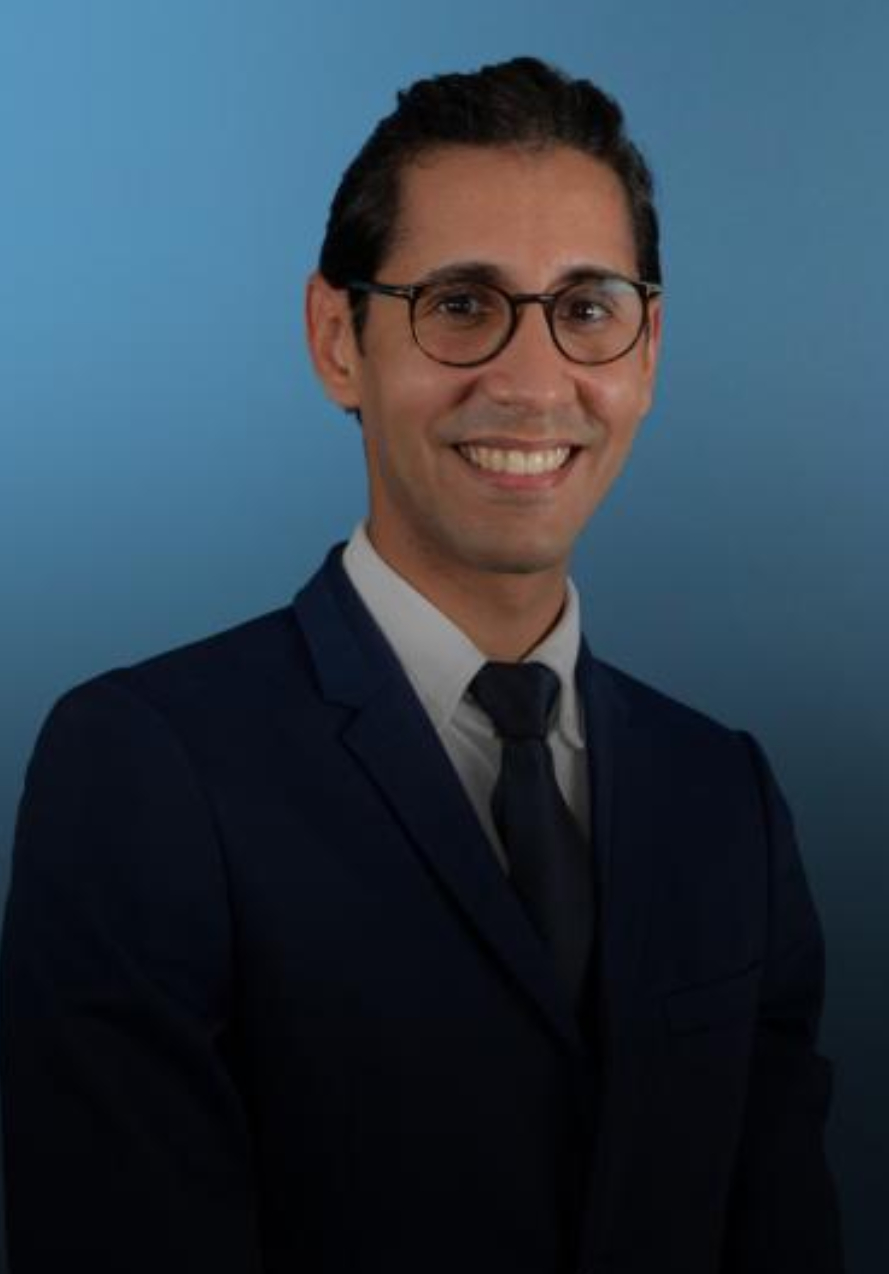
Ahmed Ouhnini
Economist, Policy Center for the New South
Ahmed Ouhnini is an Economist at the Policy Center for the New South. His research area covers agricultural economics, human and social development. Previously, he has worked as a researcher at the Paris School of Economics (PSE) and has also a record of working in consulting services in Morocco. Ahmed holds an engineering Diploma in Agriculture and Rural Development from the National School of Agriculture of Meknes and a Master’s Degree in Law, Economics and Management from the Paris 1 Pantheon Sorbonne Institute of Development. ...
Ferid Belhaj
Senior Fellow
Ferid Belhaj took up the position of World Bank Vice President for Middle East and North Africa on July 1, 2018. Prior to this, he served as the Chief of Staff of the President of the World Bank Group for 15 months. From 2012 to 2017, Mr. Belhaj was World Bank Director for the Middle East, in charge of work programs in Lebanon, Syria, Jordan, Iraq and Iran, based in Beirut, Lebanon. In this capacity, he led the Bank’s engagement on the Syrian refugee crisis and its impact on the region, including the creation of new financing instruments to help countries hosting forcibly displaced people; the ramping up of the Bank drive towards the reconstruction and recovery of Iraq during and after the ISIS invasion and the scaling up of the Bank's commitments to Lebanon and Jordan. Befo ...
Masood Ahmed
President of the Center for Global Development
...

RELATED CONTENT

  • Authors
    July 24, 2025
    This Paper was originally published on ilo.org A guide by the Mainstreaming Employment into Trade and Investment in the Southern Mediterranean (METI) Programme to advise policymakers on how to develop and implement trade, investment and employment.The PRG is a strategic framework designed to align trade and investment policies with employment goals in the Southern Mediterranean. The guide promotes practical solutions and supports policies that foster economic growth, empow ...
  • July 24, 2025
    This episode explores the potential of debt-for-climate swaps as a strategic tool to address climate challenges and fiscal constraints in developing countries. While implementation has often been slow and fragmented, the conversation examines practical experiences from regions like Lati...
  • Authors
    Bruno Saraiva
    July 21, 2025
    This article assesses the economic performance of the original BRICS economies, relative to the growth and currency appreciation projections presented in the papers that introduced the acronym, prior to the grouping becoming a diplomatic, political, and economic reality. It also discusses the BRICS agenda in the current challenging geopolitical context, in which economic fragmentation tends to raise costs for the global economy and presents considerable obstacles for emerging and de ...
  • Authors
    Edited by
    July 14, 2025
    Available soon on livremoi. The 2025 edition of the African Economic Report continues in the spirit of previous versions. It presents a broad overview of the continent’s economic evolution and offers insights into Africa’s relationship with the rest of the world. In other words, it explores how Africa navigates the effects of global fragmentation within its regional spaces while pursuing its ambition of continental integration. ...
  • Authors
    Bruno Saraiva
    July 14, 2025
    The BRICS+ group of countries met in Rio de Janeiro over the weekend of 6-7 July. The original group – Brazil, Russia, India, China and, soon after, South Africa – emerged as the materialization of a work of fiction. Jim O’Neill, then chief economist at Goldman Sachs, produced a report in 2001 drawing attention to the rise of these countries as emerging regional powers in global economic growth. ...
  • July 11, 2025
    In this episode, we discuss whether Africa’s sub-regions foster unity or deepen divides, examine how they handle political crises, and consider the impact of global powers on regional dynamics. We explore what’s needed for stronger cooperation and how Africa can preserve its diversity w...
  • July 9, 2025
    Developing countries have few options to deal with the ongoing tariff war amid unpredictable shifts in global supply chains. However, regional economic integration offers a strategic path of development in these uncertain and challenging times. Helped by geographical proximity and cultural familiarity, countries in a region can benefit greatly from promoting trade with one another, reaping the benefits of comparative advantages and economies of scale—if they are able to establish a ...