Publications /
Research Paper

Back
China’s Services Transformation and the Local Services Trap
Authors
July 13, 2026

This paper examines the evolution of China’s services sector between 2012 and 2022, analyzing the country’s structural transformation based on a novel three-tier taxonomy: knowledge services (KS), enabling services (ES), and local services (LS). Using sixteen quantitative indicators from OECD databases, the study evaluates China’s transition in comparison to the EU15 benchmark, highlighting three core challenges: manufacturing rebalancing, labor absorption, and global integration.

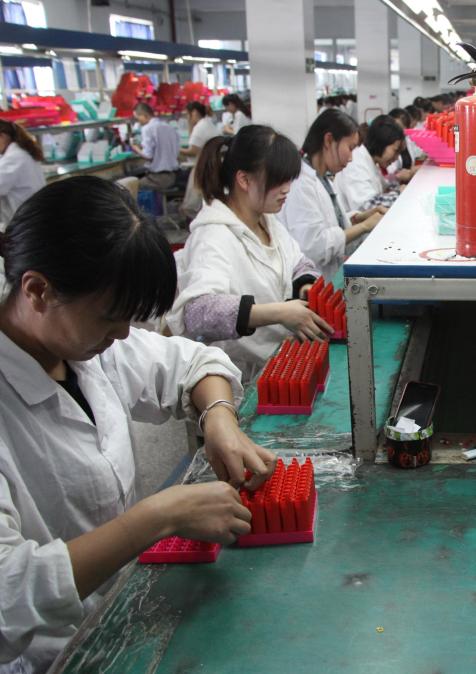
Three primary findings emerge. First, while manufacturing’s share of GDP in China has stabilized at approximately 29% due to active industrial policy, manufacturing employment has decoupled from output as automation has reduced labor intensity. Second, the services sector has absorbed this released labor, but the composition is problematic: local services (LS) have absorbed the bulk of new jobs at low productivity levels, while high-productivity gains in enabling services (ES) have generated limited direct employment. Knowledge services (KS) remain dynamic but are currently too small and skill-constrained to serve as a primary growth engine. Third, China’s external posture has shifted toward an ‘inward turn’ in direct services exports, countered by a strengthening indirect upstream channel via which producer services are increasingly embedded in other countries’ exports.

The paper concludes that China faces a critical productivity/employment trade-off: a transition dominated by local services preserves social stability through job creation, but risks a structural ceiling on aggregate growth. Successful rebalancing will require resolving the structural conditions—specifically skill availability, geographic matching, and openness to foreign inputs—necessary to scale high-productivity knowledge services.

RELATED CONTENT

  • Authors
    July 13, 2026
    This paper examines the evolution of China’s services sector between 2012 and 2022, analyzing the country’s structural transformation based on a novel three-tier taxonomy: knowledge services (KS), enabling services (ES), and local services (LS). Using sixteen quantitative indicators from OECD databases, the study evaluates China’s transition in comparison to the EU15 benchmark, highlighting three core challenges: manufacturing rebalancing, labor absorption, and global integration.Th ...
  • Authors
    July 13, 2026
    This paper provides a structural assessment of India’s services-led development trajectory, and its integration into global value chains (GVCs) between 2012 and 2022. Applying an analytical framework that categorizes services into knowledge (KS), enabling (ES), and local (LS) sectors, the study utilizes sixteen OECD indicators to move beyond the narrative of India as a ‘services champion’ and reveal a more complex economic reality. The analysis identifies three central structur ...
  • Authors
    February 11, 2026
    The U.S.–China technological rivalry has become a central axis of global economic and geopolitical competition. While the United States continues to lead in frontier innovation—most notably in advanced semiconductors and artificial intelligence (AI)—China has consolidated strengths in large-scale implementation, manufacturing capacity, and control over critical segments of global supply chains. These advantages are especially visible in clean energy technologies and in the processin ...
  • July 9, 2025
    Developing countries have few options to deal with the ongoing tariff war amid unpredictable shifts in global supply chains. However, regional economic integration offers a strategic path of development in these uncertain and challenging times. Helped by geographical proximity and cultural familiarity, countries in a region can benefit greatly from promoting trade with one another, reaping the benefits of comparative advantages and economies of scale—if they are able to establish a ...
  • Authors
    Xiaofeng Wang
    October 13, 2023
    The surprising victory of Javier Milei, the unconventional ‘anarcho-capitalist’ candidate, in the August primaries ahead of Argentina’s October 2023 general election, can be largely credited to his commitment to dollarize the Argentine economy, a move perceived as the ultimate solution to bring an end to the nation's economic turmoil. The potential shift from the local currency to the dollar has sparked concerns about Argentina's bilateral currency swap line with China. This swap l ...
  • Authors
    Selassie Tay
    February 15, 2023
    Background The African Union in 2018 agreed to implement the world’s second-largest free-trade area measured by number of countries, people, and geographical size, with the signing of the African Continental Free Trade Agreement (AfCFTA). This agreement will ultimately lead to a continent-wide free trade area consisting of 54 countries with 1.3 billion people and a combined GDP of $3.4 trillion[1]. This equates to about 19%-20% of the GDP of the European Union and China, which ...
  • Authors
    Nassim Hajouji
    February 15, 2022
    Using education and elite configurations as the main variables of analysis, this Policy Paper aims to show how higher levels of popular sector incorporation during elite conflicts, namely in the process of formulating and implementing policies related to education reforms, can negatively affect the economic complexity of developing countries. To do so, it analyzes the experiences of Mauritius and Singapore and links foundational political economy theories, particularly developmental ...
  • Authors
    منى فياض
    May 21, 2020
    تم نشر هذا المقال في الأصل على موقع قناة الحرة يقول یووال نوح هراري إن نمو الذكاء الاصطناعي والتقنيات البيولوجية قد يؤدي إلى إنتاج طبقة من "رجال متفوقين" يحكمون العالم ويحولون باقي البشر إلى "طبقة غير نافعة" (كتاب 21 مسألة للقرن الـ 21). كما تنبأ بأن التقدم العلمي سوف يولد لامساواة غير مسبوقة في التاريخ داخل المجتمعات، لكن أيضا بين الأمم. سوف تزداد الهوة بين البلدان الصناعية التي تسيطر على التكنولوجيا وتلك المحرومة منها، بل سوف لن تردم لاحقا. لاحقا، جاء تصريح الرئي ...
  • Authors
    Francisco Cordoba Otalora
    April 21, 2020
    We are entering an economic cycle with a changing nature of consumption focusing on necessities. It seems like the times of luxury, entertainment and vacations are over, at least until the discovery of a vaccine for COVID-19. The unfolding of the health crisis that we have been witnessing in Italy, Spain and other advanced economies will not be as severe as the economic crisis that the Coronavirus will unleash. The International Monetary Fund has been warning us that the financial ...
  • Authors
    Mehmet Sait Akman
    Shiro Armstrong
    Anabel Gonzalez
    Fukunari Kimura
    Junji Nakagawa
    Peter Rashish
    Akihiko Tamura
    Carlos A. Primo Braga
    February 9, 2020
    In the context of his role as chair of the T20 task force « Trade, Investment and Globalization », our senior fellow, Uri Dadush has led the T20 brief under the theme "World Trading System Under Stress: Scenarios for the Future", which has been published in Global Policy. The world trading system has been remarkably successful in many respects but is now under great strain. The causes are deep‐seated and require a strategic response. The future of the system depends critically on r ...