Morocco Hydrogen Projects: Ensuring Safety and Sustainability across the Region - Khalid Benhammou

November 13, 2023

Advancing sustainable energy governance faces major challenges like policy coordination, political and economic barriers, and infrastructure development. In this interview, Khalid Benhammoun, managing director of Sahara Wind, discusses the multiple challenges met in the advancement of sustainable energy in the Mediterranean region, especially green hydrogen. He also provides insights into the strategies that current hydrogen projects in Dakhla are employing to guarantee the safety and sustainability of hydrogen production and usage within the region.

Speakers
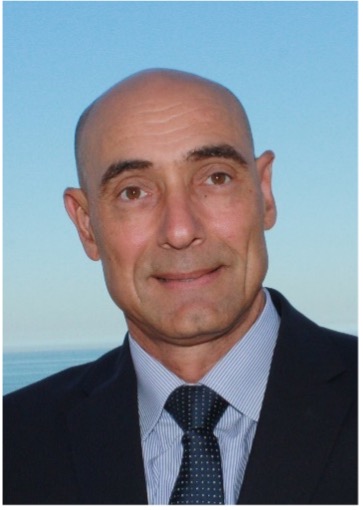
Khalid Benhamou
Director, Sahara Wind, Morocco
Khalid Benhamou is the Director of Sahara Wind, having, in 1995, erected Morocco's first 50 kW experimental wind turbine on the Sahara coastline, revealing the potential of the Atlantic trade winds in the region. This led to the inception of the Sahara Wind-HVDC multi-Giga-Watt transmission project in 2002, presented at the European Parliament and a catalyst for Euro-Mediterranean initiatives. As original project concept developer, Khalid established the Sahara Wind project’s 400-500 MW threshold capacity, phased roll-out and Terms of References of its 5GW HVDC line in collaboration with ONEE of Morocco, before its submission for funding to UNDP-GEF-World Bank in 2005. He also established the connection between the Atlantic trade winds and Morocco's phosphate rock deposits. In ...
RELATED CONTENT

  • Authors
    Mehran Haghirian
    June 15, 2026
    This article draws in part on perspectives shared by members of the Rihla Initiative for Green Economic Growth, whose regional insights helped inform the sections on how the costs of the war are being felt across the Global South. The war on Iran and in the Gulf has made it impossible to treat the Strait of Hormuz as a regional issue. The disruption around the Strait has moved through the world economy in concrete ways, from higher fuel bills and pressure on food and fertilizer ...
  • June 11, 2026
    The global energy system has entered a period of acute structural stress following the strikes by the United States and Israel on Iran in late February 2026, and the subsequent disruption of flows through the Strait of Hormuz. According to the International Energy Agency, the resulting shock marks the most severe disruption to global energy markets since the 1970s oil crises, with systemic characteristics comparable to the combined effects of those crises and the 2022 Russia-Ukraine ...
  • June 5, 2026
    Driven by its mission to reflect on and analyze the major geopolitical, economic, and societal transformations shaping the contemporary world, and with a view to contributing to knowledge-sharing and disseminating the main outcomes of its research program, the Policy Center for the New South regularly publishes collective volumes addressing issues of particular importance to Morocco, Africa, and the broader Global/New South. In this spirit, the Center has recently released two volum ...
  • Authors
    December 18, 2024
    The Middle East and North Africa (MENA) region is at a critical juncture, facing an intricate polycrisis defined by interlinked challenges including energy insecurity, water scarcity, migration, conflict, and socio-political fragmentation. These crises are not isolated; their interconnectedness amplifies their impact, creating a destabilizing feedback loop that hinders sustainable development and peacebuilding efforts. This paper explores the concept of polycrisis through the lens o ...
  • Authors
    Veronika Ertl
    Yassine Zegzouti
    November 20, 2023
    The Mediterranean region is one of the major climate-change hotspots. Advancing the region’s transition to a low-carbon and renewable energy production system will be crucial to counter global warming and achieve the objectives outlined in the Paris Agreement. However, fossil fuels continue to dominate the region's energy mix, while renewable energy sources meet only a marginal share of the overall demand. The green-energy transition in Mediterranean countries, moreover, represents ...
  • Authors
    December 10, 2021
    Addressing the increasing demands for water, energy, and food requires a coherent methodology to ensure that  societies have access to them and that conflict over them is avoided. For example, agriculture and food production  require water and energy; energy production also requires water and, in some instances, agricultural products.  Water distribution and treatment can be very energy intensive. Therefore, the benefits of approaching the Water- Energy-Food (WEF) nex ...