Marchés de capitaux et marchés financiers : quels leviers de développement au Maroc ?

May 11, 2026

Cet épisode interroge la capacité du Maroc à atteindre ses ambitions économiques avec un système de financement encore largement dominé par les banques. Dans un contexte de besoins croissants en investissement et de transformation du tissu productif, les marchés de capitaux apparaissent comme un levier stratégique pour mobiliser l’épargne, soutenir les entreprises et diversifier les sources de financement. À travers l’analyse de Mohammed Benmoussa, l’épisode met en lumière les réformes et dynamiques nécessaires pour faire des marchés de capitaux un moteur durable de croissance et de compétitivité pour le Maroc.

Speakers
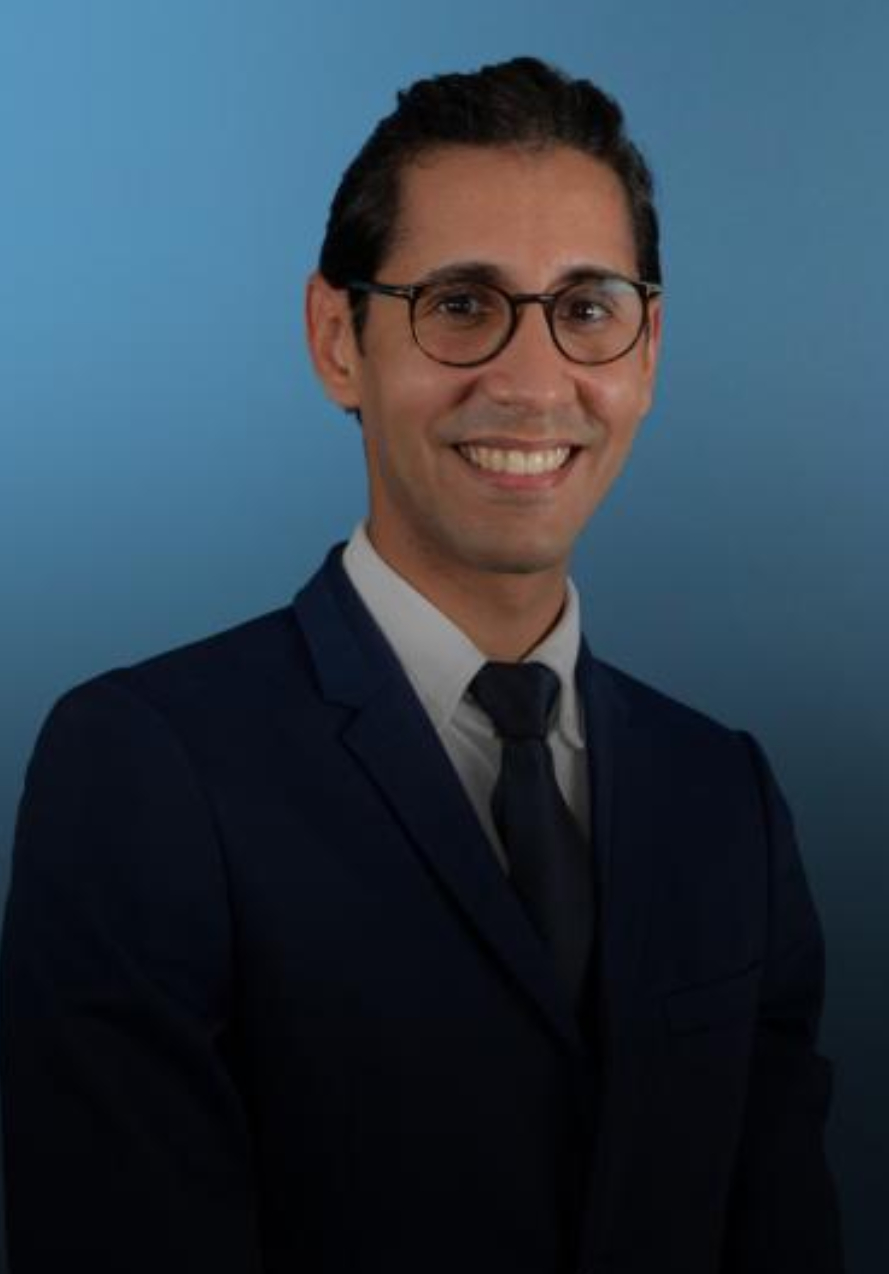
Ahmed Ouhnini
Economist, Policy Center for the New South
Ahmed Ouhnini is an Economist at the Policy Center for the New South. His research area covers agricultural economics, human and social development. Previously, he has worked as a researcher at the Paris School of Economics (PSE) and has also a record of working in consulting services in Morocco. Ahmed holds an engineering Diploma in Agriculture and Rural Development from the National School of Agriculture of Meknes and a Master’s Degree in Law, Economics and Management from the Paris 1 Pantheon Sorbonne Institute of Development. ...

Mohammed Benmoussa
Affiliate Professor, Mohammed VI Polytechnic University, Rabat
Mohammed Benmoussa is a Moroccan economist and senior consultant in economic policy, taxation, and public finance, as well as a former banker and capital market practitioner. He is Professor of Corporate and Market Finance at Mohammed VI Polytechnic University. In December 2019, he was appointed by HM King Mohammed VI to the Special Commission on the New Development Model. He is also President of the Forum of Progressive Economists, President of the Damir Movement and the La Samir Front. He previously served as President of the Brokerage Firms Association and Vice-President of the Casablanca Stock Exchange. ...

RELATED CONTENT

  • Authors
    August 6, 2020
    La COVID-19 a asséné un puissant coup de massue à l’économie mondiale, en combinant une terrible pandémie à un effondrement de la production dû au confinement de la moitié de la population active mondiale. L’incertitude générée par le choc médical et économique paralyse les consommateurs et les investisseurs, et la dispersion des prévisions économiques à court terme est plus grande qu’elle ne l’a jamais été dans l’histoire moderne, environ six fois plus que lors de la grande crise f ...
  • Authors
    Karim EL Mokri
    July 27, 2020
    The current pandemic has hit all countries hard, with severe repercussions at all levels. In economic terms, and given the scale of the damage, countries have reacted quickly by drawing on their available toolboxes. However, unlike in 2008, room for maneuver this time is much more limited and many countries have no choice but to go into massive debt to cope with the effects of the pandemic. For a country like Morocco, such a situation should lead the authorities concerned to study a ...
  • July 24, 2020
    Depuis 2018, le Ghana est considéré par le Fonds monétaire international (FMI) comme le bon élève de l'Afrique. Bon élève dans le respect de la démocratie qui lui permet d'attirer de nombreux investisseurs mais, aussi, bon élève de par les résultats économiques obtenus pour réduire son inflation et relancer sa croissance économique, suite à un programme d'ajustement structurel, soutenu par le FMI, mis en place en 2015, et qui s'est achevé en 2019. Ces résultats, le Ghana les doit a ...
  • Authors
    July 20, 2020
    This article was originally published on Bruegel. The global economy is showing signs of recovery from the economic crisis caused by COVID-19, though the spread of the coronavirus is accelerating in some countries. In this circumstance, policymakers must weigh up the trade-offs involved in dealing with the pandemic while easing lock downs and sustaining economic activity. Differences in age structures, urbanisation rates and other factors will inform decision making in different co ...
  • Authors
    July 20, 2020
    There are signs of recovery in various parts of the global economy, starting in May, after the depressive dip imposed by Covid-19. Such signs emerged after the easing of restrictions on mobility established to flatten out the pandemic curves, and also reflected policies of flattening the recession curve (income transfers to part of the population, credit lines to vulnerable companies and others). Besides remaining far from giving back the GDP lost, in all countries, the r ...
  • Authors
    Amine Benbernou
    Dorothée Schmid
    July 9, 2020
    Middle Eastern geopolitics is currently undergoing structural changes: the regional order is in transition in the aftermath of the Arab Spring that undermined authoritarian governance, and triggered the competition for power against a backdrop of American withdrawal. This new race for regional domination challenges the traditional hierarchy of powers that is mainly based on military capacity and the interplay of foreign alliances. The economy, which had previously guaranteed the pol ...
  • Authors
    Alioune Sall
    Moubarack Lo
    July 2, 2020
    La transformation de la Communauté Economique des Etats de l’Afrique de l’Ouest (CEDEAO) en « confédération d’Etats » est parfois évoquée, y compris au niveau des Chefs d’Etat de la Communauté, comme une prochaine étape naturelle du processus d’approfondissement de l’intégration en Afrique de l’Ouest. La présente étude a pour objet d’en explorer la faisabilité et la pertinence, en se fondant sur l’expérience vécue dans d’autres continents. Une Confédération d’Etats peut être défini ...
  • Authors
    Datu Sadja Matthew Pajares Yngson
    June 30, 2020
    Unless trade wars end around the globe, the world is headed for the biggest recession in living memory. The crisis arising from the coronavirus will hit fragile economies in Africa, the Pacific, and the Caribbean the hardest. At such a time, the world should be dropping barriers but, instead, new barriers are being built. In the past month, U.S. President Donald Trump threatened retaliation against India unless it released supplies of hydroxychloroquine. Worse still, he got his way ...
  • June 24, 2020
    La réputation, concept majeur s’il en est, est un indicateur de l’estime accordée à une personne physique mais aussi à une entreprise ou encore à une entité étatique. Constituée d’une somme de perceptions, elle est la résultante globale de l’ensemble d’images, d’appréciations des actions et comportements de celles-ci. Ainsi, la bonne réputation d’un gouvernement est déterminée et mesurée par son aptitude à faire face aux épreuves que traverse le pays, à affronter les bouleversements ...
  • Authors
    June 22, 2020
    COVID-19 brought the global economy to a sudden stop, causing shocks to supply and demand. Starting in January 2020, country after country suffered outbreaks of the new coronavirus, with each facing epidemiological shocks that led to economic and financial shocks as a consequence. How quickly and to what extent will national economies recover after the pandemic has passed? This will depend on success in containing the coronavirus and on exit strategies, as well as on the effectivene ...