Marchés de capitaux et marchés financiers : quels leviers de développement au Maroc ?

May 11, 2026

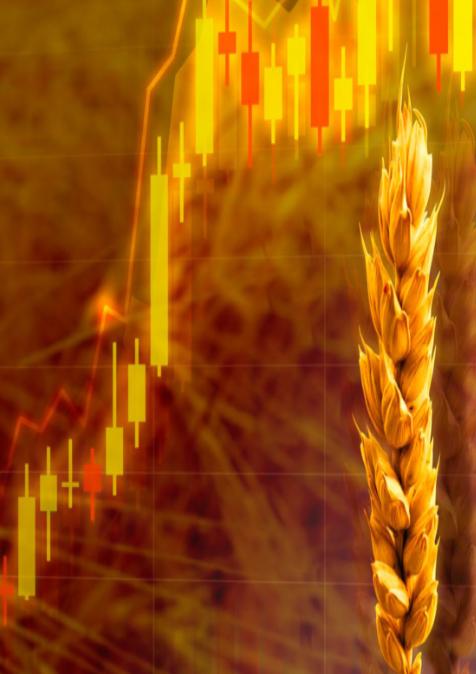
Cet épisode interroge la capacité du Maroc à atteindre ses ambitions économiques avec un système de financement encore largement dominé par les banques. Dans un contexte de besoins croissants en investissement et de transformation du tissu productif, les marchés de capitaux apparaissent comme un levier stratégique pour mobiliser l’épargne, soutenir les entreprises et diversifier les sources de financement. À travers l’analyse de Mohammed Benmoussa, l’épisode met en lumière les réformes et dynamiques nécessaires pour faire des marchés de capitaux un moteur durable de croissance et de compétitivité pour le Maroc.

Speakers

Ahmed Ouhnini
Economist, Policy Center for the New South
Ahmed Ouhnini is an Economist at the Policy Center for the New South. His research area covers agricultural economics, human and social development. Previously, he has worked as a researcher at the Paris School of Economics (PSE) and has also a record of working in consulting services in Morocco. Ahmed holds an engineering Diploma in Agriculture and Rural Development from the National School of Agriculture of Meknes and a Master’s Degree in Law, Economics and Management from the Paris 1 Pantheon Sorbonne Institute of Development. ...

Mohammed Benmoussa
Affiliate Professor, Mohammed VI Polytechnic University, Rabat
Mohammed Benmoussa is a Moroccan economist and senior consultant in economic policy, taxation, and public finance, as well as a former banker and capital market practitioner. He is Professor of Corporate and Market Finance at Mohammed VI Polytechnic University. In December 2019, he was appointed by HM King Mohammed VI to the Special Commission on the New Development Model. He is also President of the Forum of Progressive Economists, President of the Damir Movement and the La Samir Front. He previously served as President of the Brokerage Firms Association and Vice-President of the Casablanca Stock Exchange. ...
RELATED CONTENT

  • May 24, 2021
    Commodity prices have recovered their 2020 losses and, in most cases, are now above pre-pandemic levels (Figure 1). The pace of Chinese growth since 2020 and the economic recovery that has accompanied vaccine rollouts in advanced companies are seen as driving demand upward, while supply restrictions for some items—oil, copper, and some food products—have favored their upward adjustment. Some analysts have started to speak of the possibility of a new commodity price ‘super-cycle’ af ...
  • April 20, 2021
    Otaviano Canuto, Policy Center for the New South After peaking in 2007 at around 6% of world GDP, global current-account imbalances declined to 3% of world GDP in the last few years. But they have never left entirely the spotlight, albeit acquiring a different configuration from that wh...
  • April 5, 2021
    Private balance sheets have risen relative to GDP in advanced economies in the last decades, in tandem with a trend of decline in long-term real interest rates. Asset-driven macroeconomic cycles, along with a structural trend of rising influence of finance on income growth and distribut...
  • March 29, 2021
    Cross-border technological diffusion has contributed to rising domestic productivity levels in advanced and emerging economies and facilitated a partial reshaping of the global innovation landscape. However, there are local requisites to escalate the ladder of innovation capabilities. ...
  • March 25, 2021
    The projections for United States GDP released by the Federal Reserve on March 17, pointed to a growth rate of 6.5% in 2021, well above December’s 4.2% forecast. Congressional approval of the Biden administration’s $1.9 trillion fiscal package and the vaccination march against COVID-19 explain the rise in the estimate. However, it should not be forgotten that growth in 2021 will follow a fall in GDP of 3.5% last year. While the expected unemployment rate at the end of 2021 is now 4 ...
  • March 15, 2021
    China’s growth trajectory in the second decade of the century has been one of a rebalancing toward a new growth pattern, one in which domestic consumption is to rise relative to investments and exports, while a drive toward consolidating local insertion up the ladder of value added in g...
  • March 9, 2021
    In the 1990s and 2000s, the world manufacturing production partially moved from advanced countries to some developing countries, especially in Asia. This was the result of the combination of an increase of the labor supply in the global market economy, trade opening, and technological i...
  • Authors
    February 26, 2021
    Economic development analysis must inevitably rely on a double methodological standpoint. On the one hand, it needs to search for common features, those general attributes that might be present in all national experiences of wealth accumulation, poverty reduction, and moving up the income ladder. On the other, in order to be meaningful, it must reckon with time and space. It must consider that those universal development traits will play out in specific historical and geographical c ...
  • February 22, 2021
    The monetary policy report submitted by the Board of Governors of the Federal Reserve System to the U.S. Congress on Friday Feb. 19 showed that the Fed’s members have improved economic growth expectations for 2021 and 2022, expect lower unemployment rates. Meanwhile, only two of the 18 participants projected PCE (personal consumption expenditures) inflation to (slightly) exceed the 2% that serves as the longer-run objective for the monetary policy regime. In this context, is there ...