Marchés de capitaux et marchés financiers : quels leviers de développement au Maroc ?

May 11, 2026

Cet épisode interroge la capacité du Maroc à atteindre ses ambitions économiques avec un système de financement encore largement dominé par les banques. Dans un contexte de besoins croissants en investissement et de transformation du tissu productif, les marchés de capitaux apparaissent comme un levier stratégique pour mobiliser l’épargne, soutenir les entreprises et diversifier les sources de financement. À travers l’analyse de Mohammed Benmoussa, l’épisode met en lumière les réformes et dynamiques nécessaires pour faire des marchés de capitaux un moteur durable de croissance et de compétitivité pour le Maroc.

Speakers
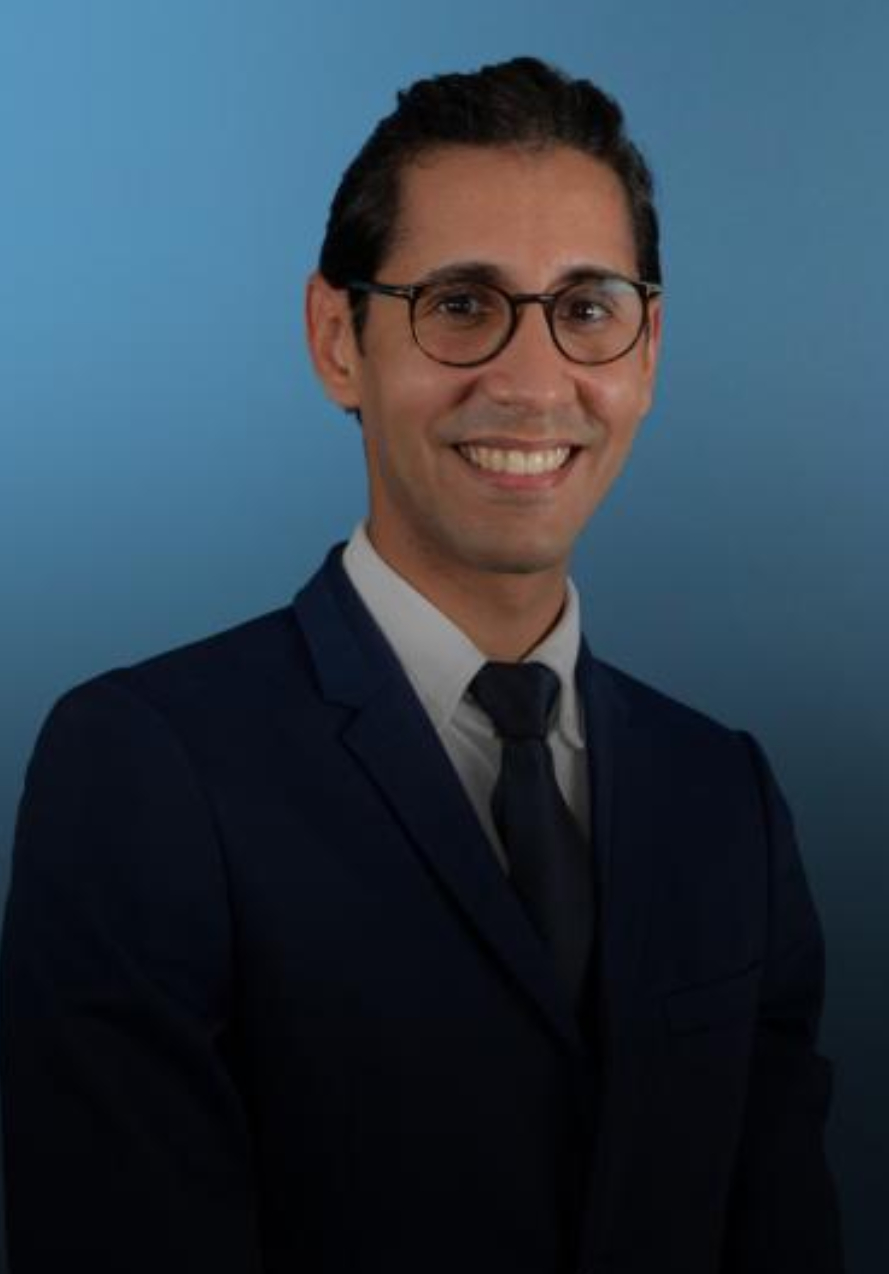
Ahmed Ouhnini
Economist, Policy Center for the New South
Ahmed Ouhnini is an Economist at the Policy Center for the New South. His research area covers agricultural economics, human and social development. Previously, he has worked as a researcher at the Paris School of Economics (PSE) and has also a record of working in consulting services in Morocco. Ahmed holds an engineering Diploma in Agriculture and Rural Development from the National School of Agriculture of Meknes and a Master’s Degree in Law, Economics and Management from the Paris 1 Pantheon Sorbonne Institute of Development. ...

Mohammed Benmoussa
Affiliate Professor, Mohammed VI Polytechnic University, Rabat
Mohammed Benmoussa is a Moroccan economist and senior consultant in economic policy, taxation, and public finance, as well as a former banker and capital market practitioner. He is Professor of Corporate and Market Finance at Mohammed VI Polytechnic University. In December 2019, he was appointed by HM King Mohammed VI to the Special Commission on the New Development Model. He is also President of the Forum of Progressive Economists, President of the Damir Movement and the La Samir Front. He previously served as President of the Brokerage Firms Association and Vice-President of the Casablanca Stock Exchange. ...
RELATED CONTENT

  • Authors
    October 23, 2020
    We have previously discussed how, between March 2020, when the financial shock caused by COVID-19 occurred, and the end of August, the stock and corporate debt markets in the United States performed extraordinarily, despite gloomy prospects on the real side of the economy. The decline in technology stock prices in September ended up taking the equivalent of a month from gains starting in April, but prices remain high. On the basis of such a ‘disconnect from reality’ in fi ...
  • Authors
    September 28, 2020
    CGTN, 25 September 2020 China’s economy keeps recovering from the coronavirus pandemic-led crisis through the third quarter of 2020, as revealed by the numbers of August activity. Its GDP grew by 3.2% in the second quarter, after falling by 6.8% in the first quarter, in both cases as compared from a year before. It is now the only major economy expected to exhibit growth this year. Successful containment of the pandemics has allowed it to be first-in-first-out relative to others. ...
  • Authors
    September 22, 2020
    U.S. stock and corporate bond markets performed extraordinarily well from the March financial shock caused by covid-19 to the end of last month. Then, three consecutive weeks of decline in the three major stock market indexes have been followed this week by a global slump attributed to fears of new lockdowns. A period of disconnect of financial markets with the underlying real economy has culminated in a revelation of the former’s high dependency to Federal Reserve policies. Discon ...
  • Authors
    September 11, 2020
    Latin American and Caribbean economies need help, but organizations like the IDB are also stretched thin. First appeared at Americas Quarterly With Latin America and the Caribbean potentially facing years of difficulties due to the pandemic and related economic crises, attention has shifted to what multilateral institutions like the International Monetary Fund (IMF) might do to help. There’s no doubt they can play a crucial role in preventing another lost decade in the region. But ...
  • Authors
    September 3, 2020
    The “middle income trap” may well characterize the experience of Brazil and most of Latin America since the 1980s. Conversely, South Korea maintained its pace of evolution, reaching a high-income status. Such divergence of economic growth can be related to their distinctive performances of domestic accumulation of technological and organizational capabilities. Their different approaches to global value chains and trade globalization reinforced such discrepancy in domestic accumulati ...
  • Authors
    August 10, 2020
    The International Monetary Fund (IMF) released, on August 4th, its ninth annual External Sector Report, where current account imbalances and asset-liability stocks of 30 systemically large economies are approached. This time the report went beyond looking the previous year and tried to anticipate what will be some of the impacts of the still on-going COVID-19 crisis. The report shows that the global economy entered the COVID-19 crisis with a configuration of external imbalance ...
  • Authors
    August 6, 2020
    La COVID-19 a asséné un puissant coup de massue à l’économie mondiale, en combinant une terrible pandémie à un effondrement de la production dû au confinement de la moitié de la population active mondiale. L’incertitude générée par le choc médical et économique paralyse les consommateurs et les investisseurs, et la dispersion des prévisions économiques à court terme est plus grande qu’elle ne l’a jamais été dans l’histoire moderne, environ six fois plus que lors de la grande crise f ...
  • Authors
    Karim EL Mokri
    July 27, 2020
    The current pandemic has hit all countries hard, with severe repercussions at all levels. In economic terms, and given the scale of the damage, countries have reacted quickly by drawing on their available toolboxes. However, unlike in 2008, room for maneuver this time is much more limited and many countries have no choice but to go into massive debt to cope with the effects of the pandemic. For a country like Morocco, such a situation should lead the authorities concerned to study a ...
  • July 24, 2020
    Depuis 2018, le Ghana est considéré par le Fonds monétaire international (FMI) comme le bon élève de l'Afrique. Bon élève dans le respect de la démocratie qui lui permet d'attirer de nombreux investisseurs mais, aussi, bon élève de par les résultats économiques obtenus pour réduire son inflation et relancer sa croissance économique, suite à un programme d'ajustement structurel, soutenu par le FMI, mis en place en 2015, et qui s'est achevé en 2019. Ces résultats, le Ghana les doit a ...
  • Authors
    July 20, 2020
    This article was originally published on Bruegel. The global economy is showing signs of recovery from the economic crisis caused by COVID-19, though the spread of the coronavirus is accelerating in some countries. In this circumstance, policymakers must weigh up the trade-offs involved in dealing with the pandemic while easing lock downs and sustaining economic activity. Differences in age structures, urbanisation rates and other factors will inform decision making in different co ...