La région Rabat–Salé–Kénitra : Dynamiques territoriales et mobilité durable

June 3, 2026

Cet épisode d’interview est réalisé en marge de la conférence « RSK Connect : Dynamiques territoriales et opportunités d’investissement dans la mobilité durable », organisée par le Policy Center for the New South en partenariat avec le Centre Régional d’Investissement (CRI) Rabat–Salé–Kénitra. Dans un contexte de transitions climatiques, énergétiques et technologiques, la mobilité durable s’impose comme un enjeu stratégique au croisement de la compétitivité industrielle, de l’innovation et du développement territorial. Cet échange avec M. Mohcine Benjelloun, Directeur du CRI RSK, revient sur les atouts de la région, ses opportunités d’investissement et les priorités à mettre en œuvre pour accompagner la transformation du secteur. Il met également en perspective les synergies à renforcer entre acteurs publics, privés et académiques pour positionner le Maroc comme hub régional de la mobilité durable.
Speakers
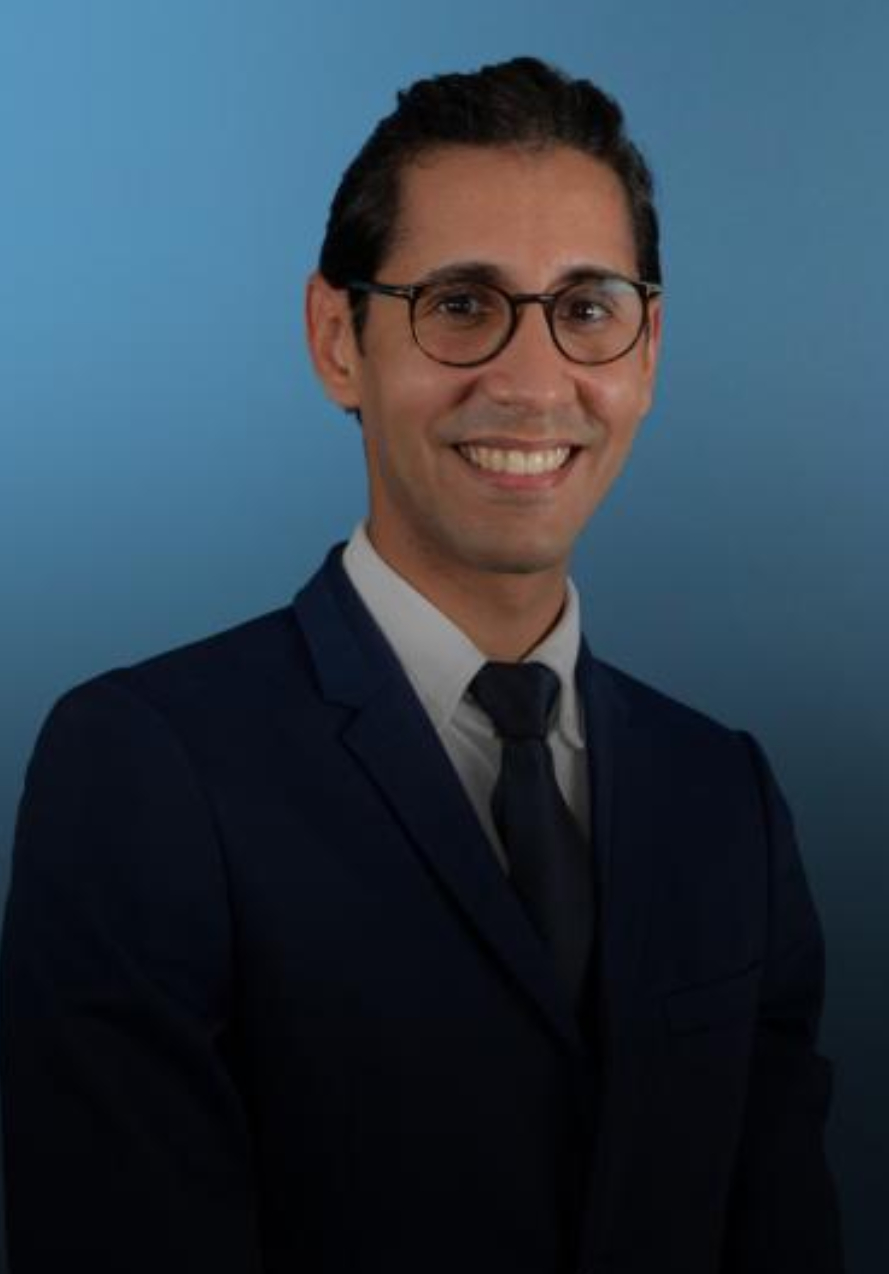
Ahmed Ouhnini
Economist, Policy Center for the New South
Ahmed Ouhnini is an Economist at the Policy Center for the New South. His research area covers agricultural economics, human and social development. Previously, he has worked as a researcher at the Paris School of Economics (PSE) and has also a record of working in consulting services in Morocco. Ahmed holds an engineering Diploma in Agriculture and Rural Development from the National School of Agriculture of Meknes and a Master’s Degree in Law, Economics and Management from the Paris 1 Pantheon Sorbonne Institute of Development. ...

RELATED CONTENT

  • September 24, 2019
    En pleine transition ordonnée de son régime de change, sous l'autorité bienveillante du Fonds monétaire international (FMI), le Royaume du Maroc est un exemple très concret des avantages et des inconvénients des deux régimes de change dominants ces dernières décennies/change fixe et change flottant /. L’objet de cette note est de rappeler, tout d'abord, les fondamentaux économiques des deux systèmes et leur environnement historique (I). Ensuite, à la lumière de ces fondamentaux, pré ...
  • Authors
    Afrique Contemporaine
    February 28, 2019
    Dans son édition n°266, la revue scientifique Afrique Contemporaine consacre son Dossier à la question de l’industrialisation en Afrique. D’après la Rédaction de la publication, le choix de la thématique s’imposait d’autant plus que « la recomposition de l’ordre mondial repose la question de la place du continent à l’échelle planétaire, en l’occurrence sur le plan économique, social et environnemental tout à la fois. » Outre la coordination du Dossier, Dr. Karim Et Aynaoui, Préside ...
  • Authors
    Yassine Msadfa
    February 25, 2019
    La transformation structurelle d’une économie demeure un point de passage nécessaire pour toute nation qui souhaite gravir les échelons du développement, cette transformation est souvent tributaire de la capacité d’une économie à s’ériger d’une société agraire de subsistance, dans son stade initial, vers une économie de productivité. Pour ce qui est du Maroc, le débat a pris de l’ampleur quant à la capacité des dynamiques actuelles à accélérer le rythme de l’activité économique au p ...
  • November 1, 2018
    This policy brief shows that the downward trend of employment in manufacturing in Morocco is due primarily to labor productivity improvement and that the increased deficit in manufacturing trade also plays an important role. While recognizing the crucial importance of a vibrant manufacturing sector in Morocco, this brief argues that Morocco cannot rely primarily on manufactures to “pull” labor out of agriculture. To provide more jobs, Moroccan policies should pay more attention to s ...
  • Authors
    September 21, 2018
    This blog is based on remarks delivered at the Think-Tank Summit in Buenos Aires on 18 September 2018 held under the G-20’s Argentine Presidency.  Africa has an enormous infrastructure gap that impedes its development. The Compact with Africa (CwA) is an international policy initiative sponsored under the German presidency of the G-20 in 2017 designed to bridge that gap. Intended to draw in the private sector in developing Africa’s infrastructure through a combination of Priva ...
  • Authors
    Yassine Msadfa
    September 21, 2017
    Les chaînes de valeur mondiales offrent de nouvelles opportunités de transformation structurelle pour les pays en développement. Aujourd’hui la vision des chaînes de valeur mondiales se limitant à l’analyse des flux commerciaux et des IDE à l’échelle globale n’est plus suffisante pour répondre aux questions clés du positionnement et de la remontée dans ces chaînes de valeur, de la dynamique de la capture de la valeur et de sa pérennisation. La réponse à ces questions appelle un écla ...
  • Authors
    August 9, 2017
    This paper reports on the recent developments in the construction of an interregional input-output matrix for Morocco (IIOM-MOR). As part of an ongoing project that aims to specify and calibrate an interregional CGE (ICGE) model for the country, a fully specified interregional input-output database was developed under conditions of limited information. Such database is needed for future calibration of the ICGE model. We conduct an analysis of the intraregional and interregional shar ...
  • Authors
    Taoufik Abbad
    July 5, 2017
    Le processus continu et renforcé de l’accumulation du capital physique, dans lequel s’est engagé le Maroc depuis le début des années 2000, a permis de préserver la stabilité des équilibres fondamentaux et d’amortir les différents chocs exogènes, aussi bien internes qu’externes. Cependant, cet effort d’accumulation n’a pas permis d’insuffler un accroissement significatif des gains de productivité et d’accélérer la transformation de la base productive. Ce Policy Brief propose de décri ...
  • Authors
    Taoufik Abbad
    July 5, 2017
    The continuous and reinforced process of accumulating physical capital, in which Morocco has embarked since the early 2000s, has helped to preserve the stability of the fundamental equilibrium and cushion the economy from various external and exogenous shocks. However, these accumulation efforts have not led to a significant increase in productivity gains or to an accelerated transformation of the productive base. This Policy Brief aims to describe the underpinnings of the capital a ...
  • Authors
    Karim EL Mokri
    October 13, 2016
    Morocco is now more than ever threatened by the trap of middle-income economies. On one hand, it is caught between increased competition from low-income countries in low productivity and labor-intensive sectors and, on the other hand, the difficulty of accelerating its pace of structural transformation towards activities with higher value added and higher technological content. International experience shows that few countries have managed to climb to the status of an advanced econo ...