Helmut Sorge in conversation with Amal El Ouassif on Migration and The Brain Drain

July 9, 2021

Helmut Sorge in conversation with Amal El Ouassif on Migration and The Brain Drain

Speakers
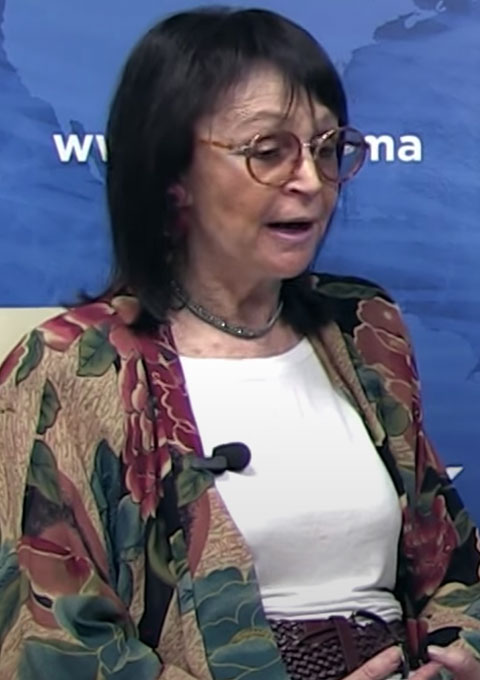
Helyette Geman
Senior Fellow
Helyette Geman is Senior Fellow at the Policy Center for the New South, Director of the Commodity Finance Center at Birkbeck, University of London, and a Research Professor at the Johns Hopkins University, who focuses on Probability, Commodities and Finance. She was Chairman of the Finance Department at ESSEC Business School from 1988 to 1995, and the Director of Dauphine Master 203 at the University of Paris Dauphine from 1995 to 2005. Helyette Geman is a Graduate from Ecole Normale Supérieure in Mathematics and holds a PhD in Probability and a PhD in Finance. She worked as a scientific expert for EDF Trading, Louis Dreyfus, BMP Billiton, Bunge Invivo and financial institutions. Her book “Commodities and Commodity Derivatives” published in 2005 by Wiley Finance has become th ...
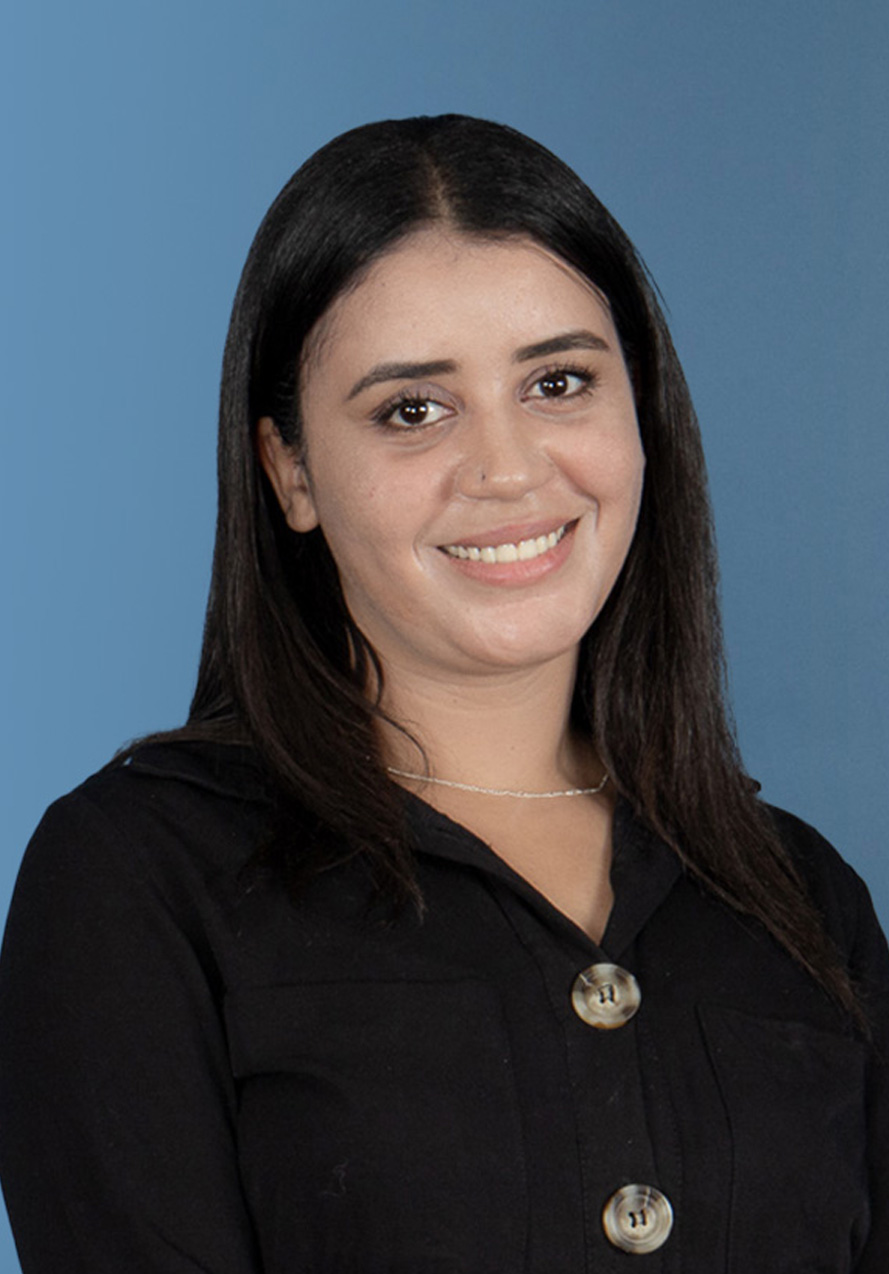
Amal El Ouassif
Senior International Relations Specialist
Amal El Ouassif is a Senior International Relations Specialist at the Policy Center for the New South (PCNS).She is also a PhD candidate in Forced Displacement Induced by Climate Change at University Mohammed VI Polytechnic (UM6P) and CNAM-Paris and a member of the IDRC-FGSES Chair of UM6P on Forced Displacement Studies.At the PCNS, Amal El Ouassif conducts research on topics including migration, forced displacement, and Euro-Mediterranean cooperation.Before joining PCNS in 2018, she worked as a program coordinator at the Westminster Foundation for Democracy and served as a consultant in development policies with the office of the Deutsche Gesellschaft für Internationale Zusammenarbeit (GIZ) in Morocco.She is also a former bluebook trainee in the Directorate General ...

  • Authors
    Sara Hasnaa Mokaddem
    May 30, 2016
    Ethiopia is located at the heart of the Horn of Africa. Torn between its position within the Greater Middle East (Culcasi 2008, 128 and Fukuyama 2008, 206) from one side, and Sub Saharan Africa on the other, this East African state is landlocked in a region marked by intense and long-standing political strife and conflicts, and is directly exposed to regional insecurity and political volatility. Against this unstable background, successive regimes and governments in Addis Ababa have ...
  • Authors
    Silvia Colombo
    Mohamed El Harrak
    Nicolò Sartori
    May 27, 2016
    Energy is at the core of the remarkable current transitions in the global economy and geopolitics, and natural gas plays a crucial role in these processes. In this context of rapidly evolving trends at the market level and developing dynamics between regional and global actors, The Future of Natural Gas aims at analysing the role of natural gas in the future energy mix by considering several key factors: the ambitious climate policies agreed by the international community, cost issu ...
  • May 24, 2016
    This podcast is performed by Nicolás de Pedro. Central Asia is back on great powers’ agenda. The region plays a primary and decisive role in both China’s Silk Road Project and Russian-led ...
  • May 17, 2016
    Emerging economies started playing a more predominant role in the international agenda. Finance and defence, which were the major determinants of the global chessboard until the end of the Cold War, though still relevant, should give room to other essential elements to secure growth and prosperity. Energy security is of quintessential importance in this new world order. ...
  • May 10, 2016
    This podcast is performed by Santiago Villar. In December 2015 a new President took office in Argentina: Mauricio Macri. These elections left behind 12 years of government of the "Victory ...
  • Authors
    Sous la direction du Professeur
    April 19, 2016
    La façade atlantique de l’Afrique réunit dans un espace géopolitique en construction les principaux atouts et défis du continent africain. La conjugaison de ces enjeux au comportement des Etats de la région semble fournir les premières composantes d’une identité stratégique « afro-atlantique », toujours en construction : vision commune des enjeux et institutionnalisation de l’espace, à travers des structures informelles comme la Conférence des États africains riverains de l’Atlantiq ...