The Health Sector in Morocco

April 13, 2026

This episode delves into Morocco’s healthcare system, tracing strides in maternal and child health, vaccination, and the quest for universal coverage. Morocco’s COVID-19 response, alongside initiatives like TADAMON and telemedicine, showcases innovation and resilience. Yet, gaps remain, especially between urban and rural areas, highlighting the ongoing challenge of ensuring equitable and sustainable healthcare for all.

Speakers
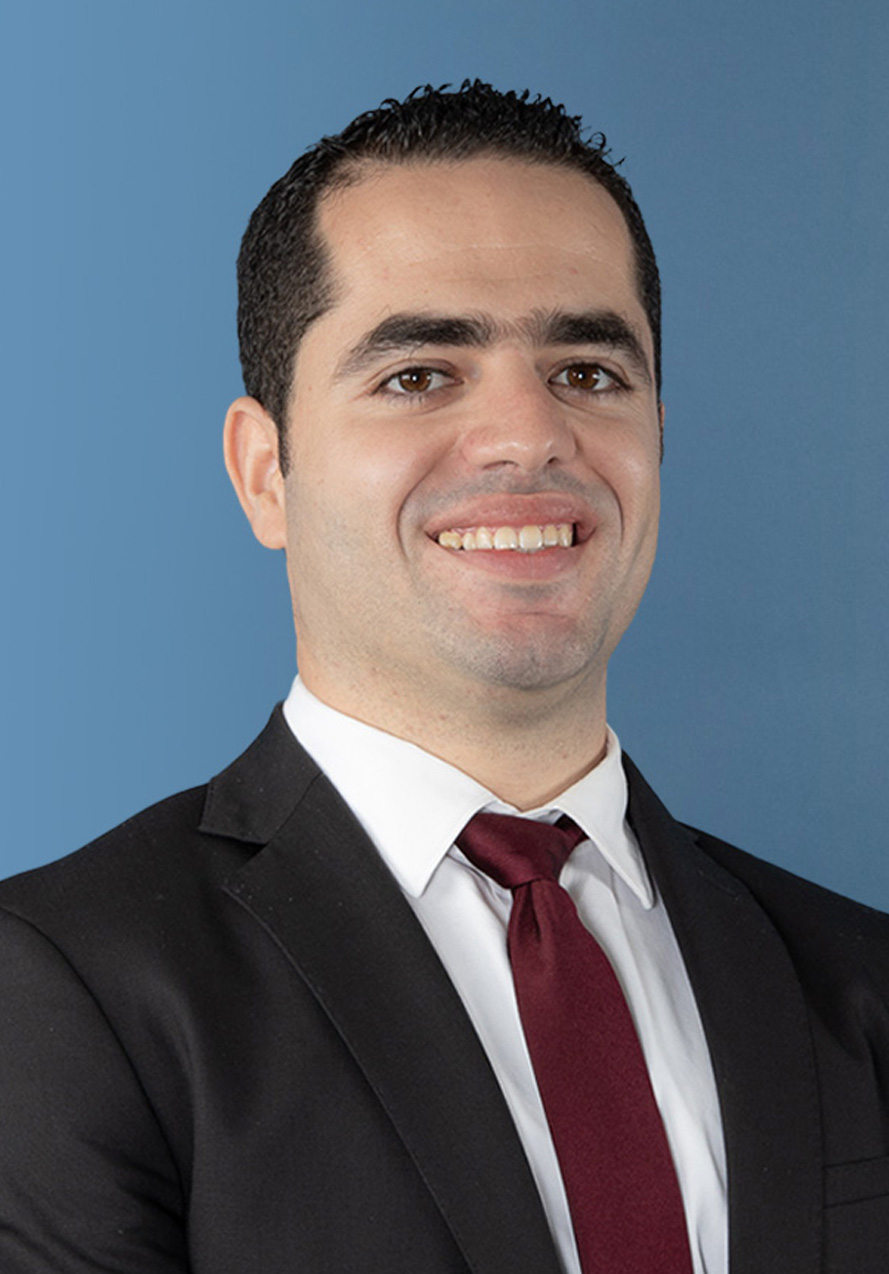
Hamza Saoudi
Senior Economist
Hamza Saoudi is a Senior Economist at the Policy Center for the New South (PCNS).At the PCNS, Hamza Saoudi conducts research on labor market dynamics, social protection systems, and inclusive growth, with a particular focus on Morocco and Africa. He is also interested in macroeconomic stabilization policies, international trade, and long-term economic development.He has contributed to PCNS projects and publications addressing informality, social protection, and inequality in developing economies.He also served as the project coordinator of the Oxford Handbook of the Moroccan Economy, published by Oxford University Press in 2026.Before joining the PCNS in 2017, Hamza Saoudi contributed to the development of quantitative models for bank credit risk management.Hamza Saoudi holds ...

Meriem Oudmane
Professor (HDR), National School of Business and Management, Casablanca
Meriem Oudmane is a Qualified Professor of Econometrics at the National School of Business and Management in Casablanca and an Affiliate Researcher at the Laboratory for Prospective Research in Economics and Management (LARPEG). She also serves as Regional Director at the Centre d’Etudes sur le Développement International et les Mouvements Economiques et Sociaux (CEDIMES), works as a consultant in public policy evaluation, and is a member of the Allied Health, Environment and Development Research Network (AHEAD). She has worked as a researcher in health economics at the Policy Center for the New South. Her research focuses on public health policies, social protection, labour markets, poverty, and inequalities. She holds a PhD in Economics from Hassan II University and an accre ...
RELATED CONTENT

  • Authors
    July 16, 2021
    The BDA Currents: Where Diplomacy Meets Business, is the Brussels Diplomatic Academy’s annual report covering the wider geopolitical and other factors influencing and affecting the world of diplomacy, international relations and global business. The journal focuses on issues of topical interest around the centers of global power, influence and importance, including the continents of Europe and Africa, the Middle East, China, India & Asia, Russia and the Commonwealth of Independe ...
  • Authors
    July 12, 2021
    Frappée de plein fouet par la crise sanitaire de la Covid-19, la République de Zambie, déjà fragilisée, fait face à de nombreux défis sur les plans politique, économique, social et climatique. Outre sa position géographique de pays enclavé, le croissant de l’Afrique australe se positionne comme l’une des premières victimes du réchauffement climatique sur le continent rendant vulnérable une partie de sa population souffrant d’insécurité alimentaire accrue. Par ailleurs, et à l’approc ...
  • June 15, 2021
    يخصص مركز السياسات من أجل الجنوب الجديد حلقة خاصة من برنامجه الأسبوعي "حديث الثلاثاء" لقراءة وتأمل بعض دعامات تقرير اللجنة الخاصة بالنموذج التنموي الجديد الذي يحمل تشخيصاً للأوضاع الاقتصادية والاجتماعية والسياسية بالمغرب، ويقدّم رؤية عن التوجهات، التي ينبغي أن تسير عليها البلاد في أفق 2...
  • May 20, 2021
    The Policy Brief ‘Pandemic, Preparedness, Morocco, and Africa’ by Uri Dadush provoked a personal reaction: Morocco may never be crowned football’s world champions, alas, but which nation, besides China, New Zealand, Israel, Japan, Denmark, Vietnam, organized its anti-COVID-19 offensive more digitally and in a more modern way than the Kingdom? Morocco’s bureaucracy is at times suffocating and unpleasant, its public hospital system stressed and underfunded. But today I can v ...
  • Authors
    April 28, 2021
    Preparedness for the next pandemic is an essential investment. To get it right, countries must stay flexible and reinforce their international health networks, not abandon them. With its new health law, Morocco has taken a step in the right direction. ...
  • April 26, 2021
    La Tunisie a fêté récemment le 10ème anniversaire de la révolution qui a mis fin à l’ancien régime bénalien et défini les principes de la IIème République. Ayant pour principales doléances la croissance économique et la justice sociale, la révolution tunisienne était exclusivement sociale. Or, l’appropriation de la révolution par l’Assemblée nationale constituante (ANC) et le quartet du dialogue national qui ont privilégié le chantier des réformes démocratiques au détriment des réfo ...
  • Authors
    March 24, 2021
    This report is part of a partnership between the Policy Center for the New South and the Atlantic Council’s Africa Center.   New technologies, such as automation, artificial intelligence and industrial robots, are often seen as a real danger for existing jobs and also for future job-creation prospects. There is a perception that they will make work redundant and lead to massive job destruction. However, others believe that automation, like previous technological waves , ...
  • Authors
    Paola Maniga
    Yassine Moustanjidi
    February 15, 2021
    The COVID-19 pandemic has exposed new vulnerabilities in social, infrastructure, and governance systems. In the first months of the pandemic, there was a genuine concern about the capacity of the Global South to contain the spread of the virus. African cities were particularly vulnerable, with some experts1, including the head of WHO2, predicting a catastrophe for the continent. Despite the structural and chronic challenges that African cities face, including informality, poverty, a ...
  • Authors
    February 12, 2021
    This paper provides a preliminary assessment of COVID-19’s impact on Africa, focusing on the sub-Saharan Africa (SSA) countries, based on information available as of October 2020. We first identify the two key long-term issues of the SSA countries before the crisis: resource dependency and slow productivity growth. COVID-19 has hit SSA countries hard, causing human and economic destruction and wiping out economic progress from the last decade. Instead of growing at 2.9% in 2020, as ...