(FR) Fiscal policy in Morocco

June 12, 2026

Cet épisode revient sur les principaux défis de la politique budgétaire au Maroc, à partir du chapitre consacré au sujet dans le Oxford Handbook of the Moroccan Economy. Les intervenants soulignent le caractère largement structurel des déficits, la difficulté à sortir d’une politique budgétaire procyclique, ainsi que l’étroitesse de l’espace budgétaire face aux grandes réformes sociales et aux investissements à venir. Ils insistent enfin sur la nécessité d’élargir l’assiette fiscale, de mieux mobiliser le potentiel fiscal existant et de renforcer la gouvernance pour préserver la soutenabilité budgétaire à long terme.

Speakers

Idriss El Abbassi
Professor of economics, Mohammed V University
Idriss El Abbassi is a Professor of Economics at Mohammed V University in Rabat and coordinator of the Master’s programme in economics. He holds a PhD from Florida State University, and his research focuses on open-economy macroeconomics, growth, and structural transformation. He teaches at both the Master’s and PhD levels and is a founding member of the Laboratory of Applied Economics. A former director of the EMPRETEC/UNCTAD programme in Morocco, he has also been a visiting professor in London. He co-authored Human Capital and Economic and Social Development in Morocco and has recently published in The Economic and Labour Relations Review and Structural Change and Economic Dynamics. ...
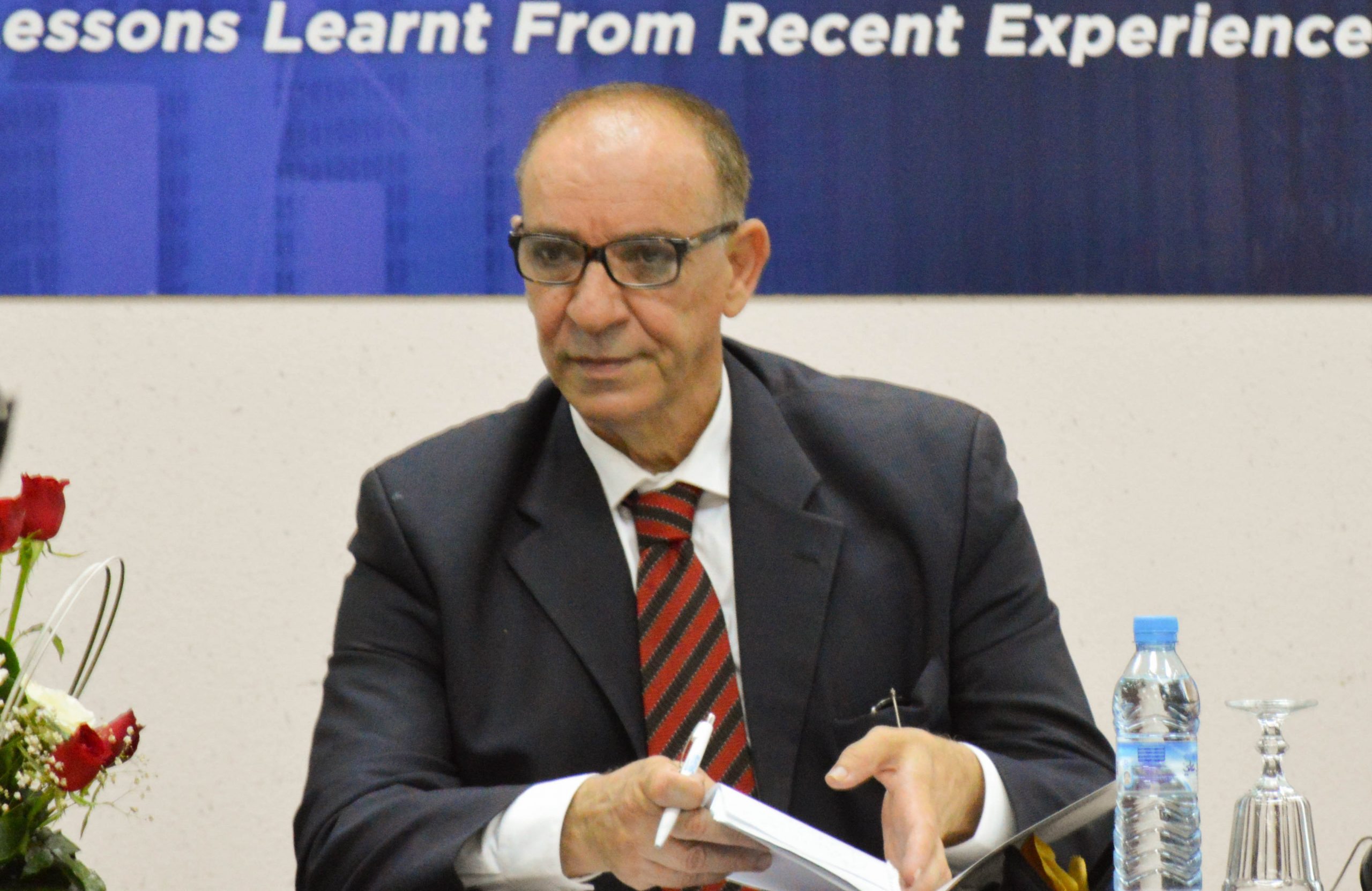
Saïd Tounsi
Professor and Researcher, Mohammed V University
Saïd Tounsi is a Professor and Researcher at Mohammed V University in Rabat. A specialistin economic policies, particularly fiscal policy, he has authored several studies onpublic debt sustainability and exchange rate regimes in developing countries. He has alsoco-edited collective volumes on macroeconomic policies in Morocco. A former trainer atthe IGF and Bank Al-Maghrib, he combines academic expertise with institutional experiencein analysing national and international economic dynamics. ...

RELATED CONTENT

  • Authors
    December 3, 2025
     Global GDP growth has proven resilient in 2025, despite the shocks caused by the trade policies implemented by United States President Donald Trump in the first year after his return to office. The gloomy projections offered by multilateral and private institutions in the first quarter of 2025 have given way to revised levels mostly in the 2.5% to 3% range for the year. ...
  • November 25, 2025
    This Policy Paper analyses the Fourth Industrial Revolution (4IR) through the critical lens of technological colonialism. It argues that the fusion of physical, digital, and biological technologies is not merely a technical phenomenon but a civilizational shift reshaping the foundations of global power. The article traces a historical continuum from previous industrial revolutions, demonstrating how patterns of inequality and extraction persist, now transposed into the digital realm ...
  • Authors
    November 21, 2025
    This report addresses the business environment in Brazil as one of the determinants responsible for the weak evolution of productivity in recent decades. After addressing this productivity performance, we define what constitutes the business environment, using as a reference the three ways in which the World Bank has been addressing the subject.Next, we highlight how the business environment affects productivity in a country. Finally, we review some recent reforms in the country's b ...
  • Authors
    Lahcen Oulhaj
    November 19, 2025
    La modélisation classique de la croissance repose sur des outils – notamment la fonction de production agrégée et la comptabilité de la croissance – dont les incohérences logiques et les ambiguïtés épistémologiques sont connues depuis la Controverse de Cambridge et les travaux d’Anwar Shaikh. Pourtant, ces failles continuent d’alimenter des raisonnements fallacieux dans le débat économique et les discours institutionnels. Cet article montre que la nature tautologique de ces outils n ...
  • Authors
    Arkebe Oqubay
    November 17, 2025
    Morocco has emerged as one of Africa's success stories, achieving significant progress in economic transformation and the green transition over the past 25 years. Continuing and deepening this transformation is essential to reach the country’s goal of becoming a high-income economy in the coming decades. Significant challenges include managing the risk of the middle-income trap, addressing demographic pressures, promoting inclusive growth, ensuring environmental sustainability, and ...
  • Authors
    Jorge Arbache
    October 9, 2025
    Conventional wisdom holds that the United States has undergone massive deindustrialization in recent decades, with the country's manufacturing sector supposedly withering as it lost ground to China. This narrative has fueled debates about industrial policy, economic nationalism, and the reshoring of manufacturing production. But what if this story is only partially true? What if, instead of disappearing, American industry simply changed its address?  ...
  • August 22, 2025
    This episode explores the opportunities and challenges of achieving deeper economic integration under the African Continental Free Trade Area (AfCFTA). We discuss the potential for boosting intra-African trade, industrialization, and investment flows. The conversation highlights the nee...
  • Authors
    Edited by
    July 14, 2025
    Available soon on livremoi. The 2025 edition of the African Economic Report continues in the spirit of previous versions. It presents a broad overview of the continent’s economic evolution and offers insights into Africa’s relationship with the rest of the world. In other words, it explores how Africa navigates the effects of global fragmentation within its regional spaces while pursuing its ambition of continental integration. ...
  • Authors
    Aram Belhadj
    June 24, 2025
    Les politiques industrielles semblent marquer leur retour, aussi bien dans les grandes puissances économiques que dans les pays émergents et en voie de développement, notamment après la pandémie de la Covid-19, l’accroissement des tensions géopolitiques et commerciales et les effets du changement climatique.L’Afrique n’est pas en reste, surtout qu’une prise de conscience des enjeux liés à la position continentale dans un monde multipolaire est en train de naître. Même au niveau de l ...