(FR) Fiscal policy in Morocco

June 12, 2026

Cet épisode revient sur les principaux défis de la politique budgétaire au Maroc, à partir du chapitre consacré au sujet dans le Oxford Handbook of the Moroccan Economy. Les intervenants soulignent le caractère largement structurel des déficits, la difficulté à sortir d’une politique budgétaire procyclique, ainsi que l’étroitesse de l’espace budgétaire face aux grandes réformes sociales et aux investissements à venir. Ils insistent enfin sur la nécessité d’élargir l’assiette fiscale, de mieux mobiliser le potentiel fiscal existant et de renforcer la gouvernance pour préserver la soutenabilité budgétaire à long terme.

Speakers

Idriss El Abbassi
Professor of economics, Mohammed V University
Idriss El Abbassi is a Professor of Economics at Mohammed V University in Rabat and coordinator of the Master’s programme in economics. He holds a PhD from Florida State University, and his research focuses on open-economy macroeconomics, growth, and structural transformation. He teaches at both the Master’s and PhD levels and is a founding member of the Laboratory of Applied Economics. A former director of the EMPRETEC/UNCTAD programme in Morocco, he has also been a visiting professor in London. He co-authored Human Capital and Economic and Social Development in Morocco and has recently published in The Economic and Labour Relations Review and Structural Change and Economic Dynamics. ...
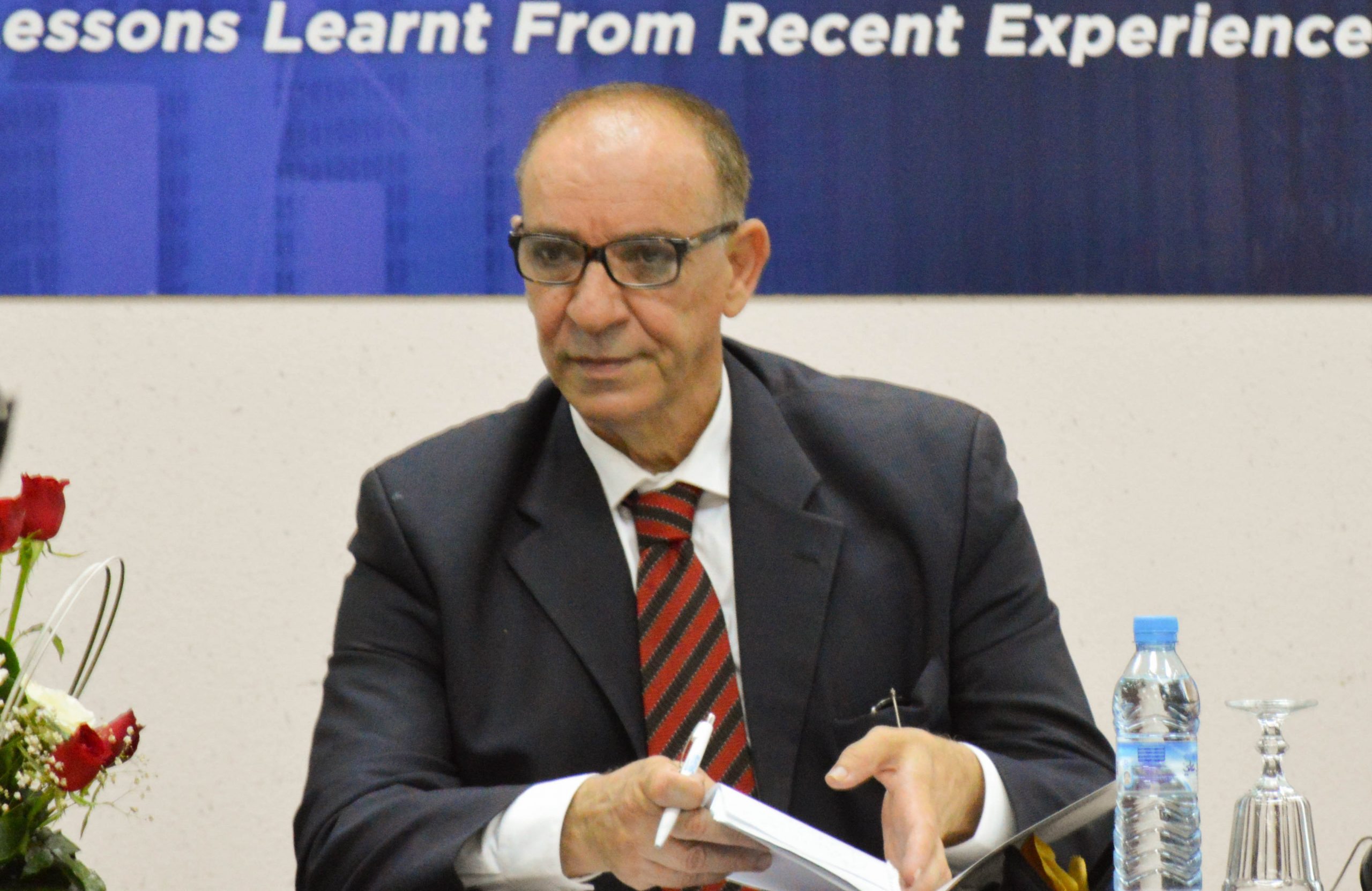
Saïd Tounsi
Professor and Researcher, Mohammed V University
Saïd Tounsi is a Professor and Researcher at Mohammed V University in Rabat. A specialistin economic policies, particularly fiscal policy, he has authored several studies onpublic debt sustainability and exchange rate regimes in developing countries. He has alsoco-edited collective volumes on macroeconomic policies in Morocco. A former trainer atthe IGF and Bank Al-Maghrib, he combines academic expertise with institutional experiencein analysing national and international economic dynamics. ...

RELATED CONTENT

  • Authors
    January 31, 2019
    Without reforms, financial markets’ optimism may crumble – and bring the house down. Judging by the reaction of financial markets, the Brazilian economy started the year at high speed. The real is among the world’s best-performing currencies so far in 2019 and the main stock market index Ibovespa hit a string of record highs leading into last week, when it broke the 97,000-point mark. Future interest rates have fallen sharply.  Foreign investors are buying in as well. The pre ...
  • Authors
    February 20, 2018
    The current market turmoil that began on Wall Street worries policy makers in emerging markets, who fear bad consequences on the economic expansion. Since the global economy’s fundamentals remain strong, this fear seem unjustified. However, there are some other risks originating in the United States, namely protectionism and fiscal deficits, which may significantly darken the economic outlook in 2019 and beyond. ...
  • Authors
    Taoufik Abbad
    July 5, 2017
    Le processus continu et renforcé de l’accumulation du capital physique, dans lequel s’est engagé le Maroc depuis le début des années 2000, a permis de préserver la stabilité des équilibres fondamentaux et d’amortir les différents chocs exogènes, aussi bien internes qu’externes. Cependant, cet effort d’accumulation n’a pas permis d’insuffler un accroissement significatif des gains de productivité et d’accélérer la transformation de la base productive. Ce Policy Brief propose de décri ...
  • Authors
    Taoufik Abbad
    July 5, 2017
    The continuous and reinforced process of accumulating physical capital, in which Morocco has embarked since the early 2000s, has helped to preserve the stability of the fundamental equilibrium and cushion the economy from various external and exogenous shocks. However, these accumulation efforts have not led to a significant increase in productivity gains or to an accelerated transformation of the productive base. This Policy Brief aims to describe the underpinnings of the capital a ...
  • June 21, 2017
    Ce podcast est présenté par Moubarack Lo. Il y analyse l’apport de l’adhésion marocaine à la CEDEAO suite à l’accord de principe donné par ses membres au 51e sommet de Monrovia le 4 juin ...
  • Authors
    October 4, 2016
    Brazil has been suffering from anemic productivity growth. This is a major challenge because in the long run, sustained productivity increases are necessary to underpin inclusive economic growth. Without them, increases in real labor earnings tend to conflict with global competitiveness; collecting taxes in order to fund government expenditures on infrastructure and social policies becomes a heavy burden; returns to private investment becomes harder to achieve; and ultimately c ...
  • Authors
    July 21, 2016
    The pace of global growth has tapered off since the crisis and the ensuing rebound. The concept of ‘secular stagnation’ was first used in 1938 by Alvin Hanson in reference to the American economy during the Great Depression. It refers to a situation where growth is slow over a protracted period, underemployment prevails and inflation is low. In such situations, the propensity to save tends to increase as a result of uncertainty and pessimism, and liquidity – which depends on interba ...