#COVID-19 - Vers une nouvelle régulation de la mondialisation - Interview de Rachid Houdaigui

April 17, 2020

- Que pourraient être les effets du COVID-19 sur l’économie politique internationale ? - Comment se présente le débat international sur cette question ? - Que font les Etats pour se préparer à l’après COVID-19 ?

Speakers
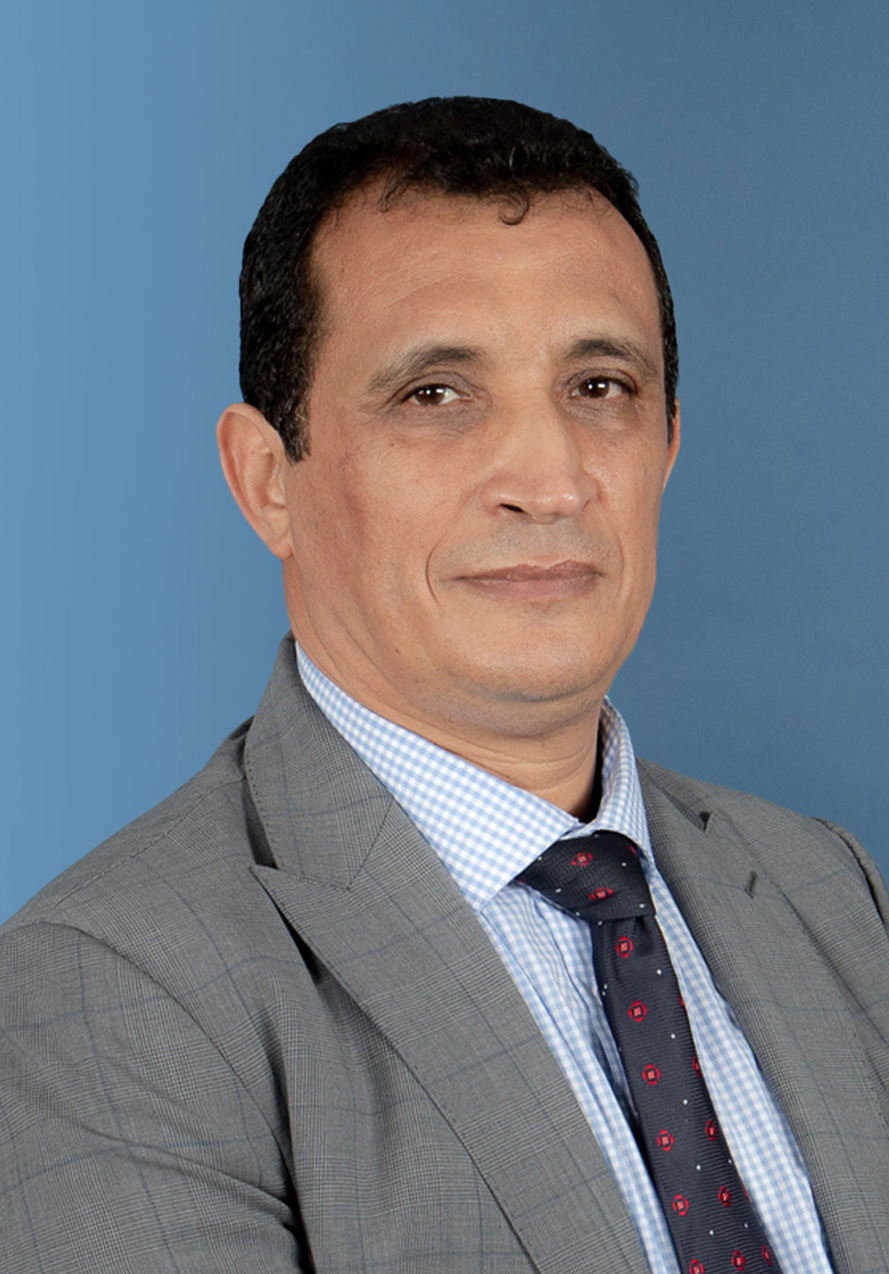
Rachid El Houdaigui
Senior Fellow
Rachid El Houdaïgui is a Senior Fellow at the Policy Center for the New South and an Affiliate Professor at Mohammed VI Polytechnic University. He also serves as a professor of International Relations at Abdelmalek Essaadi University's Law Faculty in Tangier. His expertise encompasses international relations, geopolitics, defense and security, focusing on the Mediterranean region, North Africa, and the Arab world. He also serves as a professor at the Royal College of Advanced Military Studies in Kenitra and is a visiting professor at Cergy-Pontoise University (Paris), Cadiz University (Spain), and La Sagesse University (Beirut, Lebanon).   He is the founder of the Moroccan-Spanish review "Peace and International Security" and oversees the Observatory of Mediterranean St ...

RELATED CONTENT

  • Authors
    July 6, 2026
    We take the 2026 G7 Summit in Évian-les-Bains as a case study for understanding how a leading existing multilateral organisation adapts to a more fragmented, technologically inflected, and multipolar world. We argue that the significance of Évian lies less in the summit agreements themselves than in what the summit reveals: a qualitative shift in governance away from exclusive summit diplomacy and towards more selective coalition-building, broader engagement with non-state actors, a ...
  • July 3, 2026
    This Policy Paper has also been published in French and Spanish by Le Grand Continent Morocco offers a compelling example of how a middle-income economy can navigate a more fragmented global environment, characterized by weak growth and slower convergence. Since 2022, economic activity has remained relatively strong, with growth exceeding that of many comparable economies. Non-agricultural growth has averaged 4.4% since 2022, around 1.3 percentage points above its historical av ...
  • July 3, 2026
    Este Policy Paper también ha sido publicado en inglés y francés por Le Grand Continent La economía marroquí constituye un caso ilustrativo entre las economías de renta media, en un contexto marcado por una creciente fragmentación del entorno internacional, un crecimiento mundial anémico y una desaceleración de la convergencia. Desde 2022, su trayectoria se caracteriza por una relativa solidez, con un crecimiento superior a la media de las economías de la misma categoría. Superi ...
  • July 3, 2026
    This episode explores Russia’s growing influence in Africa through media, information warfare, and anti-Western narratives. It examines how Moscow uses historical ties, social media, local influencers, and security partnerships to shape perceptions, while questioning the real scope and ...
  • July 3, 2026
    Ce Policy Paper a également été publiée en anglais et en espagnol par Le Grand Continent Le Maroc offre un exemple éclairant parmi les pays à revenu intermédiaire, dans un contexte marqué par une fragmentation croissante de l’environnement international, une croissance mondiale atone et un ralentissement de la convergence. Depuis 2022, sa trajectoire se distingue par une certaine robustesse, avec un rythme d’expansion supérieur à celui des autres économies de même catégorie. Dé ...
  • Authors
    Sous la direction de
    June 23, 2026
    L’Afrique atlantique émerge aujourd’hui comme un espace de réflexion stratégique majeur. Longtemps envisagée sous l’angle de sa fragmentation ou de sa marginalité relative dans les grands récits géopolitiques, cette façade maritime tend désormais à être appréhendée comme un ensemble en devenir, structuré par des dynamiques géopolitiques, économiques et sécuritaires de plus en plus intenses. C’est dans cette perspective qu’a été initié le Africa Maritime Symposium (AMS), dont la ...
  • Authors
    Diogo Ramos Coelho
    Bruno Saraiva
    June 22, 2026
    Global imbalances are back—and this time the risks look different. The 2008 financial crisis showed how persistent current-account deficits and surpluses between major economies can fuel financial instability and trigger sudden, severe reversals of capital flows. After almost two decades, many thought that episode had been resolved. It had not. New imbalances have built up, with a familiar cast: China, Germany, Japan, and oil exporters running large surpluses, and the United States ...
  • June 22, 2026
    History devotes considerable attention to the rise and fall of great powers. Scholars have spent centuries analyzing why empires collapse, why nations decline, and why dominant states eventually lose their position. By comparison, relatively little attention has been devoted to a different question: what happens when a country succeeds beyond its own expectations? ...
  • Authors
    June 19, 2026
    At the end of May 2026, Israeli airstrikes targeted the surroundings of Beaufort Castle (Qalaat al-Chaqif), near Nabatiyeh, before the Israeli army announced that it had captured the site. This development raises a fundamental question: why does a medieval fortified hilltop retain military value in the age of satellites, drones, and cruise missiles?This Policy Brief argues that Beaufort's significance is geographical before it is ideological or technological. Overlooking the Litani ...
  • Authors
    June 19, 2026
    Fin mai 2026, des frappes israéliennes ont visé les abords du château de Beaufort (Qalaat al-Chaqif), près de Nabatiyeh, avant que l'armée israélienne n'en annonce la prise. Ce fait soulève une question centrale : pourquoi une hauteur fortifiée au Moyen Âge conserve-t-elle une valeur militaire à l'ère des satellites, des drones et des missiles de croisière ?Le présent Policy Brief tente de démontrer que la valeur de Beaufort est géographique avant d'être idéologique ou technologique ...