APSACO Talks 2020 - Atelier 1 : Indice de sécurité humaine en Afrique

September 25, 2020

Cet atelier s'inscrit dans le cadre de la contribution de l'UNECA au thème « Faire taire les armes : créer des conditions propices au développement de l'Afrique ». L'objectif général de l'atelier est de donner un aperçu des principes qui incarnent l'approche de la sécurité humaine et de fournir des précisions sur l'utilisation de la sécurité humaine comme outil pour élaborer des politiques et des programmes efficaces par les gouvernements et les entités non gouvernementales, ainsi que par les institutions intergouvernementales régionales et sous-régionales en vue de la réalisation de l'Agenda 2063 et des ODD. Les objectifs spécifiques de l'atelier sont les suivants : • Explorer les concepts, pratiques et méthodologies de la sécurité humaine; • Déterminer la pertinence et l'importance de développer une perspective africaine sur la sécurité humaine ; • Explorer le lien entre la sécurité économique, la paix et la sécurité humaine; • Tirer parti d'une approche de sécurité humaine UA - CEA alignée sur l'Agenda 2063 de l'UA et l'Agenda 2030 de l'ONU ; • Développer une série de recommandations qui constitueront la voie à suivre dans les efforts de développement d'une méthodologie. ATELIER 1 : Indice de sécurité humaine en Afrique Intervenants: Jalal Abdel-latif, Senior Fellow, Policy Center for the New South (PCNS) Le cadrage de la sécurité humaine en Afrique: Sara Hasnaa Mokaddem, spécialiste des relations internationales, Policy Center for the New South (PCNS) Les défis de construction de l’indice de la sécurité humaine en Afrique: Saad Badaoui, Data scientist, Policy Center for the New South Les approches de conception de l’indice de la sécurité humaine en Afrique: Eleanor Keeble, Fellow, Overseas Development Institute (ODI)

Speakers
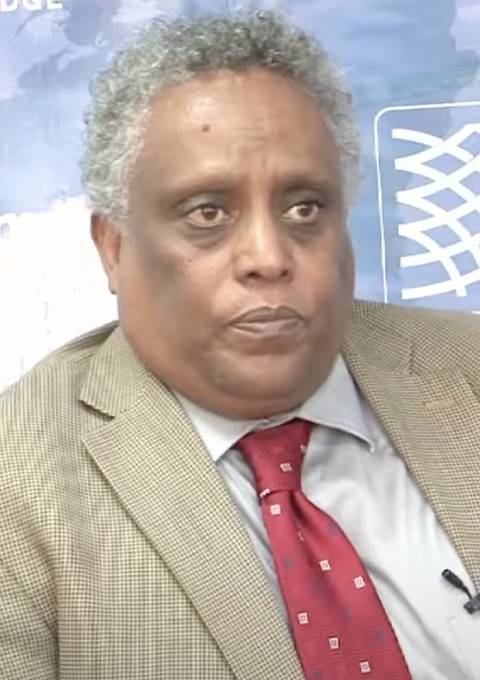
Jalal Abdel-Latif
Ethiopia
Senior Fellow
Jalal Abdel-Latif is Senior Fellow at Policy Center for the New South and Senior Social Policy Advisor, Gender and Poverty, Social Policy Division, UNECA. Jalal has over 25 years of professional experience in the areas of corporate social responsibility, civic engagement, grant making, project design and enhancing the capacities of non-profit organizations. He began his career as researcher and capacity analyst at UCLA African studies center, before working as Grants manager for USA for Africa (the We Are the World project) in California. He was also a co-founder and CEO of Inter-Africa Group, a regional think thank.  He was previously appointed by the late Prime Minister of Ethiopia to serve on the Ethiopian Telecommunications Board of Directors to assist in its moderniz ...

RELATED CONTENT

  • September 25, 2025
    This episode examines the African Peace and Security Architecture  amid evolving threats, questioning its effectiveness against modern crises such as terrorism, environmental stress, disinformation, and cyber risks. It highlights institutional and political gaps, exploring the chal...
  • Authors
    Niccola Milnes
    September 19, 2025
    The convergence of armed group drone warfare and cartel expansion in the Sahel is a global problem with direct consequences for the United States. Far from being a peripheral conflict, instability in the Sahel directly affects American safety, security, and prosperity. For U.S. safety, Jama’at Nusrat al-Islam wal-Muslimin (JNIM)’s rapid shift from crude drone experiments to battlefield strikes—combined with cartel drone attacks and Ukraine-trained operatives—means tactics tested abr ...
  • September 17, 2025
    Cet épisode s’interroge sur l’avenir des blocs régionaux africains, pris entre l’idéal d’intégration et une réalité marquée par la fragmentation. De la fragilisation de la CEDEAO à l’émergence de l’Alliance des États du Sahel, en passant par l’influence croissante d’acteurs extérieurs, ...
  • Authors
    September 15, 2025
    The October 2025 general elections in Tanzania unfold within a political culture grounded in consensus and institutional continuity. President Samia Suluhu Hassan’s leadership has reopened political space by restoring elite dialogue, easing restrictions on rallies, and facilitating the return of exiled figures. Yet the exclusion of CHADEMA—the principal opposition party—highlights the enduring limits of pluralism. This paper analyzes the Tanzanian electoral process less as a convent ...
  • Authors
    Fadoua Ammari
    September 12, 2025
    The Atlantic Initiative, announced by King Mohammed VI in November 2023 to provide landlocked Sahelian countries with access to the Atlantic Ocean via Moroccan territory, promises to profoundly reshape the bilateral relationship between Rabat and Nouakchott. This research paper examines how this unprecedented project creates new strategic opportunities while raising shared challenges for Morocco and Mauritania. Diplomatically, the rapprochement around the Atlantic Initiative unfolds ...
  • Authors
    Fadoua Ammari
    August 28, 2025
    L’Initiative Atlantique, annoncée par le Roi Mohammed VI en novembre 2023, visant à offrir aux pays sahéliens enclavés un accès à l’océan Atlantique via le territoire marocain, promet de redessiner en profondeur la relation bilatérale entre Rabat et Nouakchott. Cet article examine comment ce projet inédit crée de nouvelles opportunités stratégiques tout en soulevant des défis partagés pour le Maroc et la Mauritanie. Sur le plan diplomatique, le rapprochement autour de l’Initiative A ...
  • August 01, 2025
    In this episode, we explore how the United Nations works beyond traditional peacekeeping contexts to support justice and security sector reform in fragile contexts. Our guest, Jérôme Mell ...
  • July 17, 2025
    In this episode, we explore Illegal, Unreported, and Unregulated (IUU) fishing in Atlantic Africa, a crisis that drains marine resources, harms coastal livelihoods, and threatens regional security. Luis Miguel Escudeiro da Costa Cabral from the Atlantic Centre joins us, sharing how his ...