APSACO 2021 - WORKSHOP : Report Presentation: ISIS Files

June 23, 2021

The events in Iraq and Syria over the last seven years constitute one of the darkest pages in recent history. The so-called Islamic State (IS) managed to control an area the size of Britain and dominated its residents with an iron fist. It subjugated, terrorized and confiscated property of religious minorities. It mercilessly killed its opponents. It created a pervasive system of enforcement of strict moral codes, meting out corporal punishment to those who did not abide by them. It used its territory to plan and incite terrorist attacks worldwide. And it even officially introduced slavery, sanctioning it with religious edicts and imposing it on thousands of women from the Yazidi minority. In order to do all this the Islamic State created an extremely sophisticated bureaucracy. Seeing itself as a state, it created ministries, administrations, a complex tax collection system, even a consumer protection agency. And this bureaucracy, like any other, left behind a huge paper trail, a myriad of documents that reveal the inner workings of one of history’s deadliest and best organized terrorist organizations. Starting in 2015, as the Iraqi government and the international community had begun to take the battle to IS, New York Times reporter Rukmini Callimachi spent several months embedded with the Iraqi military as it liberated areas of Iraq from IS. While reporting on the military efforts, Callimachi also obtained permission from the Iraqi army officials she was embedded with to retrieve some of the documents IS had left behind. She ended up collecting some 15,000 pages of documents which came to be known as “The ISIS Files”. Callimachi and The New York Times understood the importance of making this collection, which documents a dark page of recent history that has hardly been completely turned, available to the public. In 2018, The New York Times and the George Washington University announced an exclusive partnership to digitize, translate, analyze, and publish roughly 15,000 pages of internal ISIS Files. Extensive work has been done by GW to preserve and present the information contained in The ISIS Files in an accurate, accessible, secure, and impartial manner. The ISIS Files project is ongoing with documents in additional themes being made available as they are completed. ------ Moderator: Mehdi Benomar, Head of Department of Research in International Relations, Policy Center for the New South Speakers: Devorah Margolin, Adjunct Professor, George Washington University Discussants: - Dina Hussein, Counterterrorism Policy Lead for EMEA, Facebook - El Mostafa Rezrazi, Senior Fellow, Policy Center for the New South

Speakers
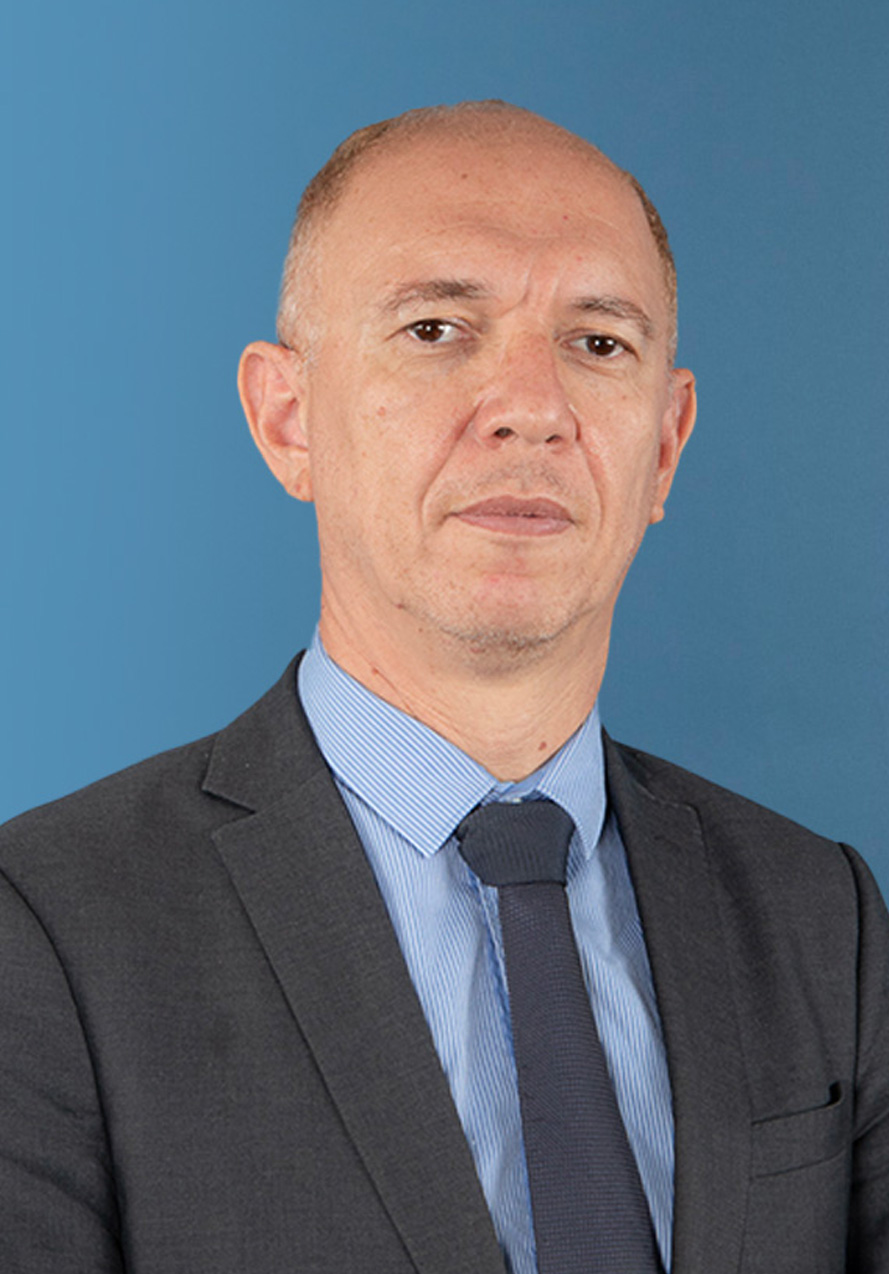
Mehdi Benomar
Head – Research in International Relations
Mehdi Benomar has cumulated 18 years of experience as analyst and occupied several positions in public organizations: in National Defense as head of division (2000-2008), in the cabinet of the ministry of Mines and Energy (2010-12) and in OCP Group (2012-2017). He also served as senior consultant in private firm Global Intelligence Partners (G.I.P.) (2008-2010) in Rabat. He specialized in strategic monitoring issues and contributed on different topics related to proliferation, energy and development in sub-Saharan Africa. Nuclear Engineer, he graduated from the Commissariat à l'énergie atomique et aux énergies alternatives and has a master in sciences. ...
El Mostafa Rezrazi
Senior Fellow
Dr El Mostafa Rezrazi is a professor of Crisis Management, and Security Studies and a Senior Fellow at the Policy Center for the New South who focuses on Terrorism, Security and East Asia studies. His area of Expertise covers Afro-Asian Affairs, Strategic & Security Studies, Terrorism, Extremism and Deradicalization, mainly from the view of Criminal; Legal and Forensic Psychology.  He got his Ph.D. in Regional & International Affairs from the University of Tokyo in 1998, and later a Doctorate from the University of Mohammed V on the Psychological dynamisms of Suicide Bombers (2014). He is the executive director of the Moroccan Observatory on Extremism and Violence, Director of the African Center for Asian Studies, Rabat. Currently, he is Visiting Professor a ...
RELATED CONTENT

  • Authors
    October 6, 2017
    This Policy Brief highlights the depths of the Sahel crisis. Some aspects of the crisis, such as extremist violence, migration, transnational crime and precariousness, are in fact symptoms of a disease that will only get worse if the real and deep causes are not addressed. Exploring the case of the G5 Sahel as a framework for the convenience of study and analysis does not imply that the crisis is limited to the five countries that are part of the G5 Sahel. Indeed, while specificitie ...
  • Authors
    October 6, 2017
    Le message essentiel de ce Policy Brief porte sur les profondeurs dans la crise du Sahel. Certains aspects de la crise tels que la violence extrémiste, les migrations, le crime transnational ou encore la précarité ne sont que les symptômes d’une maladie qui ne fera qu’empirer si les causes réelles et profondes ne sont pas traitées. En prenant le cas du G5 Sahel, comme cadre pour des commodités de l’étude et de l’analyse, nous n’insinuons en aucun cas que la crise est limitée aux cin ...
  • Authors
    July 7, 2017
    Ce Policy Brief traite de l’articulation entre le développement et la sécurité dans le bassin méditerranéen, ainsi que de l’implication des pays des deux rives, nord et sud, dans un partenariat assurant la sécurité nécessaire à un développement socio-économique conjoint. Les pays du Sahel prennent également part à l’analyse et conditionnent le succès des stratégies sécuritaires au Maghreb et au sein de l’Union Européenne. Le papier revient sur des exemples de pays riches mais frappé ...
  • Authors
    Christopher S. Chivvis
    June 20, 2017
    The United States and Europe share a common interest in addressing the growing terrorist threats from North Africa. The emergence of ISIL as a force in the region — notably in Libya, but also in Egypt and to a lesser degree in Tunisia, Algeria, and Mali — is cause for genuine concern. The ISIL challenge is compounded by the persistence of older terrorist organizations, both local ones such as the region’s various Ansar al Sharias as well as al Qaeda in the Islamic Maghreb (AQIM), al ...
  • Authors
    March 6, 2017
    The big question for Africans on safeguarding peace and security is whether the Pan-African organization, which aspires to lead the continent towards peace and prosperity and to which the continent’s predisposed human and material resource potential, is able to ensure the fulfillment of these ambitions through its own institutions? In other words, can the African Union manage African crises with independent African means? This fundamental question calls for other more intermediate ...
  • Authors
    February 15, 2017
    During the last quarter of 2016, terrorism specialists were still busy with the issues of counter-radicalization, indoctrination, and the dangers of young recruits departing to tension hotbeds, when the question arose about the return to their countries of origin by those who have experienced war and acquired significant combat capabilities. For nearly the past decade, they have been flocking to Syria and Iraq from around the world. ...
  • Authors
    February 15, 2017
    Au dernier trimestre de l’année 2016, les spécialistes du terrorisme étaient encore occupés par la contreradicalisation, l’endoctrinement et les dangers des départs des jeunes recrues vers les foyers de tension, alors que la question du retour chez eux commençait déjà à se poser, dans leurs pays d’origine, de ceux qui ont expérimenté la guerre et acquis d’importantes capacités de combat. Ils avaient dès les débuts de la deuxième décennie afflué en Syrie et en Irak de partout dans le ...
  • Authors
    January 12, 2017
    La défaite des organisations terroristes au Moyen-Orient est attendue même s’elle prendra encore quelques temps, tellement Daech et Jabhat Fath Al Sham montrent de la résistance. La première du fait de ses équipements et de ses tactiques de guérillas, la seconde du fait que depuis qu’elle n’est plus une filiale d’Al-Qaeda a pu rallier d’autres groupes syriens. Les deux organisations résistent également parce qu’elles sont renforcées par des milliers de Combattants Terroristes Etrang ...
  • January 5, 2017
    Multiple players that destabilize the countries in the region characterize the terrorist landscape in the Sahel. Despite the fact that each terrorist group has particular areas of action and zones of influence, nevertheless two main ideological tendencies confront each other in the Sahel: on one hand, Al Qaeda in the Islamic Maghreb, and on the other, the Islamic State (IS) organization (also known as Daesh). However, some groups continue to act independently of the allegiances they ...
  • Authors
    Pascal Chaigneau
    Pierre-Marie Faivre
    Jeremy Ghez
    Jacques Gravereau
    Philippe Migaux
    Alain Oudot de Dain-ville
    October 17, 2016
    Cette publication conjointe entre HEC Center for Geopolitics et OCP Policy Center, compile douze Policy Papers qui ont été présentés, discutés et enrichis lors de la première édition des Dialogues Stratégiques, une plateforme d’analyse et de débat stratégique autour des principaux enjeux géopolitiques et sécuritaires internationaux, mais également régionaux revêtant une importance capitale pour les continents européen et africain. Ce premier volume des Dialogues Stratégiques est co ...