Publications /
Policy Paper

Back
L’AES face aux défis de la fragmentation territoriale et de l’instabilité politique
January 6, 2026

La création de l’Alliance des États du Sahel (AES) symbolise une rupture politique et géostratégique majeure, appuyée sur un discours souverainiste et anti-occidental. Deux ans après, Mali, Burkina Faso et Niger peinent à assurer leur intégrité territoriale, à stabiliser leur sécurité intérieure et à bâtir une gouvernance solide. L’intégrité territoriale est un problème commun aux trois États, car dans ces pays, la cohésion de l’État et le contrôle du territoire sont directement menacés par une combinaison de facteurs sécuritaires, politiques, ethniques et géographiques. Dans le contexte sahélien, l’intégrité territoriale ne renvoie pas seulement à la défense des frontières nationales, mais aussi — et surtout — à la capacité de l’État à exercer son autorité sur l’ensemble de son espace. Les trois pays du Sahel sont confrontés à un même phénomène : une fragmentation territoriale persistante, résultant de l’enracinement du jihadisme, de la crise politique et des défis socio-économiques.

RELATED CONTENT

  • June 30, 2022
    In this episode of Africafé, Rida Lyammouri will talk about the ongoing conflicts in the Sahel, evoking the instability in Mali and Burkina Faso and suggests ways forward for greater engagement from the international community in helping fragile states in the region. ...
  • Authors
    Laura Sanders
    May 12, 2022
    An HRW report details the massacre of at least 300 civilians in the central Malian town of Moura — the deadliest single atrocity in the country’s decade-long armed conflict. Most of the victims were from the Peuhl ethnic group. The widespread political and social exclusion of the Peuhl puts them at further risk of this type of violence and drives a cycle of grievances and fear that empowers violent extremist organizations (VEOs) and impedes peacebuilding. National governments and in ...
  • March 25, 2022
    The debate around the use of private military and security companies is deeply polarized, with some authors portraying such military contractors as ‘messiahs’, praising their efficiency i ...
  • Authors
    March 16, 2022
    Of all the regions included in this report series, Tillabéri is the region that scores best when it comes to both general community resilience, as well as traditional and religious authorities’ functioning. The region is not as exposed to shocks as Est (Burkina Faso) and Ménaka (Mali), and its ability to recover from shocks is high compared to the other regions. Trust in traditional and religious authorities is comparatively high as is their equal treatment of different subgroups in ...
  • Authors
    March 1, 2022
    Dans un contexte de gouvernance complexe, où autorités traditionnelles et modernes se côtoient même si leur pouvoir décroît, le Mali connait depuis de nombreuses années une situation sécuritaire alarmante, notamment dans le centre du pays. La montée des tensions entre communautés agricoles et pastorales est aggravée par la présence de groupes extrémistes. La population du Cercle de Niono, dans la région de Ségou, a été victime de violences inouïes pendant plusieurs mois avant que de ...
  • Authors
    Jakana Thomas
    Lauren Van Metre
    February 28, 2022
    This article was initially published on usip.org   The presence of CBAGs raises issues that force a rethink of local implementation of peacebuilding processes. The RESOLVE Network’s multiyear research on Community-Based Armed Groups (CBAGs) has established critical findings for the international community on how to engage, manage and transform violent actors in conflict-affected states. While mitigation efforts tend to target anti-state extremist org ...
  • Authors
    Pierre Englebert
    February 11, 2022
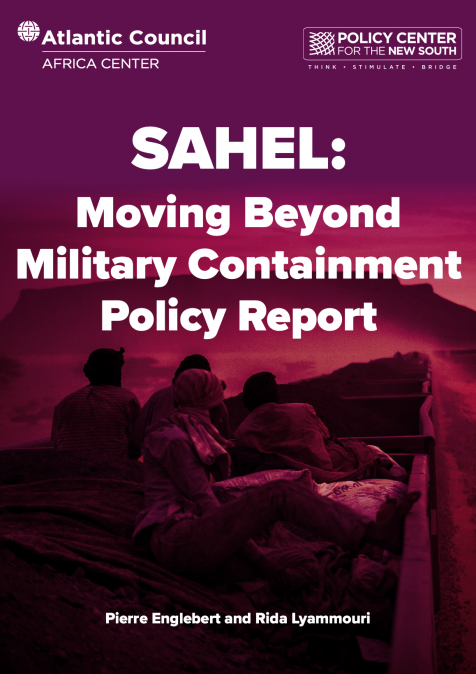
    Almost ten years after the beginning of the security crisis in the Sahel, Burkina Faso, Mali, and Niger face a graver predicament than ever before. In the throes of multiple insurgencies, they and their foreign patrons, including France, have shown the limits of military containment. While these three countries are the victims of terrorist aggression, their crises also have deep domestic roots, including long-standing patterns of state abuses of their populations, even in the more d ...