Podcasts

Back

Crisis in Venezuela: national and regional consequences

26
April 2016
Anna Ayuso Pozo

This podcast is performed by Anna Ayuso Pozo. The parliamentary elections on December 6 in Venezuela opened a new political era. The magnitude of the defeat of the governmental forces leaves no doubt about the vote against the authoritarian drift of the socialist revolution. The Congress is now in the hands of the opposition coalition that achieved 2/3 qualified majority (112 deputies). The vote was a clear punishment to the government led by Nicolas Maduro, who was appointed successor of the former President Hugo Chavez. He was unable to lead the adaptation demanded by the challenges of a changing economic cycle and contributed to polarize the society. Venezuela is now a test of the dilemmas of a continent that seeks to gain autonomy and overcome the endemic inequality gaps while trying to consolidate still imperfect democratic institutions. The Caribbean country is now a challenge for regional stability. Regional institutions, as UNASUR and CELAC, created over the last decade to give greater autonomy in resolving political crisis will be forces to act. This session will explore recent changes Venezuela's national policy and its regional implications in a context of changing political cycle.
RELATED CONTENT

  • Authors
    September 30, 2026
    You can imagine how often I've been asked to comment on where the Brazilian economy is headed after the election. With polls pointing to a runoff on October 25 and currently showing a statistical tie between Luiz Inácio Lula da Silva and Flávio Bolsonaro in vote simulations, I'm naturally asked about their economic programs and about the country's relations with the United States. ...
  • Authors
    September 30, 2026
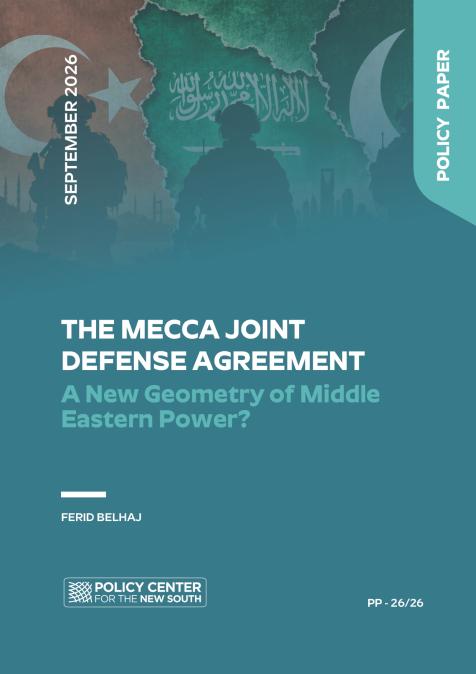
    On August 7, 2026, Saudi Arabia, Turkey, and Pakistan signed the Mecca Joint Défense Agreement, a collective-defense pact widely compared to NATO’s Article 5. This essay argues that the comparison is misleading. Mecca borrows NATO’s language of solidarity without yet possessing NATO’s institutional machinery, and the Houthi offensive against Saudi Arabia in September 2026 provided an early and revealing test of what the agreement actually means in practice. Neither Pakistan nor Turk ...
  • September 28, 2026
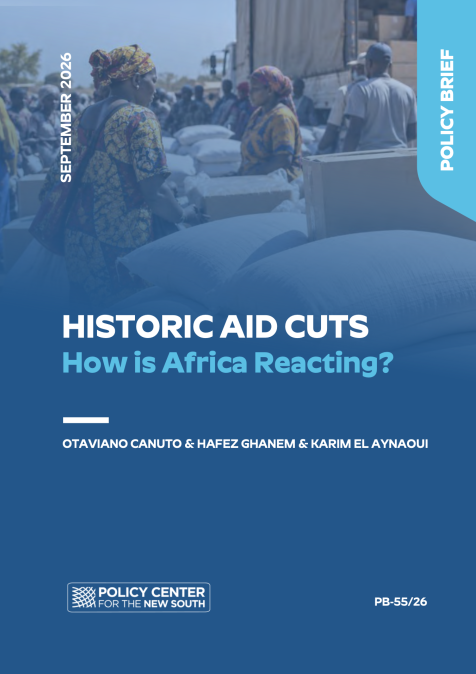
    This paper was initially published in French on the website of the Fondation Jean-Jaurès. There was a historic decline in Official Development Assistance (ODA) in 2025. Foreign aid to developing countries from members of the OECD-DAC fell by some 23%, the largest decline on record and the second consecutive annual decline. Aid to Africa fell by more than 25%. The International Monetary Fund (IMF) described this decline in ODA to Africa as “a shock like no other.” It differ ...
  • September 25, 2026
    In this episode, Senior Fellow Ian Lesser examines the United States’ longstanding ties with the Mediterranean as the country marks its 250th anniversary. He discusses how a possible shif ...
  • Authors
    Marianna Albuquerque
    September 23, 2026
    The author of this opinion, Marianna Albuquerque, is a 2022 alumna of the Atlantic Dialogues Emerging Leaders Program.As world leaders gather in New York for the 81st United Nations General Assembly, climate change returns to the center of multilateral diplomacy under markedly different circumstances. The debate is no longer confined to whether the world must decarbonize, but increasingly centers on how the transition will happen, who will bear its costs, who will capture ...
  • Authors
    September 23, 2026
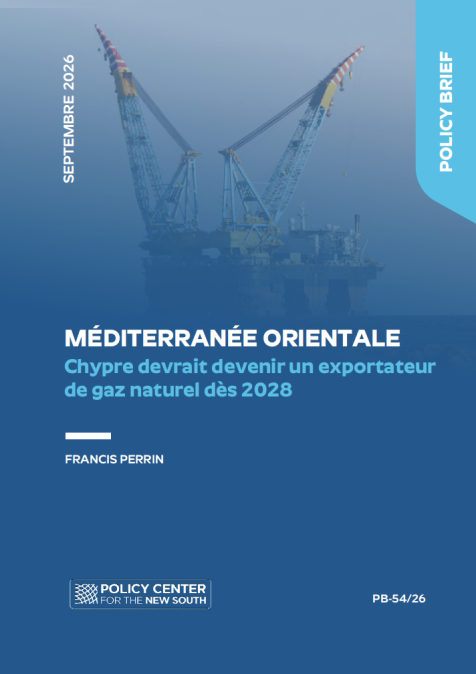
    Depuis 2010, environ, on sait que la Méditerranée orientale est une nouvelle province gazière. Des ressources gazières ont en effet été découvertes au large de quatre pays ou territoires, l’Égypte, Israël, Chypre et Gaza. Deux d’entre eux sont devenus producteurs et exportateurs de gaz naturel, l’Égypte et Israël. Au large de Gaza, le champ gazier de Gaza Marine n’a jamais été développé et il est très peu probable qu’il le soit prochainement en raison des très fortes tensions entre ...
  • Authors
    September 17, 2026
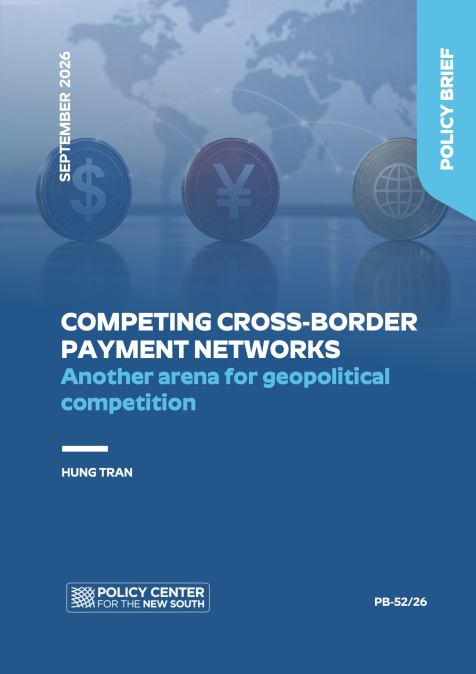
    Various competing cross-border payment networks have become vehicles for geopolitical competition. As tensions have risen, many countries want to secure access to cross-border payment systems by joining with like-minded countries to form interoperable networks, either via tokenization or Instant Payment Systems (IPSs). Three major projects are under development, serving the strategic interests of the US, China and the Rest of the World—corresponding to the three trading spheres taki ...
  • September 16, 2026
    Much of Western debate was revealingly silent on the Shanghai Cooperation Organization (SCO) summit, which took place on August 31 and September 1 in Bishkek, Kyrgyzstan. That relative silence reflects how poorly the organization’s growing significance is still understood. The meeting has not gone unreported. Any gathering of Xi Jinping, Narendra Modi, and Vladimir Putin inevitably attracts&nbs ...