Technology, Military Power, and the New Geopolitics of Security

February 27, 2026

Technological and industrial capabilities have become core instruments of state power, reshaping military strategies, economic competition, and global influence. The rapid rise of AI, cyber warfare, autonomous systems, and advanced manufacturing is redefining how states project power and deter adversaries. While technological leadership offers opportunities for innovation and strategic advantage, it also generates new risks related to escalation, dependency, and asymmetric vulnerabilities. In this evolving geopolitical landscape, the ability to integrate technology, industry, and strategy is increasingly decisive for long-term sovereignty and influence.

Speakers
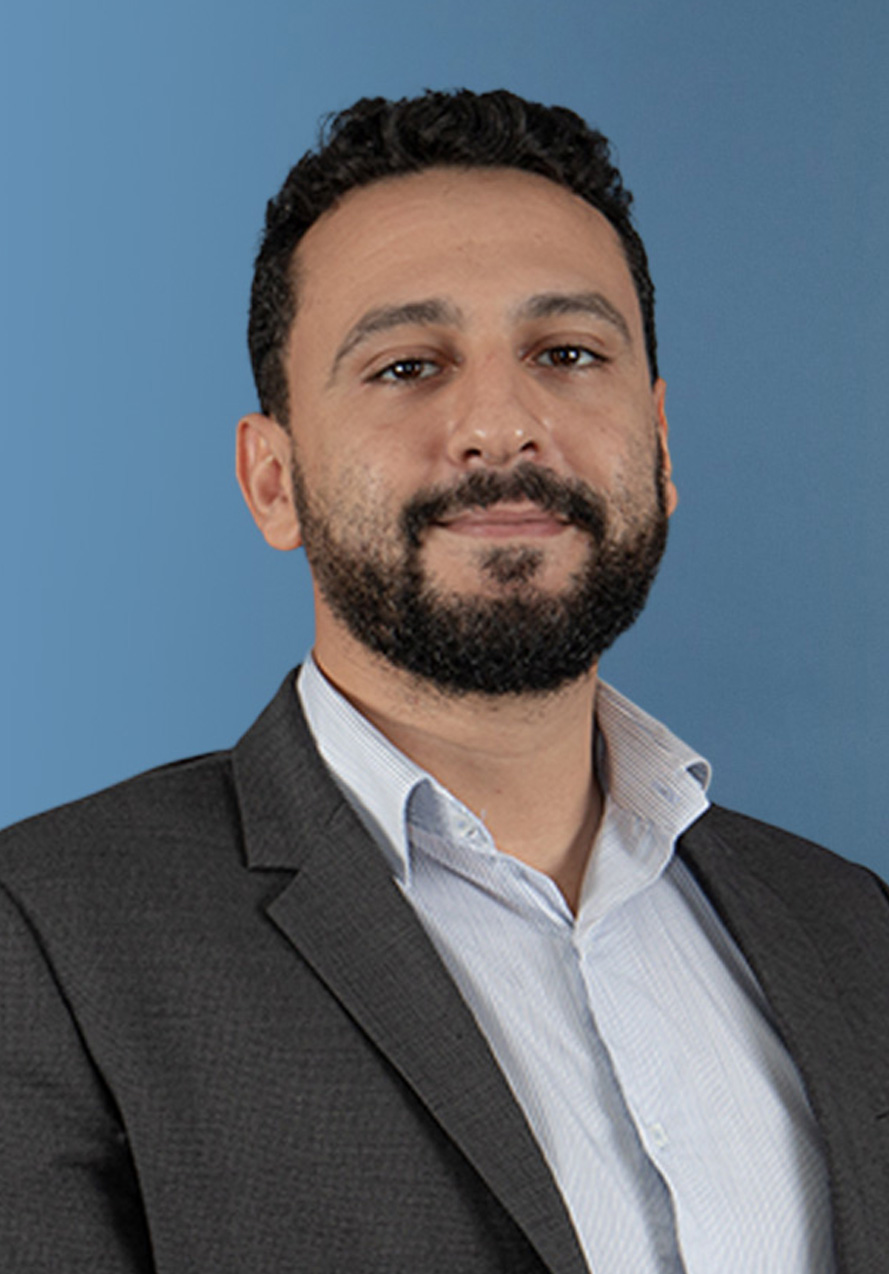
Akram Zaoui
Chargé de Mission to the Executive President
Akram Zaoui is a Senior International Relations Specialist and Chargé de Mission to the Executive President at the Policy Center for the New South (PCNS). Prior to this, he was Manager of Research Support and the Public Policy Lab at the PCNS. His main area of interest is the geopolitical economy of the Extended Middle East and North Africa (MENA) region. From 2018 to 2020, Zaoui was the coordinator of a network of 70+ civil society organizations (CSOs) across France, working with foundations, government, local communities, and the private sector. Zaoui holds a dual degree in corporate and public management from HEC Paris and Sciences Po, as well as a bachelor's degree (licence) in history from Université Paris 1 Panthéon-Sorbonne. He audited courses in Iranian and Shia Stud ...
RELATED CONTENT

  • Authors
    December 11, 2019
    The Atlantic Current’s 6th edition provides overview, fresh insights, latest data, and broader analysis on the Atlantic space’s current challenges, as well as their implications for the South. Different chapters explore emerging trends and critical issues, such as the World Trade Organization reform, Brexit and the future of EU, the expansion of militancy in the Sahel and Coastal Africa, the role of cultural diplomacy and the deepening of Sino-African relations within a shifting an ...
  • Authors
    December 7, 2019
    La présence de la France au Sahel n’est pas un sujet facile à discuter, à commenter ou à traiter. D’une part, l’intervention française, en 2013, (Opération Serval), avait permis de prolonger l’existence de l’Etat malien qui, sans l’opération française, n’aurait pas pu résister aux menées terroristes qui visaient Bamako. D’autre part, la présence française semble ne rien pouvoir changer à l’avancée du terrorisme dans la région, le phénomène semble même gagner du terrain devant l’imp ...
  • Authors
    November 26, 2019
    Beyond the verbal anarchy celebrated by President Donald Trump, or the annihilation of abandoned Kurdish allies of the United States, the never ending destruction of Yemen, the threatening warfare against Iran, a massacre by Iraqi forces to intimidate protesters against a failing government, more gas and ammunition fired in Hong Kong to oppress untamable activist fearing their loss of freedom, Britain crashing out of the European Union, abandoning common sense and democratic dignity ...
  • November 19, 2019
    In the context of the Policy Center for the New South Partnership with Jean Monnet Network on Atlantic Studies, a project coordinated by the Fundação Getúlio Vargasand funded by the European Commission, under the Horizon 2020 research program, our Senior Fellow Abdelhak Bassou and researcher in International Relations Amal El Ouassif drafted the second chapter entitled : Understanding Terrorism and Organized Crime in Light of Fragile States: Case Study on Niger, Mali and ...
  • Authors
    October 18, 2019
    The third edition of the African Peace and Security Annual Conference (APSACO) was held on June 18-19th 2019 under the theme “Africa's Place and Influence in a Changing World”. The two-day event, organized by Policy Center for the New South (PCNS), was launched with the publication of the Annual Report on Africa’s Geopolitics, Followed by five panels : - Panel 1: Africa and the world or How to balance Mutual perceptions; - Panel 2: Africa and the production of strategic and normati ...
  • Authors
    Mokhtar Ghailani
    October 18, 2019
    D’édition en édition, African Peace and Security annual Conference (APSACO), l’un des rendez-vous annuels phares du Policy Center for the New South (PCNS), confirme son envergure de plate-forme d’échange et de partage en vue de permettre à l’Afrique de s’adjuger une place dans le marché mondial des idées.  Dans son intervention lors de la 3ème édition, organisée les 18 et 19 juin 2019, avec pour thème ‘’ Africa's Place and Influence in a Changing World’ ...
  • Authors
    October 9, 2019
    This paper suggests that tribal dynamics of power structure are key in reestablishing peace and development in the region. The Sahel region’s security challenges are directly influenced by tribalism and ethnic dynamics. In recent decades mistreatment, favoritism, and corruption allowed criminality and multidimensional conflicts to flourish. This is evident in Mali, Niger, Burkina Faso, Libya, and Chad. Lightly governed and poorly secured regions in these countries became more strate ...
  • Authors
    Joseph Hammond
    September 17, 2019
    The author is an alumnus of theAtlantic Dialogues Emeging Leaders Program 2018. In the strategic waters near the straights of Hormuz in many ways such it’s the 1980s all over again. Recent mine attacks on maritime traffic and the capture of multiple vessels by Iran harks back to the so-called “Tanker War.” A nested conflict within the larger Iran-Iraq War the “Tanker War” involved American warships escorting oil tanker traffic through the Straights of Hormuz despite Iranian interd ...
  • September 9, 2019
    One of the first sovereign decisions of independent Morocco was to create the Royal Armed Forces (FAR) on 14 May 1956. Since then, the mission of the Moroccan army is consistent with the country's historical continuity shaped by strategic constants, it has however been subject to both conceptual and operational pressures since the late 1990s, as the lines between defense and security have blurred. This paper explores the central issue of adjusting the Royal Armed Forces (FAR) to a r ...
  • Authors
    July 1, 2019
    Few weeks ago, I gained the chance of reading the UN Security Council resolution 2468 of 30 April on MINURSO , and was surprised by the frequently repeated expression of “Morocco, the Frente Polisario, Algeria, and Mauritania”, instead of the previous “all parties and neighbours”. Besides, it was reported that the US representative twice referred to “Morocco, the Frente Polisario, Algeria, and Mauritania” in his short remark in the Security Council meeting1. Shortly after that, I co ...