Présentation des ouvrages phares du Policy Center for the New South

May 11, 2022

Cet atelier a servi de plateforme pour présenter les ouvrages suivants : 

- L'édition 2022 du Rapport Annuel sur la Géopolitique de l'Afrique : Ce rapport est publié annuellement par le PCNS et a pour objet de relater, étudier et analyser les faits géopolitiques majeurs qui ont jalonné l'année écoulée. Pour ce faire, le PCNS fait appel à des auteurs africains pour leur permettre d'exprimer leurs visions sur le continent. Cet appel exclusif aux africains permet surtout d'africaniser le narratif sur l'Afrique, non pas pour privilégier un optimisme béat ou pour se noyer dans un pessimisme obscur, mais pour relater les faits africains et exprimer les ambitions africaines dans un esprit de réalisme et d'objectivité.

- L'édition 2021 du Rapport Annuel sur l'Economie de l'Afrique : Ce rapport est également publié annuellement par le PCNS. Il est né d'une ambition : Celle d'approfondir un regard de l'Afrique sur l'Afrique, en épousant des démarches qui nous permettent de scruter finement l'évolution de l'Afrique. Novateur par son discours, le Rapport en question contribue à l'élaboration d'un nouveau narratif sur la croissance-développement en Afrique par le biais d'un discours original par ses angles d'approche, sa teneur et ses messages ouverts sur le changement et le progrès.

- L'ouvrage collectif sur le Leadership Féminin : De l'invisibilité à la visibilité : Au-delà d'un bilan de deux décennies de réformes, le présent ouvrage, qui combine des analyses et des témoignages, a pour ambition d'interroger les changements à l'œuvre, qui sont le fait des femmes dans leur lutte quotidienne pour une vie plus digne. L'ouvrage a également pour ambition de saisir les nouvelles initiatives et pratiques sociales et sociétales porteuses de promesses et de potentialités pour le progrès des femmes et celui du Maroc dans son ensemble.

- L'édition 2019-2021 du Rapport ARCADIA sur l'Afrique et les marchés mondiaux de matières premières : Fruit d'une collaboration entre le PCNS et CyclOpe ce rapport s'est construit sur la base d'un constat simple : les matières premières façonnent et façonneront une large part de la physionomie des économies africaines et doivent, en raison de cette dimension stratégique, faire l'objet d'analyses dédiées. 

Cet événement s'est tenu en présentiel à Paris, France
Speakers
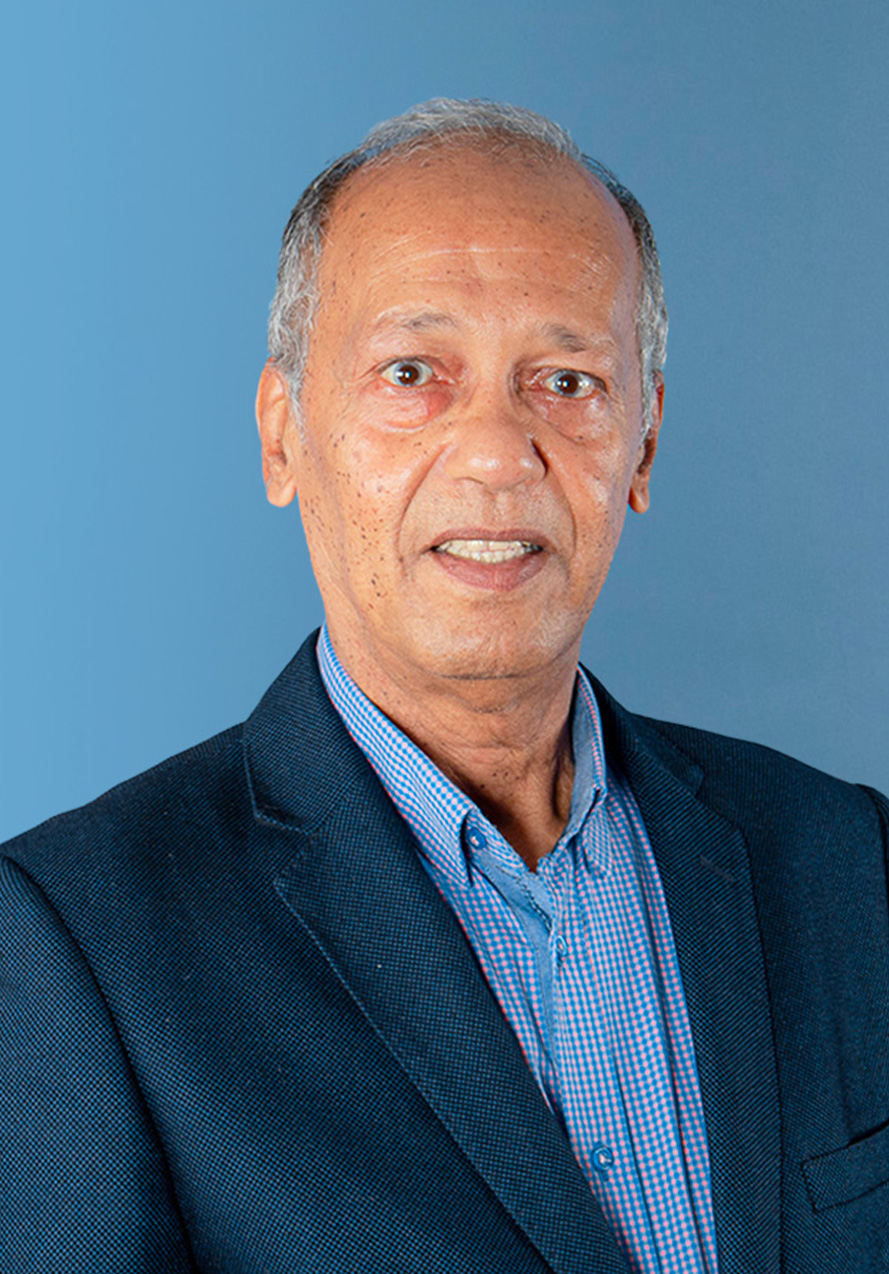
Muhammad ba
Enseignant Chercheur, Université Gaston Berger
Docteur en sciences économiques, Muhammad BA est spécialiste de l’économie du développement. Ses domaines de recherche en économie portent sur l’évaluation de la pauvreté multidimensionnelle, des inégalités et du bien-être notamment dans le cadre de l'approche par les capabilités d'Amartya Sen. Dans ses domaines, il est auteurs de plusieurs publications dans des revues avec comité de lecture. Il est actuellement enseignant-chercheur à l’Université Gaston Berger à la section d’Economie où il dispense entre autres les cours d'économie du développement, de comptabilité nationale et de macroéconomie. A côté de ses activités de recherche, Dr. Muhammad BA s’intéresse également à la transformation structurelle des pays africains. C’est en ce sens qu’il a travaillé pendant plus d’un ...
Abdelhak Bassou
Senior Fellow
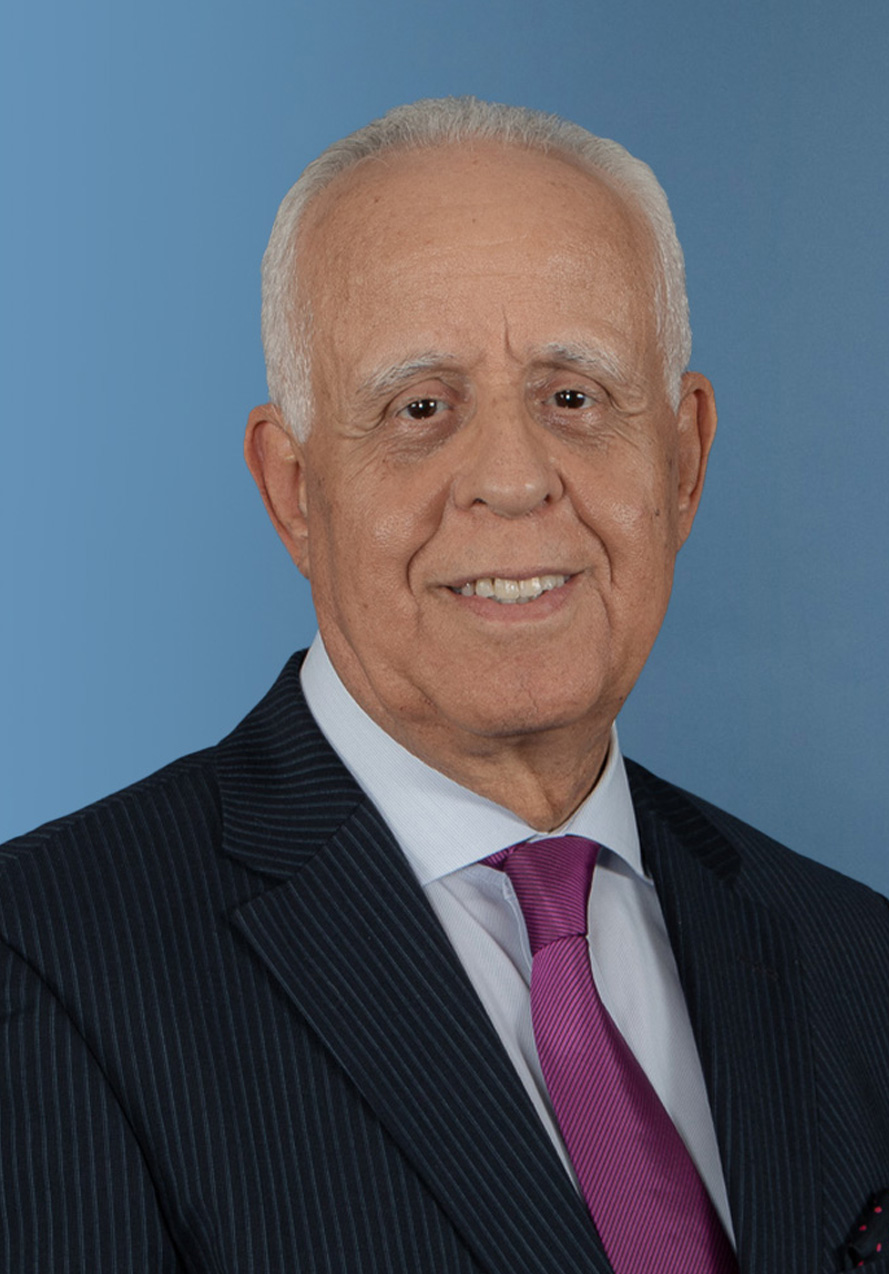
Abdelhak Bassou is a Senior Fellow at the Policy Center for the New South and a non-resident senior fellow at the Atlantic Council’s Africa Center. He is also an Affiliate Professor at Mohammed VI Polytechnic University. Bassou has had an extensive career in Moroccan National Security, where he served in various capacities including as head of the border division from 1978 to 1993. He was the former director of the Royal Institute of Police in 1998 and served as Head of Regional Security (Errachidia 1999-2003, Sidi Kacem 2003-2005) and as Central Director of General Intelligence from 2006 to 2009.   He holds a master's degree in political science and international studies from the Faculty of Law, Economics, and Social Sciences in Rabat. His academic research delves into ...
Philippe Chalmin
Fondateur, CyclOpe
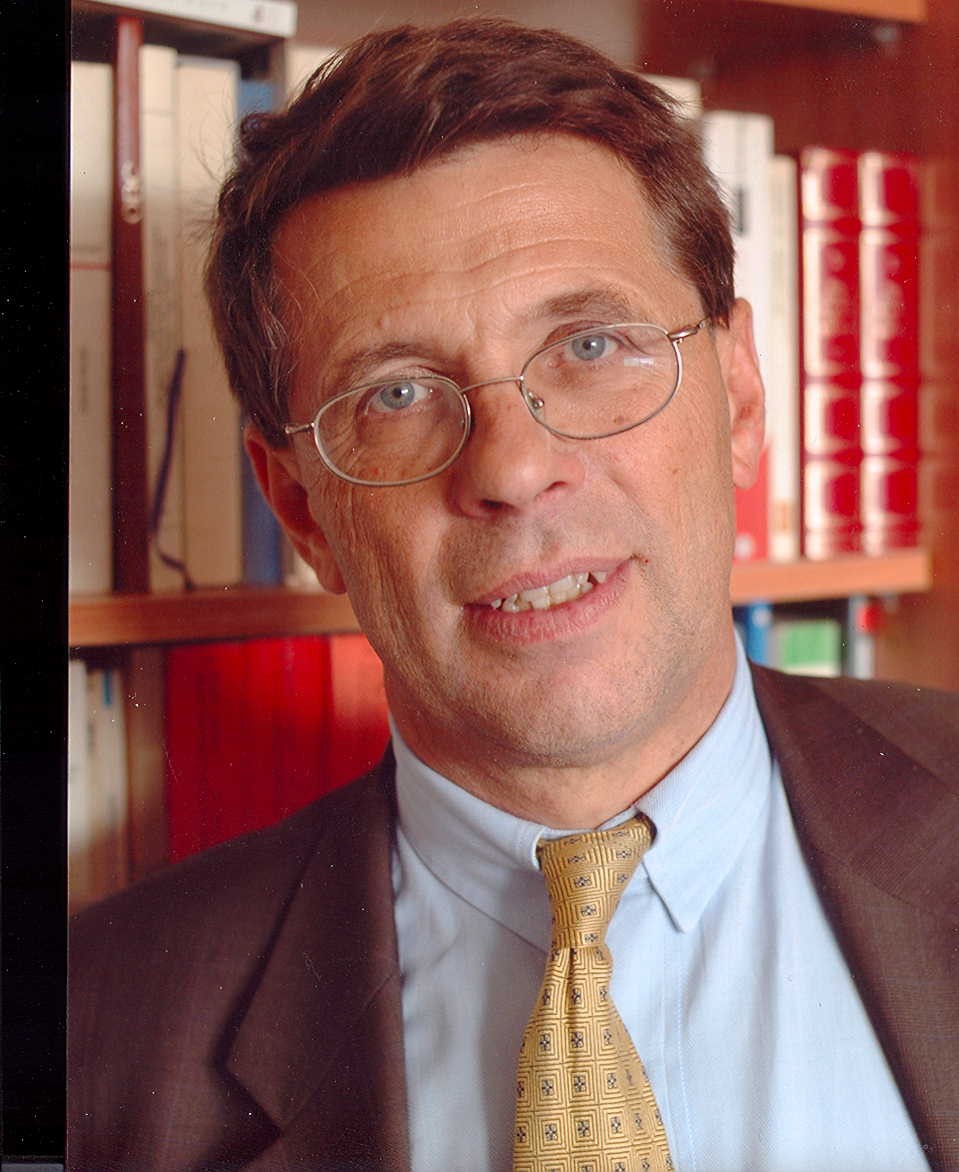
Philippe CHALMIN est Professeur émérite d’histoire économique à l'Université Paris-Dauphine et Directeur du Master 212 « Affaires Internationales. Il est Fondateur et Président depuis 1985 de Cyclope, la principale structure de recherche et d'études en France sur les marchés internationaux, Chroniqueur économique sur BFM et BFM TV au Figaro, au Monde, Président de l’Observatoire de la Formation des prix et des Marges Alimentaires auprès du Ministre de l’Agriculture et du Ministre de l’Economie et des Finances, Auteur ou Directeur d'une quarantaine de livres et de très nombreux articles scientifiques, Consultant auprès de la Banque Mondiale et de l'Union Européenne et Conférencier. Il a été de 1998 au 2000 Président de la Société d'Economie Politique dont il est aujourd’ ...
Yves Jégourel
Senior Fellow
Yves Jégourel is Senior Fellow at Policy Center for the New South as well as Full Professor and head of the Chair in “Economics of Raw Materials and Sustainable Transitions”, at the Conservatoire national des arts et métiers. He was previously a professor at the University of Bordeaux, where he directed the Master program in Banking, Finance and Commodity Trading (BFCT) and was vice-dean in charge of relations with companies in the Faculty of Economics, Management and ESA (EGAES). He devotes his teaching and research activities to the economics of commodities, with a particular focus on the common dynamics that characterize the agricultural, energy, and mineral and metal sectors: the internationalization of physical markets, the macroeconomic dependence of exporting countries ...
Mohammed Loulichki
Senior Fellow
Mohammed Loulichki is a Senior Fellow at the Policy Center for the New South and an Affiliate Professor at Mohammed VI Polytechnic University. He brings over 40 years of comprehensive experience in diplomacy, conflict resolution, and human rights. He has served in various roles including as a member and Deputy Head of the Moroccan delegation to the 3rd Conference on the Law of the Sea (1982-1990), Head of the Department of Legal Affairs and Treaties at the Ministry of Foreign Affairs (1988-1991), and General Director for Multilateral Affairs in the same ministry (2003-2006).   He also acted as Morocco's Ambassador to Hungary, Bosnia-Herzegovina, and Croatia (1995-1999), and was the Moroccan Government's Ambassador Coordinator with MINURSO (1999-2001). Furthermore, he se ...
François Luguenot
Independent Expert
François Luguenot est ingénieur agronome. Après trente années passées dans diverses sociétés de négoce international de matières premières en tant qu’analyste de marché et responsable des relations avec les média et les institutions, il est expert indépendant. Depuis 2010, il rédige la partie consacrée aux céréales du rapport CyclOpe et du rapport Arcadia. Il intervient régulièrement à la radio et dans journaux ainsi que lors de conférences et séminaires. ...
Jamal Machrouh
Senior Fellow
Jamal Machrouh is Senior Fellow at the Policy Center for the New South where he focuses on Geopolitics and International Relations issues, as well as Adjunct Professor at the Faculty of Governance, Economic and Social Sciences of the Mohammed VI Polytechnic University (UM6P). He is also professor of international relations at the National School of Business and Management, Ibn Toufaïl University, Kénitra. Mr. Machrouh is lecturer at the Royal College of Advanced Military Studies of Kénitra and at Södertörn University of Stockholm, Sweden. He is the author of a book titled Justice and Development under World Trade Organization and of various articles dealing with international relations and geopolitics. ...
Francis Perrin
Senior Fellow
Francis Perrin is a Senior Fellow at the Policy Center for the New South who focuses on energy.  Following studies in economics and political science at the University Pierre Mendès France (UPMF – today University Grenoble Alpes) at Grenoble (France), Francis Perrin worked for several years as a journalist and freelance consultant on energy and mining resources before joining in 1991 the Paris-based Arab Petroleum Research Center (APRC). He was editor in chief of Arab Oil & Gas (AOG) and Pétrole et Gaz Arabes (PGA) between 1991 and 2000 and editorial manager of the publications of the APRC from 2001 to the end of 2011. Francis Perrin set up at the beginning of 2012 Stratégies et Politiques Energétiques (SPE) and later Energy Industries Strategies Information (EISI).& ...
Afaf Zarkik
Senior Economist
Afaf Zarkik is an economist at the Policy Center for the New South and a graduate in energy strategies from Ecole des Mines de Paris. Among her areas of research and reflection: energy commodities monitoring and energy transition and sustainable development policies analysis. Before joining the Policy Center, A. Zarkik was an analyst in oil and gas mergers and acquisitions, a venture capital analyst in a cleantech fund, and a senior analyst in asset management. Afaf Zarkik est économiste au Policy Center for the New South et ingénieur titulaire d'un Master en stratégies énergétiques de l'École des Mines de Paris. Parmi ses axes de recherche et de réflexion : la veille des marchés des matières premières énergétiques et l'analyse des politiques de transition éne ...

RELATED CONTENT

  • October 14, 2026
    في ظل التوترات الجيوسياسية المتصاعدة، تتغير طرق التجارة العالمية وتتبدل معها موازين الممرات الاستراتيجية. تفتح هذه الحلقة من «حديث الثلاثاء» النقاش حول التقاء المسارات البحرية والبرية داخل هذه الممرات، والعوامل التي تتحكم في طبيعة السلع التي تعبرها. وتبحث كذلك في ما يمكن للمغرب أن يجنيه...
  • Authors
    Florent Parmentier
    October 12, 2026
    Cet article soutient que le Chief Geopolitical Officer (CGO) doit être repensé à partir de l’expérience des entreprises africaines. Dans un environnement multipolaire et fragmenté, leur principal défi n’est pas seulement la gestion des risques, mais la préservation de plusieurs options stratégiques simultanément selon une logique de hedging. Trois modèles de CGO sont à distinguer : l’intermédiation (Office chérifien des Phosphates (OCP), Tanger Med), l’intégration régionale (Ethiopi ...
  • Authors
    Paul Isbell
    October 9, 2026
    In the first seven Policy Briefs of this ongoing series of analysis on Pan-Atlanticism: The Atlantic Basin in a Multipolar-Transnational World, we developed the argument that the strategic significance of the Atlantic Basin is on the rise for a range of international actors (states, regions and non-state agents) and from distinct political or ideological perspectives. In addition, in the most recently published Policy Brief -- “The U.S. and the Current International Reconfiguration: ...
  • Authors
    Lina Jaoid
    October 8, 2026
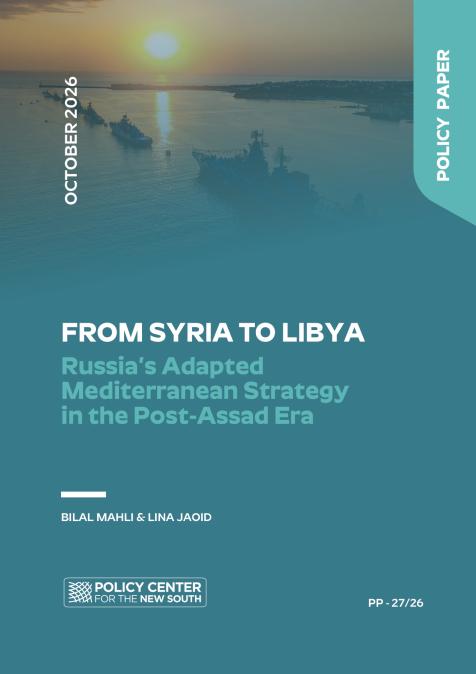
    In the two years since the fall of Bashar al-Assad in Syria, Russia has restructured its Mediterranean presence. Although Russia’s limited and increasingly conditional access to the Khmeimim and Tartus facilities in Syria has been preserved, its presence in the country has morphed from Assad’s ‘patron-client’ configuration to a more negotiated engagement. Simultaneously, Russia has upgraded its force-projection and logistical infrastructure in eastern Libya, giving it an access path ...
  • Authors
    Marie-Noelle Nwokolo
    October 6, 2026
    The author of this opinion, Marie-Noelle Nwokolo, is a 2024 alumna of the Atlantic Dialogues Emerging Leaders Program.In September 1978, delegations from 138 countries gathered in Buenos Aires, Argentina, around a powerful idea: developing countries had knowledge, experience and capabilities worth sharing with one another. The Buenos Aires Plan of Action gave institutional form to what we now call South-South Cooperation, part of a wider post-colonial effort by developing ...
  • September 28, 2026
    This paper was initially published in French on the website of the Fondation Jean-Jaurès. There was a historic decline in Official Development Assistance (ODA) in 2025. Foreign aid to developing countries from members of the OECD-DAC fell by some 23%, the largest decline on record and the second consecutive annual decline. Aid to Africa fell by more than 25%. The International Monetary Fund (IMF) described this decline in ODA to Africa as “a shock like no other.” It differ ...
  • Authors
    Marianna Albuquerque
    September 23, 2026
    The author of this opinion, Marianna Albuquerque, is a 2022 alumna of the Atlantic Dialogues Emerging Leaders Program.As world leaders gather in New York for the 81st United Nations General Assembly, climate change returns to the center of multilateral diplomacy under markedly different circumstances. The debate is no longer confined to whether the world must decarbonize, but increasingly centers on how the transition will happen, who will bear its costs, who will capture ...