Publications /
Opinion

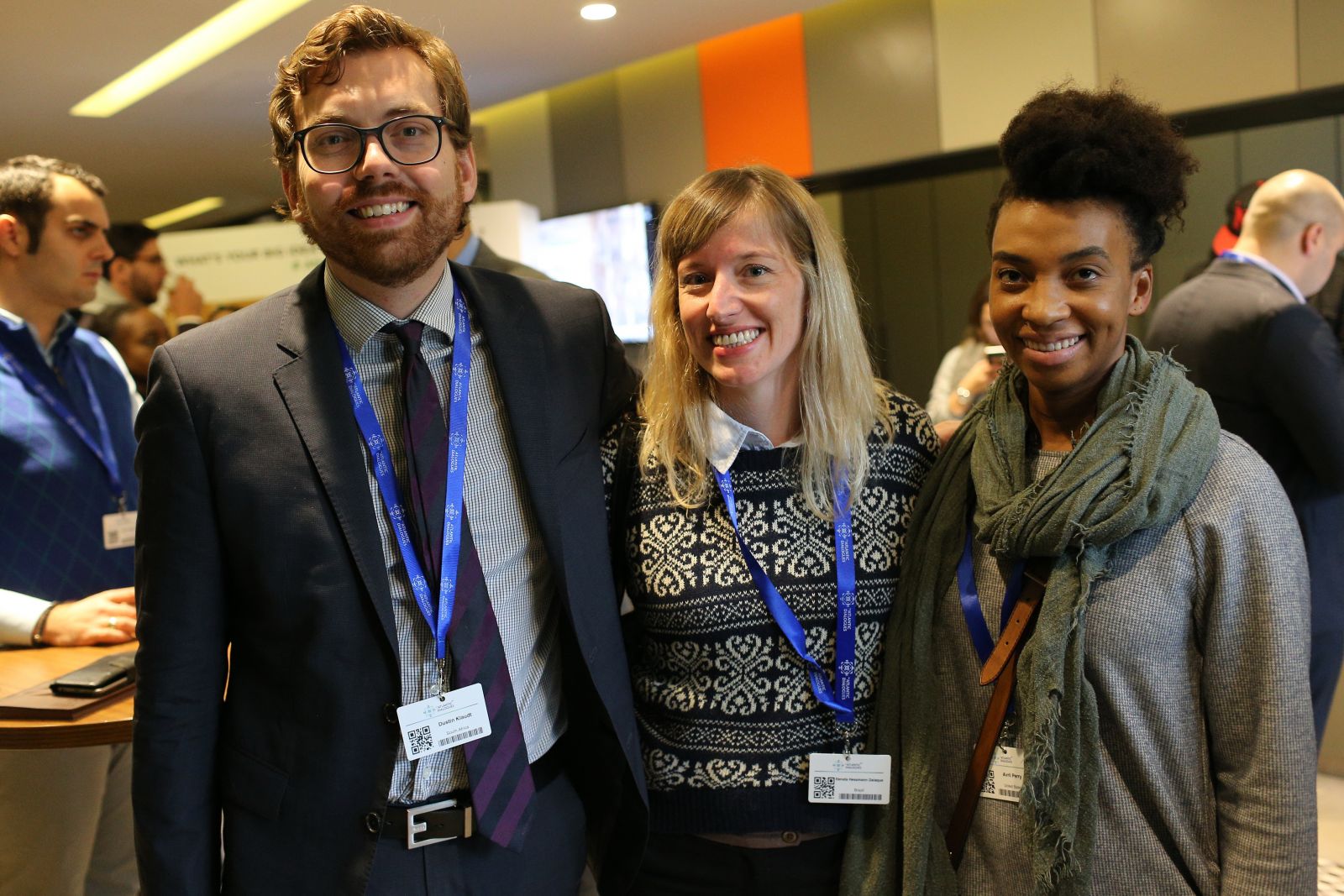
The new cohort of Atlantic Dialogues Emerging Leaders has arrived in Marrakech ! 50 young professionals aged between 23 and 35 and and carrying 25 different nationalities are following workshops. In the program today : « Technological changes, skills and jobs of tomorrow », with The Nigerian scientist Ade Mabogunje, a design thinking specialist from Stanford University (USA) and Martine Kappel, Danish expert on « self-realization » and founder of True North Leadership in Kenya.
Ade Mabogunje has started the session with a game. When he asked the Emerging Leaders to place themselves the way they wished in the room, an immediate consensus has risen on a circle. He then invited them to stand up and tell their names with the gesture of their choice. Lots of fun and laughters followed, with some sharp thinking. Ade Mabogunje refuses to be called « Professor » because « as a scientist », he says, « I can be wrong 99% of the times ».
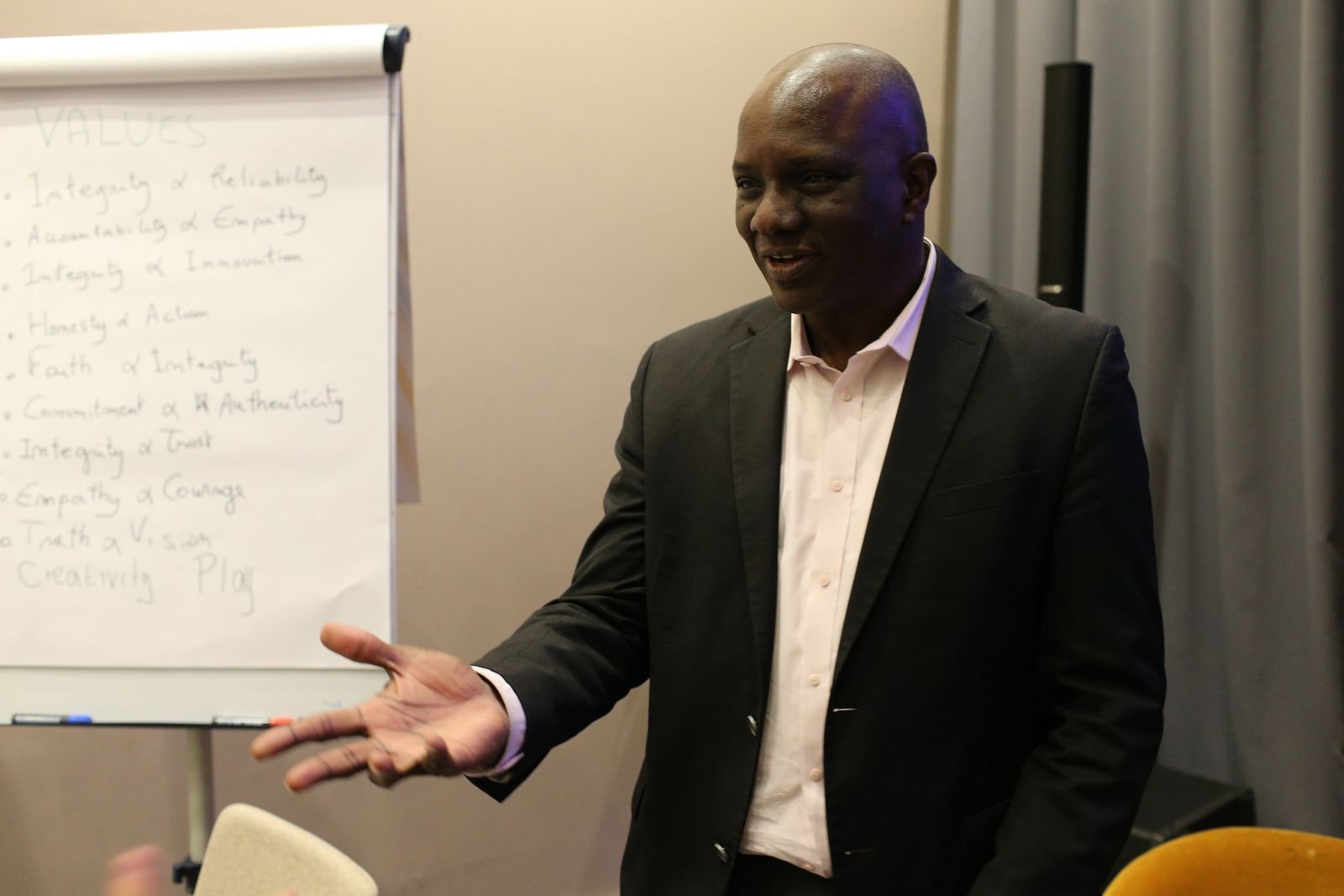
He nonetheless pointed out some raw truths : « It’s very important to play, but we tend to flush our most creative basic instincts at school – and then we say we have an economy ! ». Later, he asked : «Which continent has the most important youth ? Africa ! It’s also got the biggest potential, because young people’s dreams are shaping the future…». Martine Kappel explained it may be good to dream, but even better to realize one’s dreams. This might mean a « rebooting of your brain and downloading the right apps », she said.
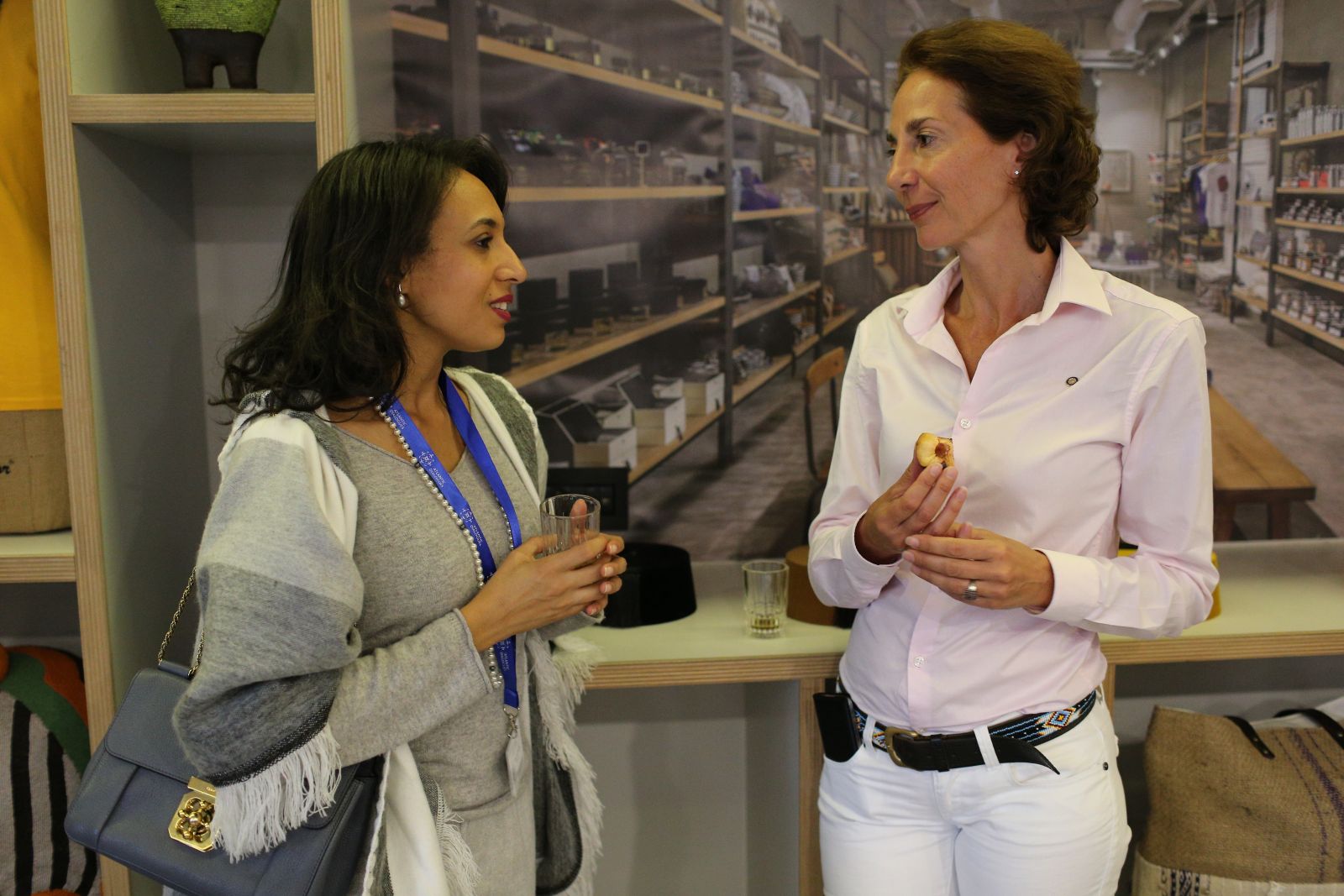
Among the Emerging Leaders, some have put those affirmations into question. Eric Ntumba, a banker in DRC (see interview below), had this remark : « Dreamers may come with a lot of wishful thinking, but we are not in heaven. The paradigm of synergy seems more realistic to me, and the closest thing we can achieve on Earth that may be close to heaven is this : how can we grow the cake et make sure there’s enough for everyone ?».
Joana Ama Osei-Tutu, Head of the Women Peace and Security Institute in Ghana, an organization linked to the Kofi Annan International Peacekeeping Training Centre, has also underlined the harsh realities of her environment : « Even when you are a dreamer or a self-accomplished person, when you operate in an environment that does not consider you, for reasons out of your control, how can you create a space for new ideas ? It’s possible to create a little haven and give a little hope, by achieving something that might have some impact ».
Ade Mabogunje as bounced on this positive note, nourishing the debate with short and relevant thinking : « Japan did not decide to beat the USA, it just works better as a team ! In Africa we have Ubuntu and I am asked to teach it in California. In value systems produced by the industrial era and based on « superiority », we do not learn to work as a team and to suppress the ego. One instance : when the Mechanical Engineering Departement decided to merge with the Fine Arts at Stanford, during the hippy era, then people were able to think what later became the Sillicon Valley ! »
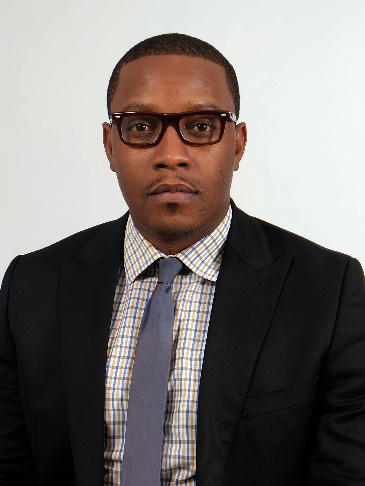
Eric Ntumba
« To change things in Africa, that’s my generation’s mission »
This young professional is a banker from Kinshasa, the capital city of Democratic Republic of Congo (DRC). He is joigning this year the Atlantic Dialogues Emerging Leaders (ADEL) network. Eric Ntumba, 35 years old, works in the field of “Corporate finance, Investment and Diaspora”.
He has completed his primary and secondary education in Kinshasa, before studying IT at North-West University (South Africa) and administration at the National School of Administration (ENA) in Paris (France). He belongs to the 2009 ENA promotion named “Willy Brandt”. One of the 50 young Emerging Leaders from 25 different nationalities to have been selected by the OCP Policy Center in 2017, he his currently following two days of the ADEL programme in Marrakech, before the Atlantic Dialogues high-level conference begins, on December 13th.
What was your motivation for submitting to the ADEL program?
The intergenerational dialogue is of great interest to me, in order to think about the global challenges that Africa is facing. I was a member of the Obama’s administration Young African Leaders in 2014, and of the Young Leaders Africa France last October. Here, the intercontinental dimension of the dialogues, on the Atlantic level, seems very interesting.
As a banker, what’s your view of your country’s economy ?
Our private sector is limited to some mining industries controlled by foreign interests. There is no real Congolese capital. And that’s a real problem for the startups, because they cannot rely on business angels who could coach and finance them. Young entrerpeneurs depend on the goodwill of international funds, which are also pursuing their own agenda. Most of the business in DRC is geared towards consumption, and we import almost everything ! Telecom and banking activities have emerged, but they stay marginal compared to even middle-sized economies such as Kenya or Ivory Coast – not to mention South Africa or Morocco !
Why do “Investment” and “diaspora” feature in your job description?
The remittances done by migrants is now documented by the World Bank. In some West-African countries, these financial flows of cash amount to more than 10% of GDP, like in Senegal, Mali or Cabo Verde. In the case of DRC, where national statistics are lacking, the remittances are even more important : 9 billion dollars per year, for a GDP of 40 billion dollars… The country has 26 provinces, and we should now consider, in my view, the diaspora – some 7 million Congolese living and working abroad, mainly in Europe - as our 27th province ! We should also allow people to carry two passports and nationalities, make them eligible and allow them to vote, and also attract their investment in DRC. This diaspora represents our main pool of skills. Unfortunatley, the “repat” movement observed after the democratic elections of 2006 – a flow that I followed myself – is now threatened. We believed then in the democratic renewal and the economic awakening of our country. The current political and economic crisis is now changing the mindset.
What is your dream?
To become president of the DRC and bring inclusive growth and development ! To transform at last my country’s great potential into real power ! My dream is that each child in Congo could realize his own dream… I also dream of doing politics differently, away from the classic frame of political parties. Hence, my participation in an alternative project we are preparing with other young professionnals who have been exposed to good practice abroad, and now wish to bring the same level of governance in DRC’s politics.
Is a “bourgeois” revolution on its way in Africa, with more and more businessmen interested in managing the public affairs, like the President Patrice Talon in Benin or the opponent Moïse Katumbi in DRC?
Such a revolution seems desirable… Before redistributing wealth, we have to create it ! But let’s see whether business leaders turning into politicians actually carry values and act with virtue, according to an ideal of more equitable redistribution of wealth. More and more, we get to the critical mass of actors that will be able to bring about that change. It just needs the right lever of action. Kinshasa is full of a powerful creative energy, but it’s useless to tell a child from Rutshuru in North Kivu that his region is rich, if he cannot get any benefit for himself ! Let’s move from word to action. I have made mine this quote of Frantz Fanon : “Each generation, in a relative opacity, must manage to define its own mission, and then accomplish or betray it.” To change things on the continent and in my country, such is the mission of my generation.