RELATED CONTENT : South America

  • April 6, 2026
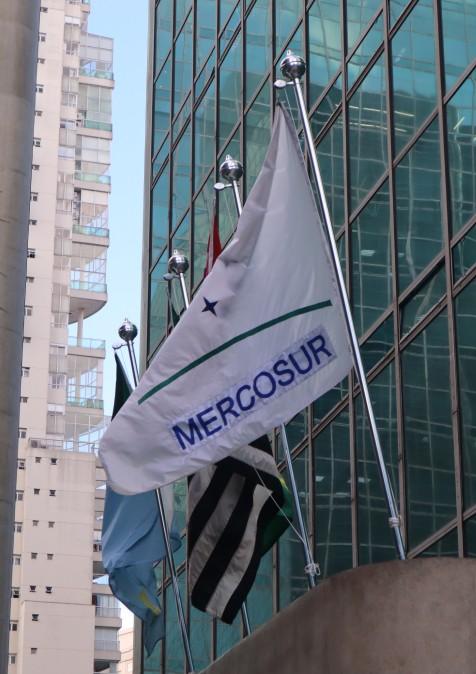
    Trade agreements, in earlier eras, were instruments of exchange. In the present one, they have become instruments of order. The EU–Mercosur agreement, after more than two decades of negotiation, reaches a decisive moment—not merely as a framework for tariff reduction, but as a mechanism through which competing visions of economic organization are projected and contested. ...
  • Authors
    April 1, 2026
    We are now in the fifth week since the U.S. airstrike that killed top leaders of the Iranian regime, initiating a war involving the United States and Israel against the country. More than a month of mutual bombardments between Iran and Israel has ensued, extending to other Persian Gulf nations, U.S. military installations—and even Cyprus. From a global perspective, the impact has stemmed primarily from disruptions to regional production of goods and the blockade of the Strait of Hor ...
  • March 18, 2026
    Le premier sommet des BRICS, tenu à l’initiative de la Russie en 2009, sera suivi de 16 autres, le dernier étant celui de Rio dont les travaux se sont déroulés les 6 et 7 juillet 2025. Jusqu’en 2022, un seul élargissement est intervenu, celui accueillant l’Afrique du Sud, transformant les BRIC en BRICS. À partir de 2023, en revanche, trois sommets, ceux de 2023, 2024 et 2025, vont se solder par la transformation des BRICS en BRICS+5, accueillant 5 nouveaux pays membres, en ...
  • Authors
    Nizar Messari
    March 13, 2026
    Latin America has had to deal with expansionist agendas of great powers since its independence. To do so, different leaders from the region have adopted different policies. Some have sought to reinforce their relations with the U.S. whereas others mistrusted their big neighbor from the North and tried to multiply their partnerships with other parties in order to keep their autonomy. To this respect, the central role played by U.S.-Latin American relations, epitomized by the1823 Monr ...
  • February 19, 2026
    This Africafe's episode examines Brazil-Africa relations: historical ties shaped by the slave trade and diaspora, Lula’s trade expansion, and competition with China/EU. It explores South-South diplomacy’s potential to reshape global institutions, the role of “South Atlanticism,” and fut...
  • Authors
    February 12, 2026
    Divergent regulatory regimes for data, driven by different motivations, ranging from privacy protection in the European Union to information control in China, could eventually produce distinctively different, and possibly contradictory, bodies of data. Artificial-intelligence models trained on those datasets could produce differing and possibly even conflicting outputs. To the extent that AI outputs start to shape human perception and to influence decisions, in governments and ...
  • Authors
    February 9, 2026
    The arrest of Venezuelan President Nicolàs Maduro caused international astonishment, raising questions about respect for international law. And, quite logically, the operation led to numerous analyses, both of the political, security and geostrategic arguments put forward by Washington, and of the underlying ambitions behind this decision, which has no real precedent in recent history. In addition to the fight against narco-trafficking, it was of course the oil issue that came first ...
  • Authors
    February 9, 2026
    L’arrestation du président vénézuélien Nicolàs Maduro a suscité la sidération internationale en interrogeant sur le respect du droit international ; puis, fort logiquement, cette opération a conduit à maintes analyses tant sur les arguments politiques, sécuritaires et géostratégiques avancés par Washington que sur les ambitions sous-jacentes ayant présidé à cette décision sans réel précédent dans l’histoire récente. Outre la lutte contre le narcotrafic, c’est bien évidemment la ...
  • Authors
    Gabriela Keseberg Dávalos
    January 26, 2026
    This Opinion was originally published by the Hanns Seidel Stiftung on January 19th, 2026. The author of this opinion, Gabriela Keseberg Dávalos, is a 2013 alumna of the Atlantic Dialogues Emerging Leaders Program. The signing of the EU–Mercosur agreement is a small geopolitical miracle. Signed on 17 January 2026 in Paraguay, it arrives at a moment when Europe is unmistakably being cast aside by the United States. Meanwhile Latin America, and with it, the Mer ...
  • January 23, 2026
    The post-1945 international order, an architecture born of war-weariness and colonial twilight, is now a majestic but empty shell. Its foundational promise—a universal system of rules administered impartially—has been hollowed out by decades of selective enforcement, instrumentalized law, and a chasm between the rhetorical ideals of its custodians and their geopolitical practice. This is not a temporary dysfunction, but a systemic failure of legitimacy. From the invasion of Iraq und ...
  • January 09, 2026
    This episode explores the Trump administration’s confrontational stance toward Venezuela, including sanctions and military posturing and evaluates their effectiveness in undermining Madur ...
  • Authors
    Nizar Messari
    December 19, 2025
    The U.S. military buildup in the Caribbean—the most significant since the Cuban Missile Crisis—comes at a moment when a new world order is taking shape, its contours still unclear, and in which the U.S. seeks to be more assertive in the Western Hemisphere. This disposition toward South America and the Caribbean was underscored by the recent publication of the new U.S. National Security Strategy, in which the Monroe Doctrine is explicitly invoked. This Policy Brief situates the devel ...
  • Authors
    November 21, 2025
    This report addresses the business environment in Brazil as one of the determinants responsible for the weak evolution of productivity in recent decades. After addressing this productivity performance, we define what constitutes the business environment, using as a reference the three ways in which the World Bank has been addressing the subject.Next, we highlight how the business environment affects productivity in a country. Finally, we review some recent reforms in the country's b ...
  • Authors
    Nizar Messari
    November 12, 2025
    The election of Javier Milei as President of Argentina in 2023 created high expectations: how likely was he to succeed in transforming Argentina as he had promised? Would he be able to enforce his economic policies despite his limited backing in the legislature? Could he maintain the strong popular support that brought him to power in the face of the harsh reforms he was committed to implementing? And ultimately, would he be able to neutralize Peronism in Argentina and launch a new ...
  • Authors
    Nizar Messari
    October 27, 2025
    This paper analyzes the impact of the BRICS+ Summit of July 2025 on the evolution of the bloc, as well as on the relationship between the bloc and the U.S. under President Trump. It also tackles the aftermath of the summit and in particular the impact it had in the souring of Brazil-U.S. relations. Before the paper analyzes the impact of BRICS+ on Morocco, it goes over the consequences of the events that resulted from the summit on the Brazilian political sphere.  ...
  • Authors
    September 2, 2025
    In 2019 - well before the onslaught of COVID-19 and the wars in Europe and the Middle East - the central thesis of a policy paper by this author, analyzing the relationship between Africa and the Caribbean, characterized it as one of missed opportunity due to the lack of consistent, meaningful engagement between the two regions - despite the relationship’s special significance given their shared history. Underinvested: The Caribbean African Relationship (PCNS 2019) chronicled the li ...
  • Authors
    August 4, 2025
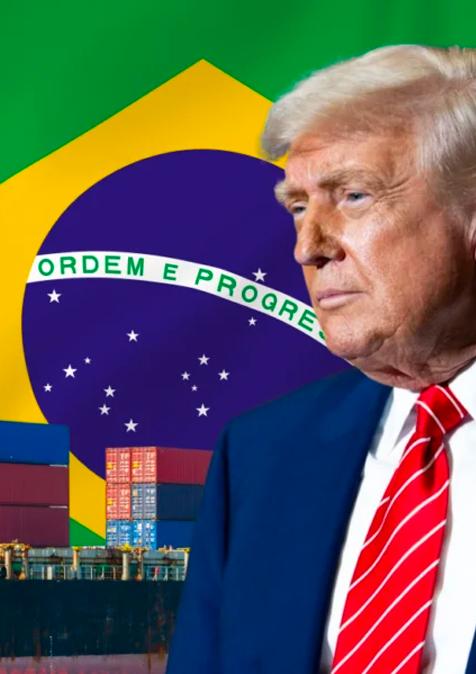
    An Executive Order issued on July 30 by President Donald Trump hiked United States tariffs on imports from Brazil by 40%, in addition to the 10% established on April 2—the so-called ‘Liberation Day’ when Trump set out ‘reciprocal tariffs’ on countries around the world.The decree came with a long list of exemptions for Brazilian exports. For a number of product lines, the 10% April 2 tariff will continue to apply. These include air transport equipment, orange juice, furniture, fuel, ...
  • Authors
    Rafael R. Ioris
    June 4, 2025
    This article was written by an external contributor. The author is not affiliated with the Policy Center for the New South, and the views expressed herein are solely those of the author. The Liberal International Order (LIO), established in the aftermath of WWII, is now facing unprecedented challenges. Though the main proponent of this same Order, the United States under Donald Trump has turned against traditional allies and is actively seeking to undermine the v ...
  • May 16, 2025
    In this podcast, we speak with Florencio Venté, Co-director of the Migration Youth and Children Platform and a global advocate for displaced youth. From starting civic activism at age 12 ...
  • Authors
    Sérgio R. R. de Queiroz
    Nicholas S. Vonortas
    May 9, 2025
    This paper aims to demonstrate how certain transformations in the international economy since the 1980s¾notably the globalization of firms and industries¾combined with a set of domestic challenges, disrupted the path of industrial and technological development that Brazil had pursued since the 1930s. In essence, growth strategies based on the scale of the domestic market ceased to be effective. The innovation and economic challenges the country now faces cannot be addressed without ...
  • Authors
    Nabil Adghoghi
    Alexandre Parola
    Fábio Albergaria de Queiroz
    Paulo Eduardo Aguiar Saraiva Camara
    Ana Flávia Barros-Platiau
    Adnane Lahzaoui
    Guilherme Lopes da Cunha
    Jacintho Maia Neto
    Nizar Messari
    Melina Moreira Campos Lima
    Andreia Rute da Silva Baptista
    Carlos Henrique Tomé Silva
    March 5, 2025
    A country's areas of strategic interest are defined by its values, principles, and expectations. In this context, unprecedented opportunities are emerging for two key Atlantic States—Brazil and Morocco—to forge a mutually beneficial partnership. This premise underscores the deep-rooted social and geohistorical connections between both sides of the Atlantic. Recognizing this potential suggests that building stronger Atlantic bonds could advance shared interests, grounded in an evolvi ...
  • Authors
    Nizar Messari
    February 24, 2025
    Latin America was barely mentioned in US President Donald Trump’s 2024 electoral campaign. Expectations were that President Trump would remain uninterested in Latin America, while Latin America would show pragmatism and restraint in its dealings with him. However, surprisingly, Latin American has been at the forefront of Trump’s agenda since his re-election. Aside from migration, which was already prominent in Trump’s electoral campaign, although as an internal issue, there is also ...
  • February 21, 2025
    In this podcast, Atlantic Dialogues Emerging Leader Eduarda Zoghbi highlights the growing influence of the Global South and advocates for the inclusion of younger voices in global discuss ...
  • Authors
    Asya Pelkes
    December 19, 2024
    The European Union’s (EU) Global Gateway initiative, established to enhance global connectivity and sustainable infrastructure, offers a significant opportunity to align with Africa’s development goals under the African Continental Free Trade Area (AfCFTA). However, the challenge lies in whether the Global Gateway can effectively complement AfCFTA’s objectives of boosting intra-African trade and industrialization by addressing critical infrastructure gaps. This paper examines how th ...
  • Authors
    Nizar Messari
    December 18, 2024
    The G20 Summit held in November 2024 in Rio de Janeiro, Brazil, under the Brazilian G20 presidency, showed what decentering from the Western agenda and Western domination of world politics could mean. The summit’s main achievement was the constitution of an Alliance against Hunger and Poverty, with a membership of, and funds mobilized from, not only all G20 members, but also from more than 60 other countries. In fact, what the West showed was discomfort at not having its agenda, its ...