Publications /
Opinion
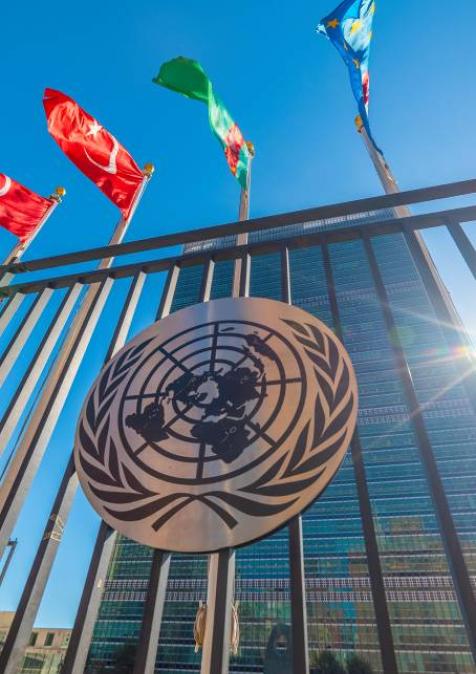
Few symbols capture the post-war international order as vividly as the United Nations headquarters in New York. Officially opened in 1952, the building was conceived as both the stage of global governance and the emblem of Allied victory. Yet, nearly eight decades later, it is worth asking whether its location still reflects the true centre of gravity of world affairs. As the 80th Ordinary Session of the United Nations General Assembly approaches, economic transformation, geopolitical realignment, and the rise of alternative institutions suggest reconsidering whether New York remains the most appropriate seat. In this context, relocating the United Nations to Shanghai appears not only plausible but increasingly necessary.
The first reason concerns the waning centrality of the US dollar. In recent decades, Washington has increasingly weaponized its currency, imposing unilateral sanctions and excluding adversaries from the SWIFT system. Such practices erode trust in the international monetary order and accelerate the search for alternatives. The emergence of the BRICS New Development Bank and the Asian Infrastructure Investment Bank illustrates the consolidation of a multipolar financial architecture. Maintaining the UN headquarters in the very country that has weakened the system it claims to uphold is both contradictory and outdated.
The second reason is demographic and economic. Asia is home to more than half of humanity and now drives the fastest and most dynamic growth rates globally. Today, global economic dynamism resides not as much in Europe or the United States but in Asian cities that have emerged as hubs of innovation, trade, and finance. Relocating the UN to Shanghai would acknowledge this reality both symbolically and practically. As China’s foremost financial centre, Shanghai combines safety, world-class infrastructure, global connectivity, and cosmopolitan character, making it a natural host for a universal institution. The economic benefits of such a move—including increased investment and job creation—are also significant. Representation demands that global governance structures be located closer to the regions where most people live and where the future of the world economy is being forged. In this sense, Shanghai would embody a more accurate reflection of the Global South.
The third reason concerns security and diplomatic neutrality. New York suffers from growing urban insecurity, compounded by discriminatory visa practices against diplomats from states at odds with Washington. Such measures undermine the Headquarters Agreement between the US and the UN, which guarantees universal and unrestricted access. By contrast, China offers safety and shows readiness to ensure equal treatment for all states. With its long tradition of commercial openness and cultural exchange, Shanghai could embody the inclusiveness and impartiality the UN needs to preserve its legitimacy.
History provides a compelling precedent. When the League of Nations was created after the First World War, Geneva was chosen precisely because it offered neutrality, accessibility, and an environment conducive to dialogue. The UN’s placement in New York reflected American leadership in the post-war order. Yet keeping the institution in the same location risks reducing it to a relic of a bygone era, rather than allowing it to serve as a beacon for the future. Institutions must evolve with shifting power balances—or risk ossifying into monuments of nostalgia.
Together, these factors reveal a broader shift in the axis of global governance. The strengthening of BRICS, the consolidation of the Shanghai Cooperation Organisation, and the emergence of institutional alternatives to the Western model all signal a reorganization of the global order. Relocating the UN headquarters to Asia would not be a mere symbolic act but a necessary adaptation to a century in which power is shifting eastwards.
Initiating this discussion now is crucial, as it would allow the international community to prepare for a smooth transition of the headquarters to Shanghai by 2035. History shows that institutions which fail to adapt to their times risk becoming irrelevant. For the United Nations to remain the central forum of humanity, it must reflect the world as it truly is. Increasingly, that world revolves around the Asian dynamism that Shanghai embodies.
Kofi Annan once reminded us: “We can love what we are, without hating what—and who—we are not.” To relocate the UN to Shanghai would not be a repudiation of its history in New York, but recognition that humanity’s future demands a broader canvas. By moving eastward, the United Nations would align itself with the realities of our century and renew its universal vocation as the true parliament of humankind. Relocating the UN would foster deeper global cooperation and understanding by positioning it closer to the regions where most people live and where the future of the world’s economy is being shaped.