Publications /
Policy Paper

Back
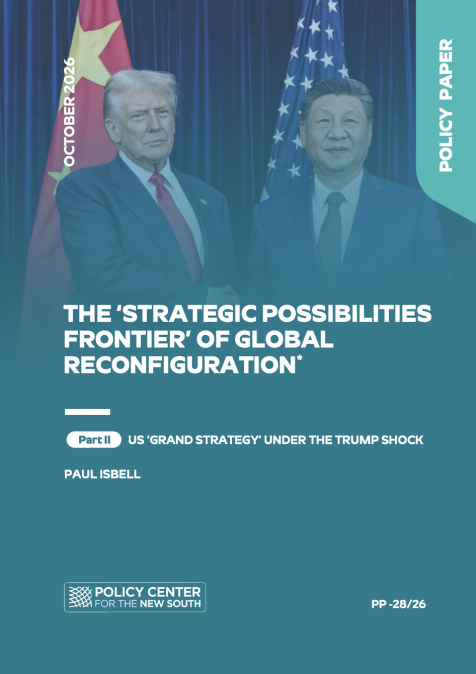
The ‘Strategic Possibilities Frontier’ of Global Reconfiguration
Authors
Paul Isbell
October 9, 2026

In the first seven Policy Briefs of this ongoing series of analysis on Pan-Atlanticism: The Atlantic Basin in a Multipolar-Transnational World, we developed the argument that the strategic significance of the Atlantic Basin is on the rise for a range of international actors (states, regions and non-state agents) and from distinct political or ideological perspectives. In addition, in the most recently published Policy Brief -- “The U.S. and the Current International Reconfiguration: Implications for Pan-Atlanticism and International Relations in the Atlantic Basin (PART 1)” – we began to develop a related thesis: that the material conditions for pan-Atlanticism, pan-Atlantic cooperation, and even Atlantic Basin regionalism could materialize -- despite their current, apparently, unlikely prospects -- under some possible future trajectories for the international system, and under certain scenarios for the United States. 

As we wrote in that last Policy Brief, “the ‘fortunes’ of the Atlantic Basin concept and its episteme—pan-Atlanticism—and of budding pan-Atlantic cooperation and potential pan-Atlantic regionalism, will depend on how the structure of international power actually evolves into the future, in interaction with the Trump 2 shock”.

In this Policy Paper (and in those to follow), we extend and complete this analysis to demonstrate these two related theses. The central question is: what opportunities might open up for pan-Atlantic cooperation and Atlantic Basin regionalism within the new international configuration that is emerging over the middle term from the collision between the Trump 2 Shock (i.e. the U.S.’s ‘restoration’ attempt) and a maturing multipolarity that is coming to define the structure of international power within the global system (i.e. what will come to be defined as either the ‘reformation’ or ‘revolution’ scenarios)?

 

RELATED CONTENT

  • Authors
    Amine Ghoulidi
    February 5, 2026
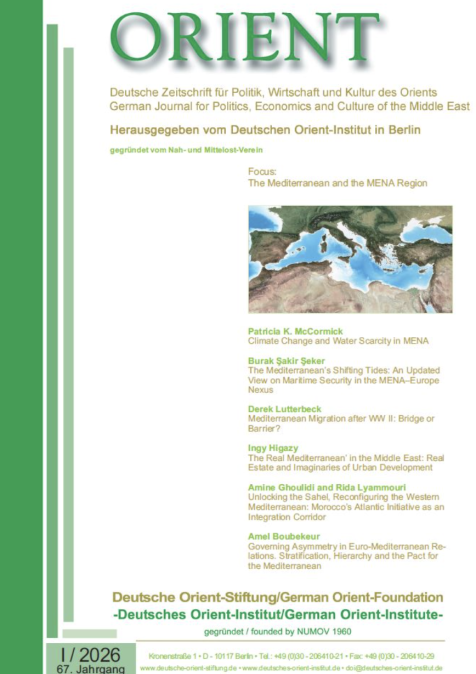
    This Paper was originally published on orient-online.com  The Western Mediterranean’s exposure to the Sahel is usually framed in terms of security spillovers and crisis management. This paper argues that this framing misreads how Sahelian access conditions now shape Mediterranean integration. Morocco’s Atlantic Initiative is a state-led corridor strategy combining Atlantic port infrastructure, inland transit routes, and energy systems to connect landlocked Sahelian economi ...
  • January 30, 2026
    En 2019, Donald Trump a proposé d’acheter le Groenland, déclenchant un refus catégorique du Danemark et une tension diplomatique transatlantique. Cette initiative reflétait l’intérêt stratégique et économique des États-Unis pour l’Arctique et ses ressources. L’épisode a mis en lumière l...
  • January 23, 2026
    The post-1945 international order, an architecture born of war-weariness and colonial twilight, is now a majestic but empty shell. Its foundational promise—a universal system of rules administered impartially—has been hollowed out by decades of selective enforcement, instrumentalized law, and a chasm between the rhetorical ideals of its custodians and their geopolitical practice. This is not a temporary dysfunction, but a systemic failure of legitimacy. From the invasion of Iraq und ...
  • Authors
    January 21, 2026
    In response to developing countries’ dissatisfaction with the New Collective Quantified Goal (NCQG) of $300 billion, which was decided at the Twenty-Ninth Conference Of the Parties (COP29) to the United Nations Framework Convention on Climate Change, in 2024 in Baku, Azerbaijan, the COP29 and COP30 presidencies promised to develop a roadmap to achieve $1.3 trillion in external climate finance that developing countries need, and to present it at COP30 in Belém, Brazil[1]. The two pre ...
  • Authors
    Stephan Klingebiel
    Andy Sumner
    January 9, 2026
    Global cooperation is under stress. It hardly requires detailed analysis: the international system is in a profound crisis, when seen from many Northern vantage points. What if we see the same turbulence but from a different vantage point? For many in the Global South the current period signals risk, but also opportunity. That the same events could spark a sense of crisis in one group but opportunity in another is nothing new. However, the sheer scale, speed, and scope of recen ...
  • Authors
    September 22, 2025
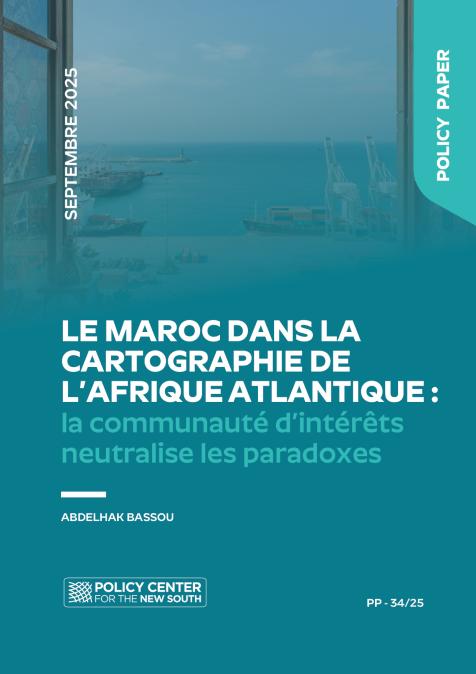
    Le Processus des États de l’Afrique atlantique (PEAA), lancé par Sa Majesté le Roi Mohammed VI en novembre 2023, ambitionne de transformer la façade atlantique africaine — jusqu’ici morcelée et vulnérable — en un espace géopolitique cohérent, intégré et prospère. L’Initiative s’appuie sur les provinces du Sud marocain comme pont stratégique vers les vingt- trois pays riverains de l’Atlantique, et sur une vision d’ouverture Sud-Sud et euro-africaine.Malgré des disparité ...
  • Authors
    Patricia Ahanda
    September 18, 2025
    L’autrice de cette opinion, Patricia Ahanda, est une alumna du programme Atlantic Dialogues Emerging Leaders 2018. Cette opinion a été publiée initialement sur patriciaahanda.paris Dans un monde marqué par l’émergence d’une instabilité géopolitique globale, par la non-linéarité et l’imprévisibilité croissante des rapports de force, le Maroc s’impose comme un leader pivot du Sud global. Un acteur incontournable capable de relier continents, blocs et cultures dans un mo ...
  • May 27, 2025
    تتناول هذه الحلقة الأهمية الاستراتيجية المتزايدة للفضاء البحري لإفريقيا الأطلسية، في ظل تصاعد رهانات السيادة والأمن البحري والتعاون الاقتصادي. نناقش سبل الاستفادة من الثروات البحرية الهائلة، وسبل تعزيز الاقتصاد الأزرق والتنمية المستدامة. نتطرق إلى التهديدات الأمنية كالصيد غير القانوني و...