Publications /
Opinion
If Ukraine burns, Moscow will burn as well
Destruction reached the Russian capital in the early morning hours, with black clouds of smoke rising above Moscow. Ukrainian drone strikes brought the consequences of the war closer to the Russian population. CBS News (June 18, 2026) reported major fires at a Moscow oil refinery, while the Russian Defense Ministry reported widespread drone interceptions.
The latest embarrassment
The attack was the “latest embarrassment” for Russian President Vladimir Putin, noted CBS, after a Ukrainian drone attack on his hometown, St. Petersburg, while he was hosting an international economic forum in the city. During a visit to Brussels, Volodymyr Zelensky warned Russia in remarks to journalists (Ukrinform, June 18, 2026): “We certainly do not want Ukraine to burn because of the enemy. But if Ukraine burns, your Moscow will burn as well.”
The continued Ukrainian strikes, predicted The Conversation (July 29, 2026), will “make the war a common facet of everyday Russian life”. In Crimea, these strikes have challenged perceptions of security and Russian control. Kyiv’s drone strikes may have had an impact on Russia, but “Russian leaders remain committed to war”, according to The Conversation.
The Washington-based Institute for the Study of War (August 4, 2026) documented a sustained Ukrainian campaign against Russian strategic assets between late June and early August 2026.
According to an analysis published by Geopolitical Intelligence Services (GIS) (May 11, 2026), unmanned aerial systems have altered the way wars are fought and turned Ukraine into a major center of military research and development. Rob de Wijk, writing for GIS, sees Ukraine increasingly as one of Europe’s most capable and influential actors in drone warfare, a transformation explored by The New York Times (March 3, 2025) in its article “A Thousand Snipers in the Sky: The New War in Ukraine.”
Technological and industrial innovation
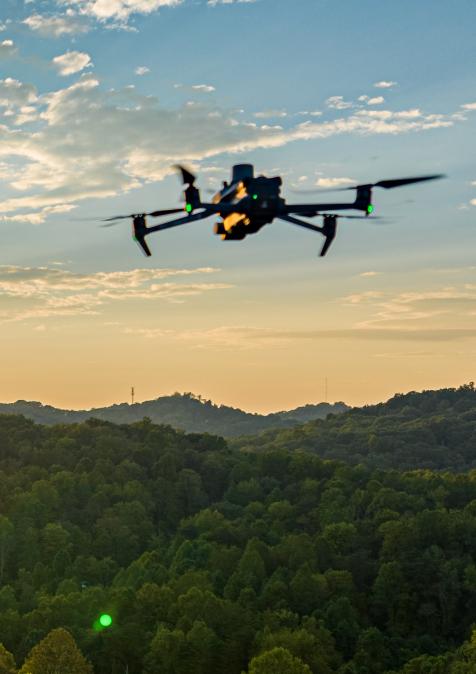
Despite the pressures of war, Ukraine has demonstrated a remarkable capacity for technological and industrial innovation, particularly in the development of unmanned aerial systems. Drones represent a revolution in warfare, writes de Wijk, “comparable to the machinegun and the tank”.
In this sense, drones are a product of a new industrial revolution driven by digital technologies, advanced computing and automation. The growing reliance on drones is fundamentally reshaping military strategy. Ukraine has emerged as a pioneer of modern drone integration, supported by private-sector innovation and international supply chains.
“Everyone wants Ukraine drones”, reported Radio Free Europe (April 3, 2026). Ukraine’s drone industry has transformed into a large-scale, decentralized wartime manufacturing ecosystem. This transformation reflects a broader shift away from traditional Soviet-era industrial structures and bureaucratic procurement models toward a more flexible, commercially driven approach to defense innovation.
A global powerhouse
Over 500 private companies are reportedly expected to produce an estimated five to six million drones this year. Kyiv’s ambitious target is to produce 10 million drones annually, potentially positioning Ukraine as a major competitor in the international drone market. The Ukrainian drone industry has rapidly emerged as a significant global actor.
Governments in Europe as well as in the Middle East, the Gulf region and the Caucasus are seeking cooperation with Ukraine to strengthen their defenses, amid growing concerns over the expansion of drone capabilities in countries such as Russia and Iran.
GIS analyst Rob de Wijk says, “the question remains whether counter drone systems will ultimately be able to neutralize the drone threat.”
Shifting battlefield dynamics
Ukraine’s growing ability to strike Russian strategic assets has renewed and bolstered hopes among many Ukrainians that victory is possible, even if still far off, and that occupied territories, including Crimea, can be liberated.
Ukraine has recently gained momentum on the battlefield against Russia’s larger military, partly owing to its technological capabilities, Western officials and analysts say. Ukrainian strikes have also placed pressure on Russian energy infrastructure and military logistics.
The transformation of modern warfare
Ukraine’s drone strikes have reportedly contributed to Russia exporting near-record amounts of crude oil, as Russia’s oil refining capacity fell to its lowest levels since 2002, Bloomberg reported, citing energy market analysis platform EA Analytics. Russia’s crude processing rates averaged 3.6 million barrels per day in July 2026, about a third below the seasonal norm.
The war, described by the United States Military Academy at West Point as involving the “most intensive use of drones in a military conflict in history”, has evolved from classical positional warfare into adaptive warfare. The widespread presence of unmanned aerial systems has challenged conventional military doctrine, reshaping the role of infantry, armored vehicles and traditional battlefield assets.
Tactical gains and strategic limitations
Drones are no longer occasional battlefield assets; they have become integral to daily defensive and offensive activities .
However, their widespread use also raises questions about the sustainability of drone-dependent warfare and its broader strategic implications. Drones are fundamentally rewriting tactical and operational battle dynamics, but military analysts at West Point point out that drones are tactically transformative without necessarily being strategically decisive.
Drones can paralyze and destroy infrastructure, spread fear among civilian populations and cause widespread disruption, but they cannot take, retake or physically hold land. GIS expert de Wijk argues that unmanned aerial systems “reshape modern combat, driving innovation and counter measures, yet still fall short of decisive battlefield victories.”
The inability to hold ground
According to The New York Times, drones have become a dominant force on the Ukrainian battlefield, accounting for substantial military losses. Drone warfare is taking military operations into uncharted territory through the increasing autonomy and networking of drone systems. Yet, although drone warfare has delivered major tactical successes and asymmetric defense advantages, it has not necessarily secured the decisive strategic victories required to end wars.
Drones have fundamentally changed how wars are fought, yet their strategic value remains constrained by their inability to hold ground. While unmanned aerial systems can inflict considerable damage and disrupt military operations, they cannot occupy or secure territory. For the time being, the outcomes of wars continue to depend on land forces, logistics and political will.
As Rob de Wijk argues, “drones transform warfare, but not strategic outcomes” (GIS, May 11, 2026).
The emerging threat of drone terrorism
The Combating Terrorism Center at West Point has drawn attention to another dimension of drone warfare in its study “On the Horizon: The Ukraine War and the Evolving Threat of Drone Terrorism” (March 2025, Volume 18, Issue 3).
The Russia-Ukraine war could accelerate the proliferation of drone technologies beyond conventional military actors, raising new security concerns related to their potential use by violent extremist organizations.
The use of drones by non-state armed actors is not a new phenomenon. However, technological developments over the past decade have intensified concerns about their proliferation and the implications for international security. These developments are challenging established theories of warfare and prompting a reassessment of conventional military capabilities and defense strategies.
The consequences of the war are also becoming increasingly visible within Russia. The smoke from burning oil refineries above Russian cities serves as a reminder of a conflict that has now lasted more than four years. The drone strikes are not the first Ukrainian attacks on Russian territory, reports The Conversation, “but they now appear to be eroding support for the war among the Russian population.”