Publications /
Policy Brief

Back
Navigating in a Grey Zone: Regulating PMSCs
April 15, 2022

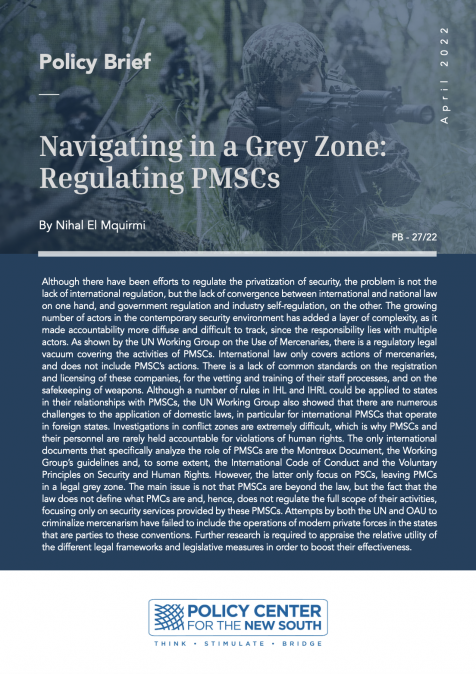
Although there have been efforts to regulate the privatization of security, the problem is not the lack of international regulation, but the lack of convergence between international and national law on one hand, and government regulation and industry self-regulation, on the other. The growing number of actors in the contemporary security environment has added a layer of complexity, as it made accountability more diffuse and difficult to track, since the responsibility lies with multiple actors. As shown by the UN Working Group on the Use of Mercenaries, there is a regulatory legal vacuum covering the activities of PMSCs. International law only covers actions of mercenaries, and does not include PMSC’s actions. There is a lack of common standards on the registration and licensing of these companies, for the vetting and training of their staff processes, and on the safekeeping of weapons. Although a number of rules in IHL and IHRL could be applied to states in their relationships with PMSCs, the UN Working Group also showed that there are numerous challenges to the application of domestic laws, in particular for international PMSCs that operate in foreign states. Investigations in conflict zones are extremely difficult, which is why PMSCs and their personnel are rarely held accountable for violations of human rights. The only international documents that specifically analyze the role of PMSCs are the Montreux Document, the Working Group’s guidelines and, to some extent, the International Code of Conduct and the Voluntary Principles on Security and Human Rights. However, the latter only focus on PSCs, leaving PMCs in a legal grey zone. The main issue is not that PMSCs are beyond the law, but the fact that the law does not define what PMCs are and, hence, does not regulate the full scope of their activities, focusing only on security services provided by these PMSCs. Attempts by both the UN and OAU to criminalize mercenarism have failed to include the operations of modern private forces in the states that are parties to these conventions. Further research is required to appraise the relative utility of the different legal frameworks and legislative measures in order to boost their effectiveness.
RELATED CONTENT

  • Authors
    July 17, 2026
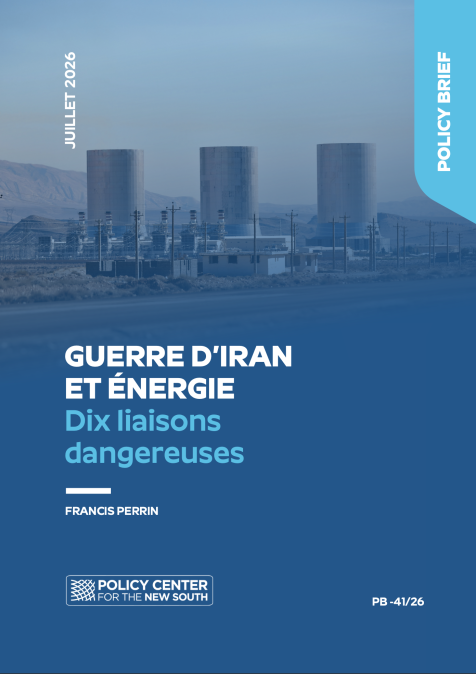
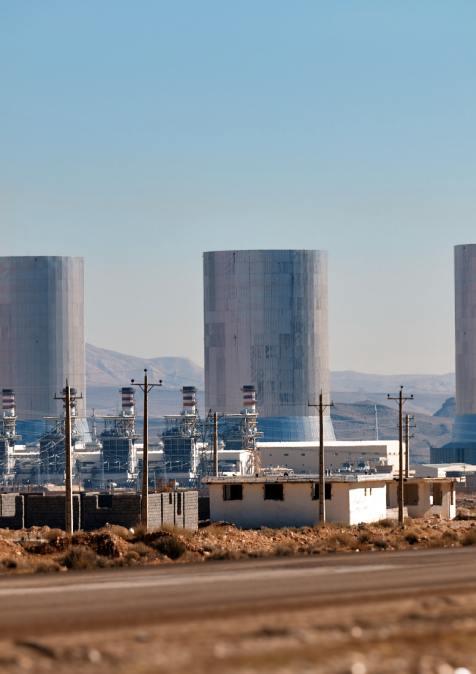
    Les relations, très étroites, entre l’énergie et la géopolitique sont bien connues. Cela vaut aussi pour plusieurs conflits armés. Mais, dans la période récente, le conflit le plus lié à l’énergie est la guerre d’Iran de 2026, qui a débuté le 28 février. Un cessez-le-feu est en vigueur depuis le 8 avril et un protocole d’accord a été signé le 17 juin par l’Iran et les États-Unis. Mais, comme le montrent les attaques de l’Iran contre des navires et les frappes américaines de ces dern ...
  • Authors
    July 17, 2026
    The close relationship between energy and geopolitics is well established. The same holds true for several armed conflicts. In recent years, however, the conflict most closely intertwined with energy has been the 2026 Iran War, which began on February 28. A ceasefire has been in effect since April 8, and a Memorandum of Understanding (MoU) was signed by Iran and the United States on June 17. Nevertheless, as demonstrated by Iran's attacks on commercial vessels and recent U.S. strike ...
  • Authors
    July 15, 2026
    We Are Watching You In April 2026, the UK Ministry of Defence revealed that it had tracked a covert Russian submarine operation apparently intended to map critical undersea cables and pipelines in the North Atlantic and the North Sea. A Russian attack submarine and two specialised intelligence vessels operated by the Main Directorate of Deep-Sea Research, commonly known as GUGI, were reportedly monitored for four weeks by the Royal Navy, including HMS St Albans and P-8 Poseidon ...
  • Authors
    July 13, 2026
    On “marinetraffic.com”, thousands of triangles fill a map of the world’s ports and oceans, each representing the active location and destination of a ship, reported the “McGill International Review” (April 16, 2026) adding,” suspicious tankers are plentiful among them.” One of these vessels, marked by a red triangle, appears, zoomed, as “Monique”, a twenty-year-old vessel, aka Tokyo, Phuket and Elysia. Its old age and the frequent name change, suspects reporter Julnar Alzuki, “indic ...
  • July 3, 2026
    This episode explores Russia’s growing influence in Africa through media, information warfare, and anti-Western narratives. It examines how Moscow uses historical ties, social media, local influencers, and security partnerships to shape perceptions, while questioning the real scope and ...
  • Authors
    June 19, 2026
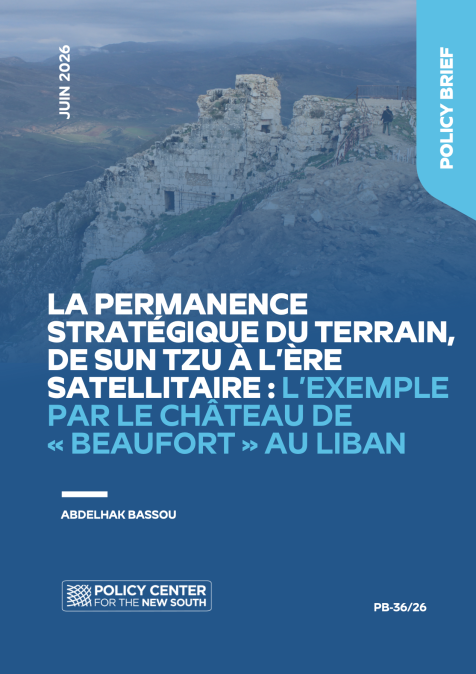
    At the end of May 2026, Israeli airstrikes targeted the surroundings of Beaufort Castle (Qalaat al-Chaqif), near Nabatiyeh, before the Israeli army announced that it had captured the site. This development raises a fundamental question: why does a medieval fortified hilltop retain military value in the age of satellites, drones, and cruise missiles?This Policy Brief argues that Beaufort's significance is geographical before it is ideological or technological. Overlooking the Litani ...
  • Authors
    June 19, 2026
    Fin mai 2026, des frappes israéliennes ont visé les abords du château de Beaufort (Qalaat al-Chaqif), près de Nabatiyeh, avant que l'armée israélienne n'en annonce la prise. Ce fait soulève une question centrale : pourquoi une hauteur fortifiée au Moyen Âge conserve-t-elle une valeur militaire à l'ère des satellites, des drones et des missiles de croisière ?Le présent Policy Brief tente de démontrer que la valeur de Beaufort est géographique avant d'être idéologique ou technologique ...
  • June 10, 2026
    L’édition 2026 du Rapport annuel sur la Géopolitique de l’Afrique (RAGA) du Policy Center for the New South analyse un continent africain saisi par une double transformation : celle du système international, plus fragmenté, plus conflictuel et plus transactionnel ; et celle des environn...