Publications /
Policy Brief
How can international arbitration preserve its core principles of neutrality, party autonomy and enforceability while adapting to a world increasingly characterized by geopolitical fragmentation, technological disruption and competing regulatory interests? Meeting this challenge demands a collective effort, bringing together arbitral institutions, national courts, governments, international organizations, academics and practitioners. It requires openness to institutional innovation, respect for different legal traditions and a shared commitment to the rule of law. Above all, it requires recognition that international arbitration belongs to no single country, institution or legal tradition.
The world in which international arbitration operates is undergoing profound change. Geopolitical tensions, economic fragmentation, technological disruption, shifts in international trade patterns and the global energy transition are reshaping the environment in which international commercial and investment disputes arise. At the same time, arbitral institutions, national legislatures and international organizations are reconsidering the legal and institutional foundations of international dispute resolution. International arbitration thus confronts a fundamental question: how can it preserve its established strengths while responding effectively to an increasingly complex, interconnected and politically fragmented world? Let me explore this question by examining several interconnected themes.
I. The changing landscape of international arbitration
For many decades, international arbitration has been regarded as one of the principal mechanisms for resolving disputes arising from international commerce and investment. Its attractiveness has rested on several fundamental principles: party autonomy, neutrality, procedural flexibility, independence and the international enforceability of arbitral awards. Although these principles remain essential, the environment in which they operate has changed substantially.
International arbitration is no longer concerned exclusively with contractual disagreements between private commercial parties. It is increasingly shaped by geopolitical developments, regulatory intervention, international sanctions, national security considerations, technological innovation and environmental policies. The Russia–Ukraine war, tensions in the Middle East, trade restrictions, economic sanctions and the restructuring of global supply chains have given rise to new disputes and added complexity to existing ones.
These developments raise difficult legal questions. When does a geopolitical event constitute force majeure? When can economic sanctions justify non-performance of a contractual obligation? Under what circumstances can a party invoke hardship or seek contractual adaptation? And how should arbitral tribunals address disputes involving mandatory regulations, export controls and competing national interests?
These questions are particularly relevant to long-term commercial agreements, energy contracts, construction projects and international infrastructure investments. They demonstrate that international arbitration must increasingly engage with the realities of international politics and economic regulation. In this environment, neutrality is not merely an institutional characteristic. It is a fundamental condition for maintaining confidence in the legitimacy and effectiveness of international arbitration.
II. The internationalization of Chinese arbitration and Shanghai's emerging role
An important dimension of the changing international arbitration landscape is the growing role of Asia, and particularly China, in international dispute resolution. China's position in international commerce and investment has evolved considerably. Its expanding involvement in international trade, infrastructure development, financial transactions and cross-border investment has created increasing demand for sophisticated international dispute resolution mechanisms. The modernization of China's arbitration framework, including the revised Arbitration Law, marks an important step in this evolution. It provides an opportunity to strengthen the legal and institutional foundations of arbitration, improve procedural flexibility and further develop the international dimension of Chinese arbitration.
This evolution raises several important questions. How can Chinese arbitration institutions attract more international disputes? How can foreign parties develop greater confidence in the Chinese arbitration environment? How can the participation of international arbitrators and practitioners be encouraged? And how can the principles of party autonomy, procedural fairness and institutional independence be further strengthened?
Shanghai is particularly well positioned to contribute to this process. Its importance as an international financial and commercial center, its concentration of international business activities and its expanding legal infrastructure provide a strong foundation for the development of international arbitration. However, becoming an internationally recognized arbitration center requires more than modern legislation and institutional development. It also requires international confidence. Building such confidence depends on consistent procedural standards, qualified and independent arbitrators, transparent institutional practices, effective judicial support and reliable enforcement of arbitral awards.
The development of Shanghai as an international arbitration center should therefore be understood not simply as a matter of institutional competition, but as an opportunity to contribute to the evolution of international arbitration as a genuinely global system. In this respect, cooperation between Shanghai, Singapore, Hong Kong, London, Paris, Dubai and other international arbitration centers will be particularly important. Competition can stimulate innovation, but cooperation is essential to strengthening the international dispute resolution system.
III. The reform of investor–State dispute settlement
Another major development concerns the future of investor–State dispute settlement, commonly referred to as ISDS. The traditional ISDS system has played an important role in protecting foreign investment and providing international investors with access to neutral dispute resolution mechanisms.
Nevertheless, the system has also faced growing criticism, particularly concerning the consistency of arbitral awards, the cost and duration of proceedings, arbitrator independence, transparency, and the balance between investor protection and States’ right to regulate. These concerns have prompted an increasingly broad international debate on the need for reform.
The work of UNCITRAL Working Group III is particularly important. The reform discussions include proposals concerning a possible permanent investment tribunal, an appellate mechanism, a code of conduct for adjudicators, procedural improvements, damages and compensation, investment dispute prevention and mediation. These initiatives reflect a recognition that the future of investment arbitration requires more than procedural adjustments. It also calls for a broader reassessment of the institutional and normative foundations of the system.
At the same time, we should not lose sight of an important principle: investment protection and the right of States to regulate are not necessarily incompatible. States must retain the ability to pursue legitimate public policy objectives, including environmental protection, public health, economic stability and sustainable development.
Investors, in turn, are entitled to the protections and legal certainty that States have undertaken to provide through international investment agreements. The challenge is to develop a system that gives appropriate consideration to both interests. This requires clearer investment treaty provisions, consistent interpretative approaches, independent adjudication and greater attention to the prevention and consensual resolution of disputes. The future of ISDS should therefore be measured not simply by the number of cases initiated, but by the system's capacity to deliver legitimate, fair and predictable outcomes.
IV. Geopolitics, international trade and the protection of cross-border investments
A further challenge is the increasing interaction between international arbitration and geopolitical developments. International businesses are operating in an environment characterized by economic fragmentation, sanctions, export controls, investment restrictions and changing trade relationships. These developments affect not only the performance of international contracts but also the legal environment in which cross-border investments are made.
For arbitration practitioners, these developments create complex legal challenges. Consider, for example, an international infrastructure project affected by sanctions, an energy investment disrupted by changes in government policy or a commercial contract whose performance becomes legally or economically impossible because of export restrictions. In each situation, the arbitral tribunal may be required to consider contractual obligations, applicable mandatory laws, the law of the seat, public policy and the consequences of regulatory intervention.
There is also an important enforcement dimension. Even when an arbitral tribunal renders a well-reasoned award, its practical value depends on whether it can be recognized and enforced in the relevant jurisdictions. The relationship between arbitration and national courts therefore becomes particularly important.
The New York Convention remains one of the great achievements of international commercial law. Its continued effectiveness is essential to the credibility of international arbitration. However, questions concerning sovereign immunity, sanctions, public policy and the enforcement of awards against State assets are becoming increasingly significant. This reinforces the importance of carefully selecting the arbitral seat, drafting effective arbitration agreements and considering enforcement prospects from the outset of an international transaction.
V. Artificial intelligence, digitalization and cybersecurity
We are also witnessing a technological transformation that is already reshaping the practice of international arbitration. Artificial intelligence offers significant opportunities to enhance the efficiency, accessibility and management of arbitral proceedings. It can assist with documentary review, legal research, translation, transcription, preparation of chronologies, analysis of evidence and management of large volumes of electronic information. These applications can reduce administrative burdens and help parties and tribunals manage increasingly complex disputes.
However, technological progress also creates new responsibilities. Its use raises fundamental concerns relating to confidentiality, accuracy, transparency and due process. How should parties disclose their use of artificial intelligence? What safeguards are necessary to prevent reliance on fabricated legal authorities or inaccurate information? How can confidential documents be protected when AI tools are used? And what limits should apply to the use of artificial intelligence by arbitrators themselves?
One principle should remain clear: artificial intelligence may assist the decision-making process, but it must never replace the independent judgment, responsibility and impartiality of the arbitrator. The authority of an arbitral award ultimately rests on the integrity of the human decision-making process.
Cybersecurity is equally important. International arbitration proceedings frequently involve sensitive commercial information, financial records, intellectual property and confidential business strategies. The increasing use of electronic platforms and virtual hearings creates risks of cyberattacks, unauthorized access, data breaches and interference with proceedings. Cybersecurity should therefore be treated as an integral component of procedural fairness and institutional responsibility. Arbitration institutions and tribunals should address these matters at the beginning of proceedings, establishing appropriate protocols for data protection, document management and secure communication.
VI. Climate change, energy transition and sustainable development
Another major source of international disputes is the global transition towards more sustainable economic and energy systems. The development of renewable energy, the regulation of fossil fuel investments, the expansion of electricity infrastructure and the growing importance of critical minerals are generating new commercial and investment relationships.
They are also creating new categories of disputes. Changes in renewable energy incentives, the withdrawal of environmental permits, modifications to feed-in tariffs and government decisions affecting energy investments may give rise to contractual or investment claims. These disputes raise fundamental questions about how to reconcile the exercise of legitimate regulatory authority with the protection of investors' rights and expectations. International investment agreements must increasingly take account of environmental protection, sustainable development and the regulatory responsibilities of States. At the same time, investors need legal certainty and predictable regulatory frameworks.
The challenge is not to choose between investment protection and environmental sustainability. It is to develop an international legal framework in which both objectives can be pursued consistently. International arbitration will have an important role in addressing these competing interests.
VII. Procedural innovation: efficiency, emergency arbitration and third-party funding
The future of international arbitration also depends on its capacity to remain efficient and accessible. One of the longstanding criticisms of arbitration concerns its increasing cost and duration. The modernization of institutional rules, including the ICC's 2026 framework and the SIAC 2025 Rules, reflects a continuing effort to address these concerns. Greater procedural flexibility, expedited procedures, preliminary determination and improved case management are among the measures aimed at making arbitration more responsive to the needs of its users.
Emergency arbitration is another significant innovation. In certain circumstances, parties cannot afford to wait until a full tribunal has been constituted before obtaining urgent protection. The preservation of assets or evidence, the protection of confidential information and the maintenance of the status quo may be essential to safeguarding the effectiveness of arbitral proceedings. Emergency arbitrators and interim relief mechanisms can therefore strengthen arbitration's practical value.
Third-party funding is also becoming increasingly relevant. It can improve access to justice by allowing parties to pursue meritorious claims without bearing the entire financial burden of proceedings. However, funding arrangements also raise questions concerning conflicts of interest, transparency, disclosure and the potential influence of funders. The objective should be to establish an appropriate balance between access to justice, procedural fairness and transparency. Ultimately, arbitration must remain a mechanism that is not only legally sound but also commercially effective and practically accessible.
VIII. Diversity, legitimacy and the future of arbitral institutions
There is another issue that deserves our attention: the legitimacy of arbitral tribunals. International arbitration is a global system. Its credibility therefore depends on the confidence of parties from different legal traditions, geographical regions and economic backgrounds.
Diversity in arbitrator appointments is an important part of this discussion. Gender diversity, geographical representation, professional experience, legal background and the participation of younger practitioners all contribute to the development of a more representative international arbitration community.
This is not simply a question of representation. It is also a question of institutional legitimacy and confidence in the independence and impartiality of the system. Arbitration institutions have an important responsibility to encourage broader participation and to ensure that international arbitration reflects the diversity of the international business and legal communities it serves.
IX. Mediation and the development of integrated dispute resolution mechanisms
Another important development is the increasing recognition that arbitration should form part of a broader dispute resolution framework. Negotiation, mediation, dispute boards, expert determination and arbitration can complement one another. In long-term commercial relationships, particularly in construction, infrastructure and energy, the early resolution of disagreements can preserve commercial relationships and prevent disputes from escalating into lengthy proceedings.
Hybrid mechanisms, including Arb-Med-Arb, are therefore attracting increasing attention. This development is also relevant to investment disputes, where prevention and mediation can offer States and investors opportunities to resolve disagreements before they become formal arbitration proceedings. The future of international dispute resolution should not be defined by arbitration alone, but by the capacity of different mechanisms to work together effectively.
X. The geographical transformation of international arbitration
All these developments are taking place against the background of a broader geographical transformation. For many years, international arbitration was strongly associated with a relatively small number of traditional centers, particularly London, Paris and Geneva. Today, Singapore, Hong Kong, Dubai and other centers have become increasingly important. Shanghai's growing international ambitions are part of this wider transformation. This development should not be viewed simply as a competition for cases. It reflects the changing geography of international trade, investment and economic cooperation. The development of multiple internationally respected arbitration centers can strengthen the global system by expanding access, encouraging institutional innovation and bringing dispute resolution closer to the commercial activities that generate disputes.
However, international arbitration must avoid excessive fragmentation. Different centers may have different institutional structures and legal traditions, but the system must continue to share fundamental commitments to impartiality, procedural fairness, party autonomy and enforceability. The strength of international arbitration lies in its ability to accommodate legal diversity while maintaining common principles.
XI. The future: preserving the foundations while embracing change
International arbitration is entering a new phase of development. Its future will be influenced by at least five structural transformations. First, arbitration will become increasingly geopolitical as international conflicts, sanctions, trade restrictions and national security considerations exert greater influence on international disputes and the legal frameworks governing their resolution. Second, the relationship between commercial arbitration and investment arbitration will continue to evolve. Although they remain distinct systems, they face common challenges concerning transparency, efficiency, independence and enforcement. Third, the legitimacy of arbitration will become as important as its efficiency. Parties need proceedings that are not only fast and cost-effective, but also fair, independent and credible. Fourth, sustainability and the energy transition will increasingly influence the substance of international contracts and investment agreements. Fifth, technological innovation will transform the way arbitration is conducted, while requiring new safeguards for confidentiality, accountability and due process.
These developments lead us to a fundamental conclusion: the future of international arbitration cannot depend exclusively on new rules, institutions or technologies. Above all, it depends on confidence. Confidence that arbitral tribunals will remain independent and impartial. Confidence that parties will receive a fair opportunity to present their cases. Confidence that arbitral awards will be respected and enforced. Confidence that institutions will adapt to new challenges without compromising fundamental legal principles. And confidence that international arbitration will remain a genuinely neutral mechanism for resolving disputes across national, legal and cultural boundaries.
This brings me back to the central question:
Can international arbitration preserve its traditional foundations of neutrality, party autonomy and enforceability while adapting to a world increasingly characterized by geopolitical fragmentation, technological disruption and competing regulatory interests?
Achieving this objective requires collective responsibility. It requires cooperation between arbitral institutions, national courts, governments, international organizations, academics and practitioners. It also requires openness to institutional innovation, respect for different legal traditions and a shared commitment to the rule of law.
Ultimately, the international arbitration system is not the property of any particular country, institution or legal tradition. It is a common international achievement. Its future depends on becoming more efficient, inclusive, technologically advanced and responsive to the needs of international commerce and investment, while remaining faithful to the principles that have made it successful. International arbitration must evolve with the world, without losing the foundations that give it legitimacy.
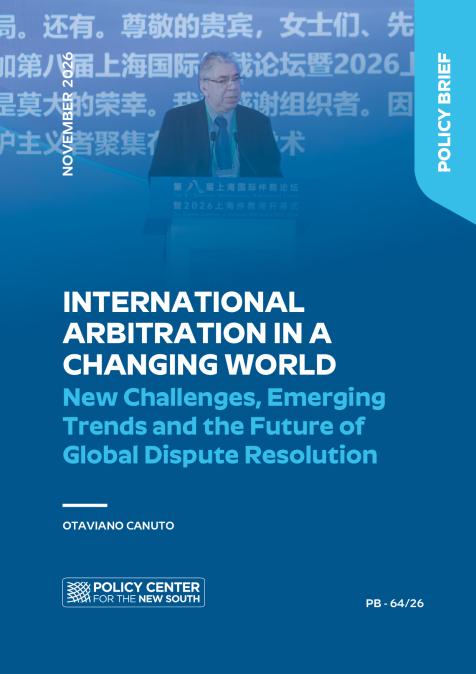
[i] Based on my keynote address at the 8th Shanghai International Arbitration Forum, Shanghai, November 7, 2026. I am deeply grateful to my former colleagues in the World Bank’s Trade Department, from whom I learned a great deal during my tenure as Vice President overseeing the department (2009-2013).