Publications /
Opinion

This Opinion was originally published in globalpolicyjournal.com
Is the present juncture a crisis or an opportunity for international cooperation? Len Ishmael, Stephan Klingebiel and Andy Sumner argue that the answer is: both.
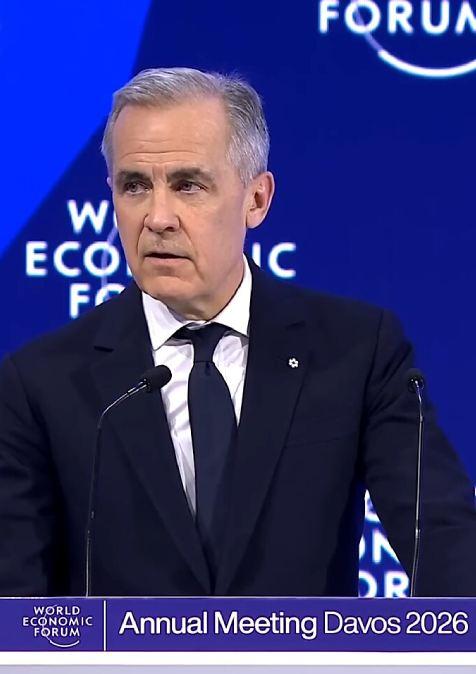
Is today’s global turbulence a sign of collapse, or of overdue rebalancing? There is little doubt about the relevance of Canadian Prime Minister Mark Carney’s speech at the World Economic Forum in Davos. It was a strong intervention, not least because it drew on Eastern European experience through its explicit reference to Václav Havel’s 1978 essay The Power of the Powerless. Carney’s call for “building coalitions that work” resonated widely especially because, without mentioning President Trump, he spoke with unusual clarity and candour as a Western leader about the state of the international system and the pressures it is currently under.
But this is nothing new. Leaders from the Global South have long expressed the view that the rules of the Western led liberal world order have been inconsistently applied and are designed to favour the West. Brazil’s President Luiz Inácio Lula da Silva has repeatedly called for far-reaching reforms of global governance, while South Africa’s President Cyril Ramaphosa has echoed similar demands. Mia Amor Mottley, Prime Minister of Barbados, has emerged as one of the most forceful voices arguing that existing global structures systematically disadvantage the Global South.
More recently, on 19 January 2026, Singapore’s Minister for Defence, Chan Chun Sing, delivered a notable address built around three core propositions: first, that small states must build capabilities to remain relevant; second, that like-minded states must actively uphold rules and norms; and third, that new norms are urgently needed to address emerging challenges—despite the “tyranny of the current moment.” Given Singapore’s exposure to the erosion of international institutions and norms, the directness of this intervention is significant. Together, these interventions underline two points: Carney’s speech was a milestone. However, it also reflects a broader conversation whose substance depends heavily on perspective and positioning.
The key divide is not between order and chaos, but between Northern anxiety and Southern agency.
For decades, unfair global structures were largely sidelined in Northern policy debates. They are now being taken seriously at a moment when US leadership is openly straining relations with allies and challenging established norms. This shift highlights how perceptions of global order depend to a large extent on vantage point. Unsurprisingly, the state of global affairs is interpreted very differently across regions - a fact that remains underestimated by many Northern observers.
This is exactly the issue we explore in a policy paper recently published by the Policy Centre for the New South.
Why the North Sees Crisis
From many Northern perspectives, the international system is widely seen as being in deep crisis. This view has been forcefully articulated in major political and policy forums such as the 2025 United Nations General Assembly and the Munich Security Conference, where leaders warned not only of erosion but of dysfunction. UN Secretary-General António Guterres cautioned that the “pillars of peace and progress are buckling,” arguing that multipolarity without effective multilateral institutions risks chaos.
European leaders have similarly framed authoritarian coordination and bloc politics as direct challenges to the rules-based international order. At the same time, rising nationalist populism within Northern countries is weakening domestic support for multilateralism itself, hollowing out the political foundations on which global governance depends.
Crucially, this crisis is not experienced merely as an abstract loss of legitimacy, but as a decline in problem-solving capacity. Institutional paralysis in bodies such as the UN Security Council and the WTO has limited their ability to act, encouraging a turn towards minilateral and ad-hoc arrangements. Power-based bargaining increasingly substitutes for rule-based cooperation, while normative fragmentation undermines shared expectations about democracy, human rights, and the rule of law. In fast-moving domains, from artificial intelligence to digital governance, regulatory gaps are widening, reinforcing the Northern perception that global institutions are falling behind the challenges they are meant to manage.
Taken together, these developments explain why many Northern actors interpret the current moment less as transition than as breakdown. What is at stake, from this vantage point, is not only influence but governability: the fear that existing institutions can no longer deliver stability, predictability, or collective action in a fragmented and competitive world.
Why the Global South Sees Opportunity
From the perspective of the Global South, the same turbulence can look very different. For many countries, today’s moment signals not only risk but also opportunity. The unravelling of the post-Second World War liberal order has been accelerated by an extraordinary convergence of shocks from the COVID-19 pandemic and wars in Europe and the Middle East, to trade fragmentation, political polarisation in advanced democracies, and shifting alliance structures. While these developments fuel anxiety in the North about declining influence, they follow decades of dissatisfaction elsewhere with an international system widely seen as unrepresentative and inequitable.
Shifting power balances are creating space for greater agency. Economic gravity is moving decisively towards the Indo-Pacific region, and many Global South countries, often described as “swing states” or multi-aligned actors, see opportunities to shape a governance architecture that better reflects contemporary realities. Growing demands for voice and inclusion have gained institutional expression through reform initiatives, renewed debates on Bretton Woods institutions, and pragmatic coalition-building across traditional North–South divides.
Despite financial constraints and institutional strain, a reformist mood is visible. Many Global South governments are not rejecting multilateralism but seeking to reshape it through South–South cooperation, regional frameworks, and flexible, issue-based coalitions capable of delivering concrete outcomes. From this vantage point, what the North often experiences as disorder may appear as a rare window to influence the rules, norms, and institutions of the emerging global order.
Agency Has Shifted and So Has Multilateralism
Is the present juncture a crisis or an opportunity for international cooperation? The answer is: both. For many in the North, established practices are clearly under strain, generating a pervasive sense of crisis. At the same time, actors in the Global South see an opportunity to shape a more inclusive and equitable multilateral system. This has long been a central aspiration.
What looks like breakdown from a Northern vantage point can thus appear as rebalancing from the South. Agency has shifted, and so have the venues where cooperation advances. Institutions may be narrower in scope, but in several domains, they are broader and more innovative in delivery. The future of global cooperation will be written less in universal declarations, and more in who exercises agency.
Photo by Mathias Reding