Publications /
Policy Brief

Back
L'économie afghane au bord du chaos
November 8, 2021

 L'arrivée des Talibans dans Kaboul, le 16 août 2021, et l'effondrement du régime afghan au profit des islamistes qui l'accompagne, vont provoquer une véritable onde de choc mondiale, faisant oublier, pour un temps, la situation économique du pays durant la présence américaine. Ce Papier est consacré à cette situation et aux conséquences, pour l'économie afghane, de la prise de pouvoir des Talibans.
Le moins que l'on puisse dire, c'est que la présence américaine n'a guère été profitable à l'économie du pays, avec des résultats en trompe l'oeil imputables à des dons ou à des soutiens financiers, essentiellement portés par le Fonds monétaire international (FMI) et la Banque mondiale (BM) et ou émanant du monde occidental. Par contre, de façon surprenante, pendant 20 ans de présence américaine, rien n'a été fait pour valoriser le riche sous-sol afghan.
L'arrivée des Talibans prive le pays de ces dons et aides occidentales qui avaient permis à son économie de faire illusion. Parmi les pays ouverts à la discussion avec le pouvoir islamique en place, la Chine et la Russie mettent en avant les questions sécuritaires. Pourtant, la priorité absolue est économique, dans un pays incapable aujourd'hui de payer ses fonctionnaires. Valoriser le sous-sol est, bien sûr, la seule issue qui permettrait au pays de sortir de sa dépendance et de mettre fin à « l'économie de la perfusion » qui a été la sienne. La Chine, qui a déjà fait ses offres de services aux Talibans avant leur retour à Kaboul, nous semble être, de loin, le pays le mieux placé pour tirer profit de cette situation.

RELATED CONTENT

  • From

    17
    9:00 am November 2026
    In person registrationOnline registrationIndustrialization in North Africa is entering a new phase shaped by global megatrends, the green and digital transitions, evolving value chains, and the growing need for resilient and competitive production systems.Against this backdrop, the Policy Center for the New South and the United Nations Industrial Development Organization (UNIDO) are convening The Future of Industrialization: Building Future-Ready Industries in North Africa on November 17, 2026, at the Policy Center for the New South in Rabat.The event will present key insights from the Industrial Development Report 2026 (IDR26) and bring together policymakers, industry leaders and experts to discuss the region’s industrial opportunities, constraints and policy priorities. The ...
  • Authors
    Aziz Ajbilou
    Ouidade Sabri
    November 4, 2026
    School dropout remains a major challenge for education systems and public policy, with lasting consequences for human capital, labor market integration, social cohesion, and long-term economic growth. Despite sustained efforts to expand access to schooling, many countries continue to experience high dropout rates, particularly at key transition points in lower- and uppersecondary education. Policy responses have often relied on fragmented, sector-specific interventions—addressing ed ...
  • Authors
    October 29, 2026
    Wars are decided by those who hold military power, but their costs are increasingly borne by those who have little or no voice in the decisions that start them. The US–Iran war shows this imbalance very clearly. Its economic consequences have gone far beyond the battlefield and have disrupted energy markets, trade routes, food supplies, public finances and investment in the Gulf, Europe, Africa and Asia. The most striking feature of the conflict, however, is not only the size of the ...
  • October 23, 2026
    In this episode, Mehran Haghirian explores the global economic consequences of disruptions in the Strait of Hormuz, beyond oil and gas. He examines their impact on trade, fertilizer suppl ...
  • Authors
    October 13, 2026
    “Every gun that is made, every warship launched, every rocket fired signifies in the final sense, a theft from those who hunger and are not fed, those who are cold and are not clothed.”President Dwight Eisenhower, April 16, 1953 This paper examines the economic and human impacts of the first six months of the Iran war—from February to the end of August 2026—on Iran’s Arab neighbors and compares these impacts with those on the three countries directly involved—Iran, Israel and t ...
  • Authors
    Soukaina Raoui
    October 5, 2026
    This paper was originaly published on International Journal of Educational Research Open University dropout remains a major challenge in higher education due to its academic, social, and economic consequences. This study examines the role of academic and career orientation in shaping dropout in Morocco and improving student retention. A sequential mixed-methods design is applied. The quantitative component uses APOGEE administrative data covering 55,674 students and logist ...
  • Authors
    September 23, 2026
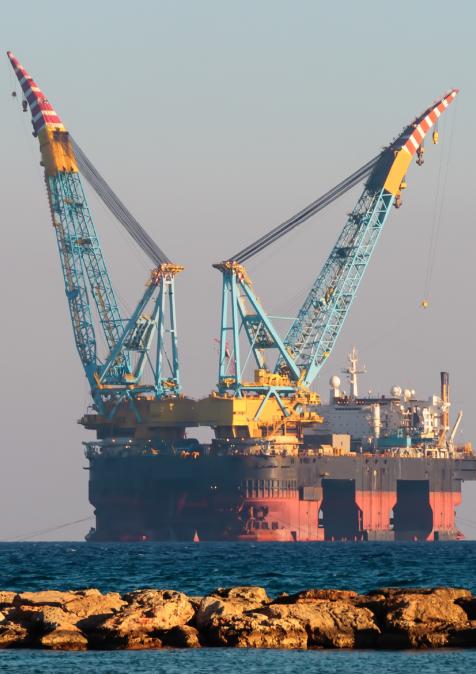
    Since around 2010, it has been known that the Eastern Mediterranean is a new gas province. Gas resources have indeed been discovered offshore four countries or territories: Egypt, Israel, Cyprus and Gaza. Two of them have become producers and exporters of natural gas, Egypt and Israel. Off the coast of Gaza, the Gaza Marine gas field has never been developed, and it is highly unlikely to be developed anytime soon given the very high tensions between the State of Israel and Hamas. By ...
  • Authors
    September 23, 2026
    Depuis 2010, environ, on sait que la Méditerranée orientale est une nouvelle province gazière. Des ressources gazières ont en effet été découvertes au large de quatre pays ou territoires, l’Égypte, Israël, Chypre et Gaza. Deux d’entre eux sont devenus producteurs et exportateurs de gaz naturel, l’Égypte et Israël. Au large de Gaza, le champ gazier de Gaza Marine n’a jamais été développé et il est très peu probable qu’il le soit prochainement en raison des très fortes tensions entre ...
  • Authors
    September 14, 2026
    Le déclenchement de la Guerre en Iran et le blocage du détroit d’Ormuz ont eu des conséquences majeures sur un grand nombre de marchés mondiaux de matières premières. Si l’attention médiatique s’est logiquement portée sur le pétrole et le gaz naturel, ainsi que sur l’aluminium, en raison de la forte dépendance de l’offre de ce métal aux prix de l’énergie, le soufre, comme l’hélium, l’éthylène, le propylène ou l’urée, a également été pris dans les rets de ce conflit. Loin d’être une ...