Publications /
Opinion
Africa First, But Africa Not Alone
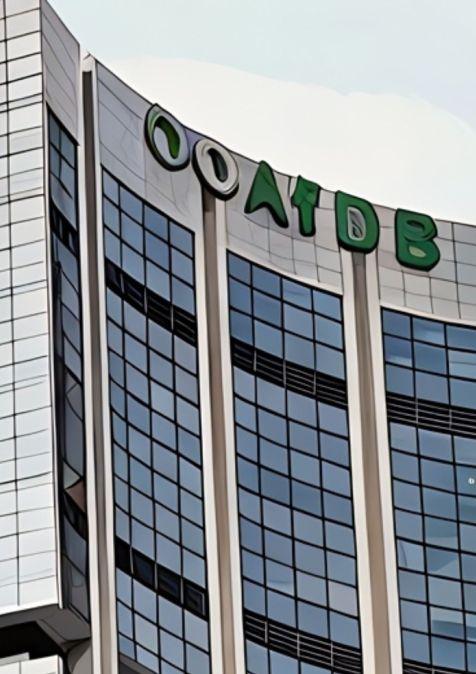
As the world grapples with economic fragmentation, geopolitical realignments, and an accelerating polycrisis, Africa finds itself at a historic crossroads. With its vast resources, demographic dynamism, and a growing consumer base, the continent has the potential to reshape global economic narratives. Yet, this potential remains constrained by inadequate infrastructure, limited access to global finance, and persistent structural vulnerabilities. In this new era, the African Development Bank (AfDB) must take a bolder role—not as a passive development financier but as a strategic vehicle for Africa’s economic sovereignty and global influence.
The AfDB’s agenda should be guided by a clear principle: Africa First, but Africa Not Alone. This is not a retreat into protectionism but a recalibration of priorities. It is about asserting Africa’s agency in a world where economic blocs are hardening, supply chains are being reconfigured, and the Bretton Woods institutions face mounting criticism for their failure to adequately serve the Global South.
Crucially, this agenda must embrace a whole-of-Africa approach, fully integrating North Africa into continental economic strategies. For too long, North Africa has been treated as geopolitically distinct, often viewed through the lens of the Middle East or Mediterranean relations rather than as an integral part of Africa’s development story. The AfDB must do more to break this artificial divide and foster a more unified African economic agenda that includes both sub-Saharan and North African economies.
Moreover, the changing leadership at the AfDB in May 2025 presents an opportunity for institutional renewal, professionalization, and a departure from the past inertia that has often slowed the bank’s ability to act decisively. With a new president set to take office, Africa’s premier development finance institution must pivot toward a more strategic and results-driven approach.
Africa’s Window of Opportunity in a Fractured Global Economy
Africa’s economic trajectory is being shaped by a world undergoing deglobalization, friendshoring, and heightened geopolitical competition. The weakening of multilateral trade regimes and the rise of regional economic blocs have created both risks and opportunities for the continent.
- China’s evolving engagement: While China remains Africa’s largest bilateral lender and infrastructure partner, Beijing’s slowing economy and recalibration of its Belt and Road Initiative (BRI) require Africa to rethink its dependence on Chinese capital.
- The U.S. and EU’s re-engagement: The West is stepping up efforts to counter Chinese and Russian influence in Africa, particularly in energy, minerals, and security cooperation. The U.S. Inflation Reduction Act (IRA) and the EU’s Global Gateway initiative offer new investment pathways, but Africa must shape the terms of engagement.
- BRICS+ and South-South cooperation: The expansion of BRICS+ (including Egypt and Ethiopia) presents Africa with an alternative framework for economic cooperation, challenging the dominance of Western-led financial institutions.
- Geopolitical commodity realignment: Africa’s critical minerals (cobalt, lithium, rare earths) are now at the center of global supply chain wars. The continent must leverage its resources strategically rather than surrender them to raw material extraction models.
With this backdrop, the AfDB cannot afford to be a status quo institution. It must transform into a proactive economic architect for the continent.
A Strategic Pivot: From Lender to Architect of African Economic Sovereignty
The AfDB must go beyond traditional lending and position itself as a geopolitical and geoeconomic actor that shapes Africa’s development trajectory on its own terms. This requires a three-pronged approach:
1- Reshaping Africa’s Financial Architecture: A New Deal for Capital Mobilization
Africa’s financing gap for infrastructure, energy, and industrialization remains a staggering $100–$170 billion per year. Yet, the continent remains at the mercy of foreign debt markets, where borrowing costs are significantly higher than in other emerging regions. The AfDB must spearhead a bold shift in Africa’s financial architecture.
- Expanding Africa’s alternative financial institutions: The AfDB should accelerate the development of an African Credit Rating Agency to counterbalance the unfair risk premiums imposed by Western agencies. Additionally, it should lead efforts to operationalize an African Monetary Fund (AMF) that offers counter-cyclical lending, reducing reliance on the IMF’s often punitive conditionalities.
- Pushing for SDR reallocation and new capital mechanisms: While Western economies have pledged to reallocate Special Drawing Rights (SDRs) to Africa, the process remains slow and insufficient. The AfDB must lead a coalition of African finance ministers to demand a greater and more direct reallocation, alongside the establishment of an Africa-focused liquidity fund.
- Unlocking pension funds and sovereign wealth capital: With an estimated $2 trillion in African pension and sovereign wealth funds, the AfDB should develop mechanisms to channel these resources into infrastructure and green energy investments rather than letting them sit in Western financial institutions earning minimal returns.
2- Industrialization and Energy Sovereignty: Beyond Resource Extraction
Africa cannot repeat the mistakes of the past—remaining a supplier of raw materials while importing finished goods. The AfDB must drive a new industrialization paradigm that prioritizes local value addition and economic complexity.
- Building strategic mineral refining and processing hubs: Instead of exporting raw lithium, cobalt, or rare earths, Africa must develop regional industrial corridors that process these minerals domestically. The AfDB should provide concessional financing to governments and private sector actors that commit to in-continent beneficiation.
- Expanding energy sovereignty through renewables and gas: Africa cannot industrialize without energy. The AfDB should support a dual-track approach—accelerating renewable energy deployment while ensuring natural gas remains a transitional fuel. The West’s push to cut financing for African gas projects must be countered with a firm African-led energy strategy.
- Strengthening intra-African supply chains: The African Continental Free Trade Area (AfCFTA) offers a historic opportunity to boost intra-African trade. The AfDB must finance industrial clusters and transport corridors that enhance connectivity, reducing the current reliance on external markets.
3- A Whole-of-Africa Agenda: Integrating North Africa into the Strategy
North Africa has often been treated as separate from Africa’s broader economic agenda, yet it is home to some of the continent’s largest economies and plays a key role in regional stability. The AfDB must break this artificial divide and promote an inclusive development strategy.
- Bridging infrastructure gaps between North and sub-Saharan Africa: The bank should support greater transport and energy connectivity across the Sahara, integrating supply chains between regions.
- Leveraging North Africa’s financial and industrial base: Countries like Egypt, Morocco, and Algeria have well-established industrial and financial sectors that could serve as hubs for broader African industrialization.
- Facilitating South-South investment: North African capital and expertise should be encouraged to invest in sub-Saharan economies, particularly in energy, logistics, and manufacturing.
4- Rethinking Fragility: A Resilience-First Approach
With over 400 million people across 26 African countries affected by conflict, economic resilience is unattainable without addressing fragility. The AfDB must shift from reactive crisis management to a resilience-first strategy that integrates peacebuilding, economic diversification, and institutional strengthening.
Beyond Crisis Response
Conflict resolution must go beyond immediate stabilization efforts, embedding long-term, community-driven peacebuilding mechanisms that preempt instability rather than merely containing it.
From Dependency to Economic Transformation
Fragile states must transition from reliance on extractive industries to diversified, sustainable economies. Strategic investment in resilient sectors will foster self-sufficiency and reduce vulnerability to external shocks.
Institutional Anchors for Stability
A robust post-crisis recovery framework requires strengthening governance structures and creating economic zones that serve as engines of regional stability and integration.
The AfDB must move beyond conventional aid-driven approaches, embedding resilience at the core of its development paradigm.
5- Changing Leadership in May 2025: A Moment for Institutional Renewal
The upcoming leadership change at the African Development Bank (AfDB) presents a critical opportunity to restore credibility, improve governance, and enhance operational agility.
Decentralization for Efficiency
The AfDB’s centralized structure has often led to bureaucratic inertia, slow approvals, and rigid project design. Establishing autonomous regional hubs in Nairobi, Abidjan, Pretoria, and a North African center—Cairo or Casablanca—would:
- Accelerate decision-making and approvals for critical projects.
- Adapt policies to regional economic realities, improving efficiency.
- Deepen engagement with local governments, businesses, and civil society for stronger stakeholder ownership.
Breaking the Cycle of Patronage
For the AfDB to be a world-class institution, leadership must be apolitical, meritocratic, and results-driven. This requires:
- A competitive, transparent recruitment process for senior roles.
- Attracting top African talent from international organizations, academia, and the private sector.
- Embedding data-driven leadership that prioritizes impact over politics.
Reducing Donor Dependence
The bank must shift beyond reliance on external donors by mobilizing African capital and diversifying funding sources, reinforcing its role as a credible financial institution for the continent’s future.
Conclusion: A Decisive Moment for Africa’s Development Bank
The African Development Bank stands at a defining moment. It can choose to remain a conventional development financier, constrained by donor politics and incremental reforms, or it can embrace a bold, transformative role that reshapes Africa’s economic trajectory.
A ‘business as usual’ approach is no longer an option. With global power dynamics shifting and Africa’s economic weight rising, the AfDB must champion a new vision—one that prioritizes Africa First, but Africa Not Alone.
By reshaping the continent’s financial architecture, driving industrialization, integrating North Africa into the strategy, and leveraging its leadership transition to professionalize its operations, the AfDB can turn this moment of global fracture into an era of African resurgence.
The question is no longer whether Africa can rise, but whether its institutions are prepared to lead. May 2025 will be the test.