Publications /
Policy Paper

Back
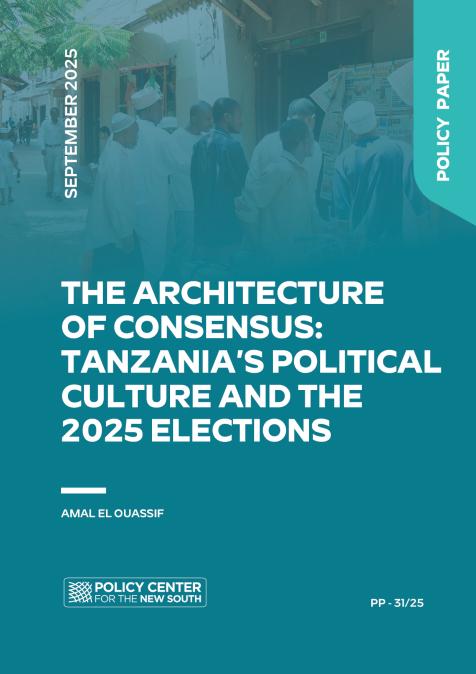
The Architecture of Consensus: Tanzania’s Political Culture and the 2025 Elections
Authors
September 15, 2025

The October 2025 general elections in Tanzania unfold within a political culture grounded in consensus and institutional continuity. President Samia Suluhu Hassan’s leadership has reopened political space by restoring elite dialogue, easing restrictions on rallies, and facilitating the return of exiled figures. Yet the exclusion of CHADEMA—the principal opposition party—highlights the enduring limits of pluralism. This paper analyzes the Tanzanian electoral process less as a conventional test of democratic competition than as a recalibration of consensus politics, where inclusion and exclusion are managed within a hegemonic framework shaped by the legacies of ujamaa and the dominance of Chama Cha Mapinduzi (CCM). Drawing on the works of Hyden and others, the analysis situates the 2025 elections within a historical continuum in which elections function as instruments of national affirmation and elite negotiation rather than mechanisms for alternation of power. The discussion develops along three interrelated dimensions: the persistence of elite accommodation within CCM, the bounded openness of civic and opposition space, and the symbolic but limited role of procedural pluralism. It argues that Samia’s leadership reflects a strategy of “negotiated legitimacy,” with reforms carefully calibrated to safeguard stability and international credibility while preserving the architecture of dominance. The conclusion reflects on the implications of this model for Tanzania’s future: while stability is maintained through consensus without contestation, growing demographic, social, and digital pressures may test the resilience of this political order beyond 2025.

RELATED CONTENT

  • July 19, 2022
    يخصص مركز السياسات من أجل الجنوب الجديد حلقة برنامجه الأسبوعي "حديث الثلاثاء" لمناقشة أهم التحديات التي تواجهها القارة الإفريقية مع عبد الحق باسو ، باحث بارز بمركز السياسات من أجل الجنوب الجديد. خلال هذه الحلقة ، يستعرض عبد الحق باسو التحديات الأمنية الرئيسية التي تواجه البلدا...
  • July 15, 2022
    Longtemps considérée comme ce que plusieurs ont appelé un « lac salé » qui sépare l’Afrique et l’Asie, la mer Rouge a longtemps été marginalisée au niveau international. Néanmoi ...
  • July 12, 2022
    يخصص مركز السياسات من أجل الجنوب الجديد حلقة برنامجه الأسبوعي "حديث الثلاثاء" لمناقشة أهم التحديات التي تواجهها منطقة حوض بحيرة التشاد مع خالد شكراوي، باحث بارز بمركز السياسات من أجل الجنوب الجديد. في شمال منطقة وسط إفريقيا، وتحديداً في بحيرة تشاد التي تعتبر ذا...
  • June 28, 2022
    ستتطرق هذه الحلقة الجديدة من برنامج حديث الثلاثاء الى العلاقة الثنائية المغربية الجزائرية عبر التركيز على المناطق الحدودية بين البلدين الجارين انطلاقا من وجهة نظر تاريخية علمية. فكيف تخبرنا الحدود عن طبيعة العلاقات بين البلدين الشقيقين؟ وكيف من الممكن ان نبني انطلاقا من هنا رؤية لمستقبل...
  • June 21, 2022
    يخصص مركز السياسات من أجل الجنوب الجديد حلقة برنامجه الأسبوعي "حديث الثلاثاء" لمناقشةوضعية اللاجئين بإفريقيا خلال عام 2022 مع محمد لوليشكي، باحث بارز بمركز السياسات من أجل الجنوب الجديد يحتفي العالم كل 20 يونيو من كل عام باليوم العالمي للاجئين، بينما أفادت مفوضية الأمم ا...
  • June 20, 2022
    From socio-economic crises to the scourges of war, through natural disasters and environmental degradation, the world's history is marked by events leading to mass migration, exacerbating the phenomenon of climate refugees. Today, environmental phenomena prompt many inhabitants to choose exile in search of more stable horizons. It is essential to note that no legal text, either global or regional, considers the case of climate refugees. Given the lack of a specific legal regime for ...
  • Authors
    Pascal Chaigneau
    Alain Oudot de Dainville
    Rodolphe Monnet
    Florent Parmentier
    Olivier Tramond
    June 16, 2022
    Les Dialogues stratégiques, une collaboration entre le HEC Center for Geopolitics et le Policy Center for the New South représentent une plateforme d’analyse et d’échange biannuelle réunissant des experts, des praticiens, des décideurs politiques ainsi que le monde universitaire et les médias au service d’une réflexion critique et approfondie sur les tendances politiques mondiales et les grandes questions d’importance commune pour l’Europe et l’Afrique. Cette publication est ...
  • Authors
    May 27, 2022
    How did an insurrection in Northern Mozambique escalate into a crisis that is drawing myriad external actors, and risks destabilizing the region? What are the colonial and Cold War origins of this conflict in Cabo Delgado? Why is Rwanda such a prominent intervener? How are tensions between Kigali, Maputo and Pretoria playing out in the peacekeeping operation now underway? ...
  • Authors
    May 26, 2022
    L’engagement des acteurs extérieurs au niveau du continent africain ainsi que sa nature n’ont cessé d’évoluer. Si au début des années 90 l’intérêt pour le continent ainsi que l’attractivité dont celui-ci jouissait semblaient s’être quelque peu dissipés, le début du 21ème siècle a marqué un regain d’intérêt et une nouvelle perception de l’Afrique. L’évolution des dynamiques géopolitiques à l’échelle mondiale a réorienté la vision des acteurs extérieurs concerna ...
  • Authors
    Sabine Cessou
    May 17, 2022
    Ce thème, abordé au Centre HEC de Géopolitique à Jouy-en-Josas, lors de la 12e édition des Dialogues stratégiques avec le Policy Center for the New South, une rencontre semestrielle, a permis de revenir dans le détail sur cette zone qui relie la Méditerranée à l’océan Indien, à la jointure de trois continents : l’Asie, l’Afrique et l’Europe. Cette route maritime qui s’étend sur plus de 2 200 km, pour une largeur qui varie de 300 km à moins de 30 km entre Djibouti et le Yémen, r ...