Publications /
Opinion
Sports diplomacy can be defined as a foreign-policy approach that uses sport as a tool to advance national interests, shape international perceptions, and foster cross-border engagement. As a subset of cultural and public diplomacy, it operates where politics, identity, and popular culture intersect. In an increasingly polarised and fragmented global order, sports diplomacy has emerged as one of the ‘softest’ of soft-power instruments, able to reach audiences that traditional diplomacy often cannot.
Critics might argue that diplomacy requires more than sporting exchanges but history suggests that sports can indeed play a meaningful role in easing tensions and creating diplomatic openings. The most cited example remains the ‘ping-pong diplomacy’ of the 1970s, when table-tennis exchanges between the United States and China encouraged a thaw after decades of hostility and helped prepare for formal diplomatic engagement. This episode continues to be referenced as evidence that sport, under the right conditions, can lead to tangible policy gains.
In the contemporary era, sport has acquired even greater diplomatic significance because of its deep entanglement with media, youth culture, and global fandom. Mega sporting events offer states unparalleled platforms to project national narratives, showcase infrastructure, and signal global ambitions. Olympic Games have long functioned as theaters of national prestige. The 2008 Beijing Olympics was widely interpreted as China’s attempt to announce its arrival as a major global power. Through sports, states seek not only admiration, but also legitimacy and influence.
Sports diplomacy across the Middle East and North Africa has surged in recent years. Qatar’s hosting of the 2022 FIFA World Cup dramatically elevated its global visibility. Beyond stadiums and logistics, symbolic gestures mattered. Qatar’s Emir presenting a bisht, or traditional ceremonial cloak, to Argentina’s Lionel Messi during the trophy ceremony, sparking worldwide discussion. On social media and also in diplomatic circles, the act was interpreted as a sign of great respect, demonstrating how cultural symbolism embedded in sport can resonate far beyond the field of play.
Saudi Arabia has pursued an even more expansive sports-diplomacy strategy. Its state-owned energy giant, Aramco, became a major FIFA partner in a deal extending until 2027, covering sponsorship rights for flagship events including the 2026 FIFA World Cup and the 2027 FIFA Women’s World Cup. Saudi Arabia’s acquisition of English Premier League club Newcastle United, its aggressive investments in tennis, boxing, Formula 1, golf, and horse racing, and it’s positioning to host the 2034 FIFA World Cup, underscore a deliberate attempt to leverage sports to rebrand the kingdom and enhance its geopolitical standing. This would also help to diversify its economy by making the country as a sports tourism hub, while improving its sports infrastructure and eventually ranking in the process.
Other Gulf investment in sports includes Manchester City in the English Premier League. After a takeover by the Abu Dhabi United Group, the club has overshadowed its more illustrious neighbors Manchester United, and has become one of the most successful English clubs. Manchester City’s commercial growth and brand appeal has also been among the best in world football.
Not far behind is Paris Saint-Germain (PSG) of France. PSG, after being bought by Qatar Sports Investments (QSI) (as a majority owner), has become the best French team. The pinnacle of PSG’s success under QSI was winning the UEFA Champions League title in 2025 after 13 years of sustained domestic success. Moreover, PSG has employed global superstars including Lionel Messi, Kylian Mbappe, and Neymar Jr., and has emerged as a commercial behemoth and fashion label through collaborations with Nike’s Jordan brand.
Sports Diplomacy and Morocco
Within Africa, Morocco has emerged as one of the most sophisticated practitioners of sports diplomacy. The 35th Africa Cup of Nations (AFCON), hosted by Morocco between December 21, 2025, and January 18, 2026, stands as a defining example. Coming at a time when African national teams are arguably stronger than ever, the success of AFCON 2025 for football fans across the world can be understood from the record 121 goals scored during the tournament.
Morocco was AFCON host for only the second time, having last done so in 1988, and had not won the tournament since 1976. Expectations for Morocco were therefore immense. On the pitch, a squad led by Achraf Hakimi, featuring players from top European leagues, was under pressure to perform. Off the pitch, the Moroccan state was under equal pressure to deliver an impeccably organized tournament. Morocco is also under scrutiny in advance of the 2030 FIFA World Cup, which Morocco will co-host with Spain and Portugal. AFCON 2025 was thus arguably the dress rehearsal for the grand spectacle of the 2030 FIFA World Cup.
Morocco’s historic run to the semi-final at the 2022 World Cup in Qatar has further heightened the expectations surrounding Moroccan football and national ambition. The 2022 World Cup marked a major turning point for Moroccan football. Subsequently, the U23 team won the bronze medal at the 2024 Olympic Games in Paris, the U20 team won the World Cup in Chile in 2025, and the U17 team reached the quarter-finals of the 2023 World Cup in Indonesia and the 2025 edition in Qatar. The women’s national team has also stood out by reaching the round of 16 at the 2023 Women’s World Cup, held in Australia and New Zealand.
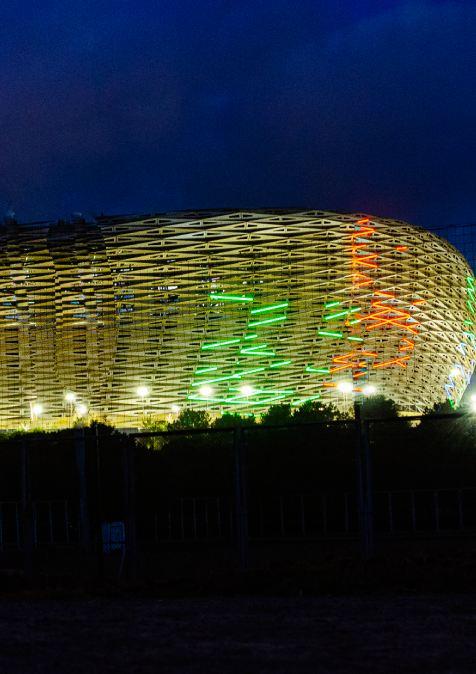
A particularly notable achievement was the standard of hospitality and logistics. For the first time in AFCON history, all 24 participating teams were provided with private training facilities, with base camps established in five-star hotels. Five of the six stadiums planned for use in the 2030 World Cup were tested under real tournament conditions, showcasing world-class amenities. The sixth venue will be the 115,000-capacity Grand Stade Hassan II. It is still under construction, but when completed will become the world’s largest football stadium.Financially, AFCON 2025 also marked a turning point. Tournament revenues reportedly increased by nearly 90% compared to past editions, largely due to an unprecedented rise in sponsorships and optimized distribution of media rights internationally. The African Football Confederation (Confédération Africaine de Football, CAF) stated that the 2025 Africa Cup of Nations was the greatest commercial success in the history of football in the African continent. This commercial success reinforced Morocco’s credentials as a reliable host able to deliver both sporting excellence and economic returns. Moreover, the event helped accelerate Morocco’s economic growth, which reached 4.5% in 2025, with over 100,000 jobs created, and a significant rise in consumption. The Minister of Industry and Trade even declared: “In 24 months, we have gained about ten years of development in terms of infrastructure.”
Costs and Challenges
Nevertheless, sports diplomacy is not without challenges for Morocco. Hosting mega events entails significant costs, logistical complexity, and political scrutiny. However, despite these concerns, Morocco’s use of sports has remained closely aligned with cultural diplomacy objectives. It has promoted national identity, projected stability, and strengthened ties with African partners, showcasing Morocco within the MENA region and within Africa.
Morocco is currently undergoing a multidimensional transformation with democratic, economic, and societal aspects. Politically, the adoption of the 2011 Constitution has institutionalized the principles of a constitutional monarchy with a semi-parliamentary orientation, redefining the balance of powers and strengthening representative governance. Economically, the implementation of the New Development Model reflects the strategic ambition to deploy structural reforms and inclusive growth strategies to position Morocco as an emerging economy by 2035. At the societal level, ongoing reforms of the legal code aim to bring the normative framework into line with the evolving dynamics and expectations of Moroccan society.
Sports diplomacy has long functioned as a bridge between nations, offering a rare space where competition and cooperation coexist. For Morocco, AFCON 2025 was not only a football tournament, but a strategic diplomatic exercise. The kingdom has reinforced its leadership role within Africa, strengthened continental partnerships, and enhanced its regional influence and global standing ahead of the 2030 FIFA World Cup. In a world in which influence increasingly flows through culture and perception, Morocco’s sports diplomacy appears well positioned to deliver lasting diplomatic dividends.
Dr Samir Bhattacharya is Associate Fellow, Observer Research Foundation, India
Abhishek Khajuria is a PhD scholar in Jawaharlal Nehru University, India