Podcasts

Back

The EU's challenges post-COVID-19

02
April 2021
Len Ishmael & Abdessalam Jaldi

In a world where conventional threats to public safety and international security are increasingly a back seat, the Covid-19 pandemic has opened a new chapter in the discussion on how to address modern global governance. Regarding Europe, it is no secret that the European Union has been teetering on the edge of collapse for years, from the financial crisis to the Covid-19 pandemic. In this podcast, Abdessalam Jaldi, International Relations Specialist at the Policy Center for the New South engages in a conversation with Len Ishmael, Senior Fellow at the Policy Center for the New South to discuss the European Union's challenges post Covid-19, and also the opportunities presented by the actual health crisis.

RELATED CONTENT

  • Authors
    Patricia Ahanda
    November 23, 2026
    Patricia Ahanda, alumna du programme Atlantic Dialogues Emerging Leaders 2018.  Depuis l’Antiquité, l’océan Atlantique est l’odyssée de récits multiples. Son étymologie convoque déjà la figure d’Atlas, le Titan que les traditions antiques situaient aux confins occidentaux du monde connu, condamné à soutenir la voûte céleste, et dont le nom fut également associé aux montagnes du nord-ouest de l’Afrique.[1]Dès l’origine, l’Atlantique apparaît comme le croisement des réc ...
  • Authors
    November 2, 2026
    If Ukraine burns, Moscow will burn as well  Destruction reached the Russian capital in the early morning hours, with black clouds of smoke rising above Moscow. Ukrainian drone strikes brought the consequences of the war closer to the Russian population. CBS News (June 18, 2026) reported major fires at a Moscow oil refinery, while the Russian Defense Ministry reported widespread drone interceptions.  ...
  • Authors
    October 29, 2026
    Wars are decided by those who hold military power, but their costs are increasingly borne by those who have little or no voice in the decisions that start them. The US–Iran war shows this imbalance very clearly. Its economic consequences have gone far beyond the battlefield and have disrupted energy markets, trade routes, food supplies, public finances and investment in the Gulf, Europe, Africa and Asia. The most striking feature of the conflict, however, is not only the size of the ...
  • Authors
    Niagalé Bagayoko
    Eugène Berg
    Pierre Berthelot
    Vincent Campredon
    Christophe Chabert
    Alain Oudot De Dainville
    Emmanuel Veron
    October 28, 2026
    Cet ouvrage est issu de la 20e édition des Dialogues Stratégiques, organisée le 6 mai 2026. Il s’articule autour de deux thématiques : « Souverainetés critiques : sécuriser les infrastructures essentielles et les ressources stratégiques » et « La Méditerranée : entre coopération régionale et rivalités globales ». La première partie examine les conditions dans lesquelles les États peuvent protéger leurs infrastructures et maitriser leur accès aux ressources essentielles. Les con ...
  • Authors
    Paul Isbell
    October 9, 2026
    In the first seven Policy Briefs of this ongoing series of analysis on Pan-Atlanticism: The Atlantic Basin in a Multipolar-Transnational World, we developed the argument that the strategic significance of the Atlantic Basin is on the rise for a range of international actors (states, regions and non-state agents) and from distinct political or ideological perspectives. In addition, in the most recently published Policy Brief -- “The U.S. and the Current International Reconfiguration: ...
  • Authors
    Lina Jaoid
    October 8, 2026
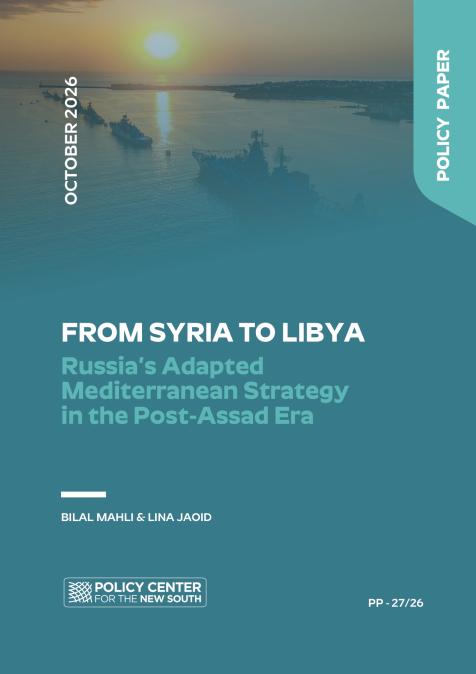
    In the two years since the fall of Bashar al-Assad in Syria, Russia has restructured its Mediterranean presence. Although Russia’s limited and increasingly conditional access to the Khmeimim and Tartus facilities in Syria has been preserved, its presence in the country has morphed from Assad’s ‘patron-client’ configuration to a more negotiated engagement. Simultaneously, Russia has upgraded its force-projection and logistical infrastructure in eastern Libya, giving it an access path ...
  • Authors
    August 13, 2026
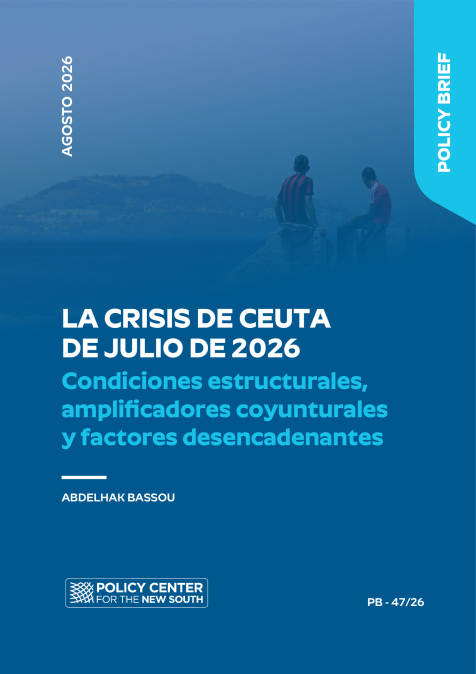
    Cuando estalla una crisis, esta da lugar a la activación de reflejos para su gestión y la limitación de sus efectos. Comienzan, entonces, los análisis y las suposiciones sobre las disfunciones, los incumplimientos y las fallas que la ocasionaron. En algunos casos, la teoría de la conspiración se inmiscuye y las hipótesis buscan a los autores que provocaron la crisis, sus designios y sus objetivos. Sin embargo, la teoría de la gestión de crisis nos enseña que una crisis surge según ...
  • Authors
    August 12, 2026
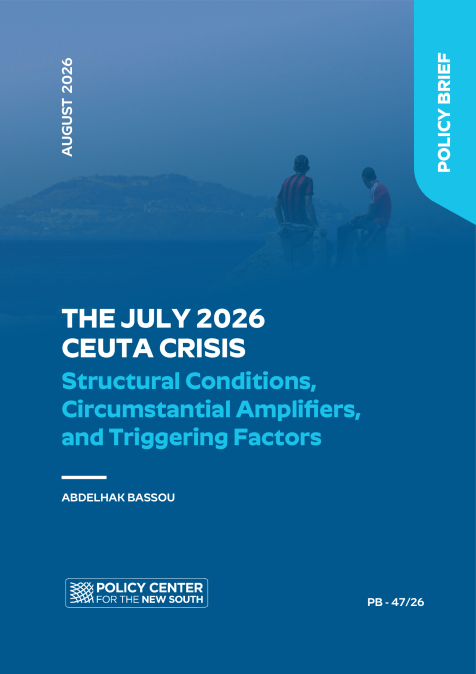
    When a crisis erupts, it sets crisis-management reflexes in motion and prompts efforts to contain its effects. Analysts then begin looking for the malfunctions, oversights, and failures that caused it. In some cases, conspiracy theories creep in, and speculation turns to who engineered the crisis, and to what end. Crisis-management theory teaches us, however, that a crisis unfolds under conditions that favor its emergence. Crises take shape in an environment where latent vulnerabil ...
  • Authors
    August 11, 2026
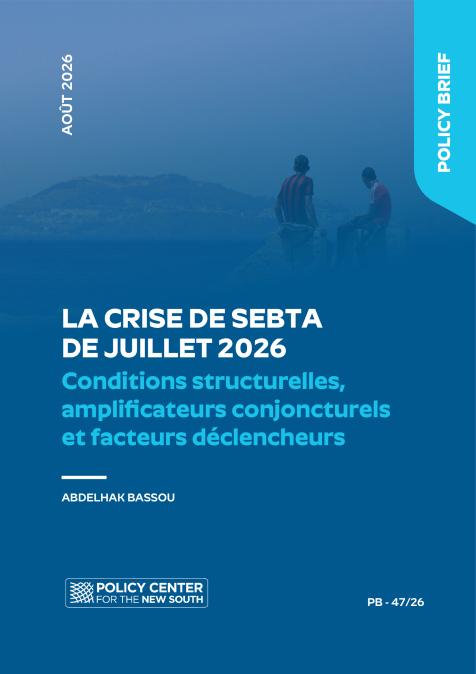
    Lorsqu’une crise éclate, elle donne lieu à l’actionnement des réflexes pour sa gestion et la limitation de ses effets. Commencent, alors, les analyses et les suppositions sur les dysfonctionnements, les manquements et les défaillances ayant entrainé ladite crise. Dans certains cas, la théorie du complot s’ingère et les hypothèses cherchent les auteurs ayant provoqué la crise, leurs desseins et leurs buts.Cependant, la théorie de gestion des crises nous apprend qu’une crise inte ...