Publications /
Opinion

Some of the golden Buddhas seemed to smile; many of the 2200 pagodas and temples surviving in the ancient city were fighting the damage of time and earthquakes. The road we took from historic Bagan to Mandalay, 178 kilometers away had more holes than a Swiss cheese, and the driver was as reluctant as a Trappist monk to answer my questions. When I noticed a group of destitute, drawn looking men, pale faces and hollow cheeks, cutting trees and moving giant rocks by hand towards trucks on the side of the narrow road, I asked the driver a rather naïve question: “Are these men criminal or political prisoners?”
I was surprised by the armed guards, among them some uniformed women. No answer from my driver. “Can we stop for a second?” Silence. Then the driver accelerated and said to me, “even the attempt to communicate with these people is dangerous business. No photos, no talk. Don’t dare do anything foolish.” I didn’t. Near Mandalay I invited the fearful driver for lunch, and he insisted on sitting at a table away from other people. He did not want any listeners denouncing him to the police. Private contact of between local people and foreigners was off limits, and anyone inviting a stranger into their homes would risk imprisonment. He was on a job, and therefore not suspicious, but how could I be certain that he did not work for the intelligence service?
My driver’s English was fluent though homemade with the help of BBC news announcers. He was a supporter of Aung San Suu Kyi, the daughter of the hero of most Burmese, General Aung San, who negotiated the independence of the former British colony in 1947, and was assassinated by political rivals. His daughter, obviously fearless of detention, torture or repression, developed into a global hero, a symbol of freedom and determination, willing to endure confinement in a prison cell in Rangoon’s Insein Prison. She was also held under house arrest at her home, 54 University Avenue, Rangoon (Yangon since 1989 when the Union of Burma turned into the Union of Myanmar). She was determined to free her people, and on her path was ready to sacrifice her marriage to her British husband, who died in 1999 in Britain without the presence of his wife, who was afraid the rulers would not allow her to return from his funeral.
She remained under house arrest for almost 15 years, before “the world’s most famous political prisoner” (The Independent, October 23, 2011) was finally liberated and authorized to be politically active. During her arrest, the former UN employee devoted herself to Buddhist meditation and to studying Buddhist thought. At times she played the piano or read biographies sent by her husband, who was a scholar of Tibetan culture and literature.
On my 1997/1998 trip I tried to meet the icon—“one of the children of Ghandi” (Time)—but I was blocked by secret service agents. In that year she was officially not under house arrest, but a prisoner nevertheless (Der Spiegel Special, 4/ 1998). Since February 1, 2021, Aung San Suu Kyi, again has been a prisoner, kept incommunicado, possibly in the capital city Naypyidaw, by power-hungry generals, who organized a coup against democracy, arresting the State Counsellor (equivalent to prime minister) at dawn, three months after Aung San Suu Kyi’s party had triumphantly won parliamentary elections (which the military declared as fraudulent). She was charged with violating the official secrets act (punishable by up to 14 years in prison), corruption, and incitement to sedition. Her party, the National League for Democracy, is to be dissolved.
Ten of thousands demonstrated in the towns of Yangon, Mandalay, Monywa, Mawlamyine, reported Human Rights Watch (July 31, 2021). The military, an estimated 350,000 soldiers strong, and supported by arms from India, Russia and China, fired with live bullets into protesting crowds, killing more than 1000 demonstrators. As of July 31, 5442 citizens had been imprisoned.
A Serious Blow to Democratic Reform
The junta handed power to General Min Aung Hlaing and declared a state of emergency for one year. United Nations Secretary General Antonio Guterres said, “these developments represent a serious blow to democratic reforms in Myanmar.” Washington raised the threat of new sanctions, but Afghanistan certainly had priority, and COVID-19 fears dampened the spirit of concern. The renewed imprisonment of the once-brave politician, a Nobel Peace Prize recipient who in her glorious time was received by Barack Obama in the White House, did not provoke violent mass protests around the globe, or outrage for her arrest.
What a disturbing change of fortune and reputation. In 1991, the Norwegian Nobel Committee applauded her willingness to suffer and to set her people free: “Suu Kyi’s struggle is one of the most extraordinary examples of civil courage in Asia in recent decades. She has become an important symbol in the struggle against oppression.” Alas, once she began to inhale freedom again, a decade ago, Aung San Suu Kyi matured into a tragic figure and some of her past supporters asked her to return the Nobel Peace Prize. Canada, which made her an honorary citizen, withdrew the honor.
In September 2017, the New Yorker asked: “What happened to Myanmar’s human rights icon?” Undoubtedly Aung San Suu Kyi was partly responsible for the seemingly peaceful transition from military junta to partial democracy, yet, Burmese forces have, for decades, been fighting civil wars in different regions of their nation. An estimated 20 ethnic groups (with an estimated 75,000 fighters) are struggling for more autonomy, most facing systematic discrimination, lack of economic opportunities and development in their regions, and abuse by the military.
Six years ago even China, an ardent supporter of Myanmar, got involved. Ethnic Chinese rebels confronted the Myanmar military forces and 50,000 ethnic Chinese civilians escaped across the border into China. After the recent coup d’etat, Beijing continues to aid the junta, arguing at the UN against criticism and sanctions, minimizing mass killings and torture. In her Council on Foreign Relations report on ‘Myanmar’s troubled history: Coups, Military rule, and Ethnic Conflict’ (February 10, 2021), Lindsay Maizland wrote that the “1982 Citizenship Law states that only members of ethnic groups that lived in Myanmar before 1823, when the British first occupied part of the country, are full citizens”.
This law has rendered hundreds of thousands of lifelong Myanmar citizens and members of entire minority groups, particularly the Rohingya, effectively stateless. “Under the 2008 constitution, only full citizens are entitled to most rights, such as nondiscrimination, equal opportunity, and freedom of expression. The constitution also prevents those not to be considered to be full citizens from participating in political processes such as voting and running for office.” (Lindsay Maizland, February 10, 2021).
In 2016 and 2017, Maizland noted, “the military and local security forces mounted a brutal campaign against the Rohingya, killing thousands of people and razing hundreds of villages. Rights groups and UN officials suspect that the military committed genocide against the Rohingya.”
In 2013, The Economist reacted to the silence of the former human rights icon, her Excellency Aung San Suu Kyi. Her “halo has even slipped among foreign human rights lobbyists, disappointed at her failure to make a clear stand on behalf of the Rohingya minority Archbishop Desmond Tuto of South Africa, a fellow Nobel Peace Prize winner, condemned the Burmese leader on social media: If the political price of your ascension to the highest office in Myanmar is your silence, the price is surely to steep” (The Guardian, September 8, 2017).
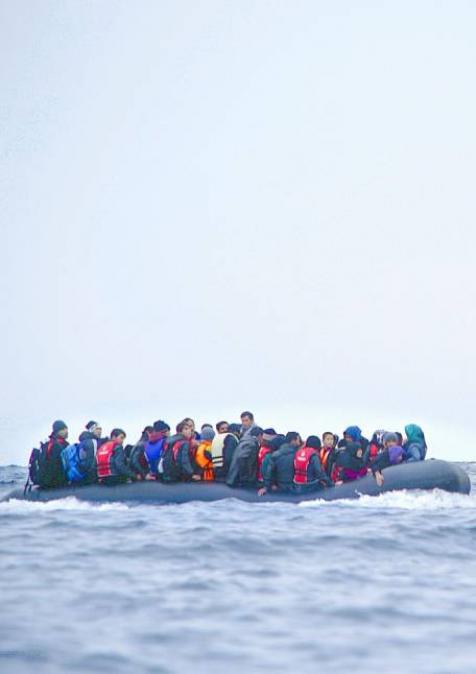
In 2019, Gambia filed the first international law suit against Myanmar at the International Court of Justice, accusing the country of violating the UN Genocide Convention. Who defended the oppressive regime in Court? The shining symbol of freedom, justice and equality, Suu Kyi. She denied that ethnic cleansing was taking place, thus “defending the indefensible” (Al Jazeera, 14 December, 2019). The verdict of the court may reach her in a cell, or again under house arrest. More than 800,000 Rohingya, according to the UN Refugee Agency (April 1, 2021), are crowded into the largest refugee camp in the world, Kutupalong, Cox’s Bazar district, near the border between Bangladesh and Myanmar. Obviously, the former leader of Myanmar decided to ignore the drama at the border, thus, naively, attempting to pacify the generals. Today it’s too late for change—she has her own drama to manage: to stay alive, and escape prison once again. And the world hardly seems to care. Another icon fallen, another coup d’etat. What else is new?
The opinions expressed in this article belong to the author.