Publications /
Opinion

The Polish memory of oppression, occupation, the holocaust, Nazi occupation, and communist dictators is burned into the national soul and conscience. A Polish born Pope, Jean Paul II, supported the long national struggle for freedom, giving faith to Poland’s 38 million citizens, mainly Catholic.
Freedom turned into a national treasure. Membership of the European Union, achieved in May 2004, promised a path towards social justice, wealth, and global acceptance of their abused homeland, ojczyzna. But just weeks ago, another, more sinister, message was spread by Polish leaders, including Prime Minister Mateusz Morawiecki. It spoke of a ‘third world war’, ‘colonialism’, ‘occupation’, ‘dictatorship’, ‘blackmail’, not in relation to historical enemies but to the European Union. The enemy was not in Berlin or Moscow, but Brussels.
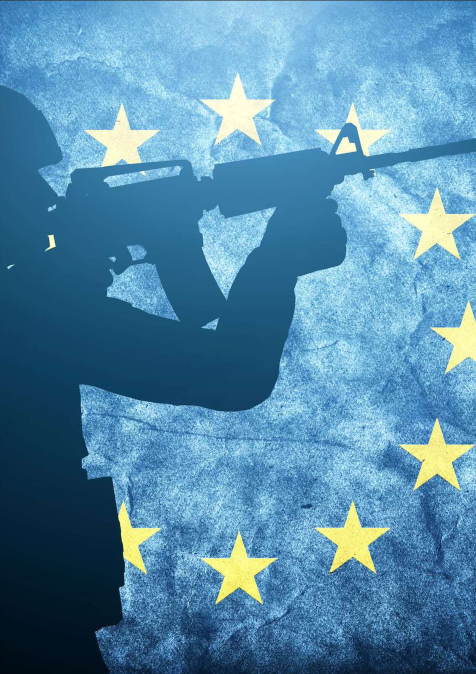
When asked by the Financial Times (October 24, 2021) if Poland would retaliate against the Brussel authorities,( which initiated court cases against repressive policies in their country, which are considered illegal under EU law) by using European Union veto power to block legislation on climate issues, the Polish government leader replied, “What is going to happen if the European Commission will start the third world war? If they start the world war, we are going to defend our rights with any weapons which are at our disposal”. And: “If someone will attack us in a complete unfair way, we will defend ourselves in any possible manner”.
A war? No, Poland feels abused, its national honor and fundamental values scorned and dignity trampled on by European politicians and judges. For five years now, Poland’s governing conservative-nationalist Polish Law and Justice party (Prawo i Sprawiedliwość, PiS) has “launched assaults on the country’s judiciary and public media, putting democracy and the rule of law at risk”, noted Professors Daniel Kelemen and Mitchell A. Orenstein in an article, published by Foreign Affairs in January 2016. “European Union officials”, wrote the” New York Times “(October 22, 2021)”say they face an unprecedented situation in which a member is directly challenging a foundation principle of the bloc:the primacy of EU law over national legislation.”
The EU has tried to impose European laws and European philosophy on human dignity and responsibility upon the rulers in Warsaw, including the acceptance of migrants, tolerance, and equality for LGBT citizens, a liberal approach towards abortion laws, and the independence of the media and judiciary. The EU, reported the New York Times (October 22, 2021) “deployed first dialogue, then lengthy legal proceedings, and now threats of sanctions to get Poland to reverse its policies.” But Poland, the newspaper noted, “showed no intention of backing down.” Instead Warsaw, which was willing to accept EU entry conditions took a “provocative step” on October 7, when the head of Poland’s Constitutional Court, Julia Przylebska, declared that “the country’s Constitution trumps European Union law in certain aspects, a key pillar of the European project.”
The verdict, reported the Financial Times (October 22, 2021), “brought to a head a year of feuding between Warsaw and Brussels over a controversial overhaul of the Polish judiciary, and the backlash was immediately and sustained”. Luxembourg’s foreign minister Jean Asselborn warned Poland, as Reuters reported October 8, it was “playing with fire”. Ursula von der Leyen, President of the European Commission, declared: “This is the first time ever that a court of a member state finds that the EU treaties are incompatible with the national constitution. This ruling calls into question the foundations of the European Union. It is a direct challenge to the unity of the European legal order”.(https://ec.europa.eu)
If We Don’t Uphold the Principle, the Whole of Europe Will Start Collapsing
Some analysts argue that Poland’s intransigence may pose a bigger threat than Brexit, in which the United Kingdom decided unilaterally to leave the EU, while the rest remained united. Vera Jourova, the EU commissioner from the Czech Republic, told the Voice of America (October 11, 2021), “if we don’t uphold the principle in the EU that equal rules are respected the same everywhere in Europe, the whole Europe will start collapsing. This is why we will have to react to this new chapter which the Polish Constitutional Court started to draw”.
An estimated 100 000 people gathered in Warsaw on Sunday, October 9 (BBC News, October 11, 2021) to show support for Poland’s EU membership. Among them, noted Henry Ridgewell from the Voice of America, was Donald Tusk, the former president of the European Council until 2019 and now leader of Poland’s opposition Civic Platform Party. “What is it that brought us all here today? A pseudo-Court of Justice, a group of masquerades in judicial robes, by order of the party leader, in violation of the Constitution, decided to take Poland out of the EU”.(Voice of America, October 13, 2021)
Surveys show an overwhelming majority of Poles support EU membership and there is no legal way to throw countries out of the EU. “We will not leave the EU tomorrow”, said Donald Tusk, “and the EU will not fall apart the day after tomorrow”, reported Reuters (October 13, 2021) ”These are processes that can take years”. Yet, the European Union is facing a growing challenge from Poland, wrote Elian Peltier and Monika Pronczuk in the New York Times (October 22, 2021), “that is pitting its own institutions against each other and leaving member states divided: what to do when a member repeatedly violates rules agreed on by the blocs 27 countries, but shows no intention of leaving?” Alexander de Croo, Prime Minister of Belgium, said his Polish counterpart was “playing with fire when waging war with your European colleagues for internal political reasons”. Benedict Brook , senior reporter of Australia’s website “news.com (October 24, 2021) felt that “member states are at odds with Poland’s actions—France is furious, Germany has said more talks were needed, and some eastern states have cautiously got behind Poland”.
“European Union officials and experts have warned that the repeated attacks on the judiciary by Poland’s right wing and nationalist government”, said the New York Times, “could embolden other governments to follow the example”. Victor Orban, the reactionary ruler of Hungary is siding with Poland . And in France, Eric Zemmour, a far-right pundit and possible candidate in the next Presidential elections has called for support for Poland and its rights .” France has to learn lessons from this federalist coup that the European Commission tried .I fully support the Polish nation and its government in enforcing their legal order.” The imposed sanctions are “a serious violation of political freedom”( Telewizja Poska,’ TVP) October 8, 2021)
Daniel Kelemen, a professor of European Studies at Rutgers University, New Jersey, believes that challenges to the rules of law by European Union members could “grow and metastasize like a cancer”. For Piotr Buras, head of the Warsaw office of research institute the European Council on Foreign Relations, the debate over the primacy of EU law is not the real issue, but the dismantling of Poland’s judiciary: “It is democracy versus autocracy”. France’s Europe Minister Clement Beaune feels that the Polish attitude has brought “Polexit closer”, copying Britain’s Brexit. “This is an attack on the EU by a Constitutional Court that was controlled by the Polish government. It is very serious, there is the risk of a de-facto exit”.
On October 27 the EU Court of Justice struck back—case C-204/21 R ‘Commission v Poland’, made global headlines: Warsaw has to pay a penalty for its reluctance to accept European law of €1 million daily, a fine “necessary in order to avoid serious and irreparable harm to the legal order of the European Union and the values on which that Union is founded, in particular that of the rule of law”.
Warsaw, the single biggest beneficiary of EU cash, may also be deprived of €36 billion (Financial Times, October 24, 2021) the EU is willing to transfer to Warsaw to finance a COVID-19 recovery program, promised by the right-wing government to its people. No surprise that the Prime minister of Poland has complained publicly that he was forced to negotiate with a gun to his head: “Blackmail must not be a method of policy”. The Belgian Prime Minister De Croo reminded Warsaw, “you cannot pocket all the money, but refuse the values. Poland should not treat the EU like a cash machine”.
The opinions expressed in this article belong to the author.