Water scarcity: Same challenge, different answers

April 12, 2021

Water resources have become increasingly scarce in several regions of the world, particularly in arid and semi-arid zones. Countries located in these regions are constrained by water scarcity due to their hydro-climatic characteristics and intra- and interannual rainfall fluctuations. In addition to these attributes, the negative effects of climate change result in a considerable increase in temperature and a consequent decrease in rainfall. According to IPCC estimates, the decrease in precipitation in these areas can reach up to 20% (IPCC, 2008). As far as temperature is concerned, it is supposed to increase, favoring water evaporation. According to the same source, the increase in temperature will be different according to regions. It will be 1°C in the Maghreb basin. In addition to the decrease in water availability, its demand is constantly increasing for several reasons. Firstly, population growth, which generates additional and inelastic demand for water. Secondly, the massive urbanization that some countries are experiencing requires a new organization of the sector to supply the cities with drinking water. And finally, the requirements of socio-economic development to achieve the expected levels of growth. Given these observations, water resource management is of extreme importance in countries suffering from water scarcity, particularly the MENA countries and some sub-Saharan African countries. In front of this scarcity, many governments had put in place policies and programs to manage water to make better and sustainable use of it. In the light of these elements, this webinar attempts to answer the following questions: What is the situation of water resources in African and MENA countries? How are governments responding to water scarcity? How can this problem be addressed in the future and what is the role of technology? The event will be broadcast live on our website, Facebook, Twitter and YouTube. For more information, please send us an email at: events@policycenter.ma
Speakers
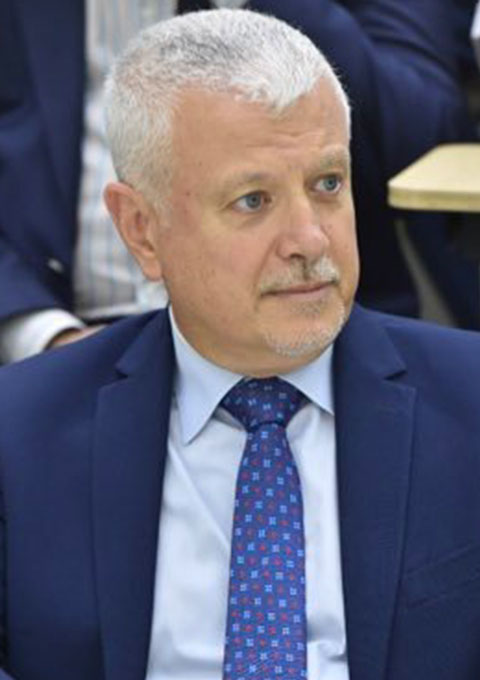
Mohamed Ait Kadi
Morocco
President, General Council of Agricultural Development
Pr. Mohamed Ait-Kadi is currently President of the General Council of Agricultural Development. The Council is a high-level policy think tank of the Ministry of Agriculture, Fishery, Rural Development and Forestry in Morocco where he has also served as Secretary General and Director General of the Irrigation Department. He is President of the Scientific Committee of the Foundation AAA (Adaptation of African Agriculture to climate change) Mohamed is a member of the Hassan II Academy of Science and Technology and Professor at the Institute of Agronomy and Veterinary Medicine Hassan II. He is also a member of the Academy of Agriculture of France, Oslo International Water Academy and the International Advisory Panel of the Bioeconomy World Summit.. ...
Guy Jobbins
Overseas Devlopment Institute (ODI), London
Guy Jobbins is Director at Astande and a Research Associate at the ODI in London. His work ‎focuses on institutional, political and social dimensions of water security and climate resilience, ‎with a particular interest in the North Africa and West Asia regions. Previously he was a Senior ‎Research Fellow in Water Policy at the Overseas Development Institute, a Senior Programme ‎Officer with Canada’s International Development Research Centre based in Cairo, and a ‎Research Fellow at University College London ...
Rabi Mohtar
Senior Fellow
Rabi H. Mohtar is a Senior Fellow at the Policy Center for the New South and Professor and former Dean of the Faculty of Agricultural and Food Sciences at the American University of Beirut, who focuses on Civil and Biological/Agricultural Engineering, Environmental and Ecological Engineering, Water-Energy-Food Nexus, Water Security and Climate Change. He is also Professor at Texas A&M University, College Station, Texas and Adjunct Professor at Purdue University. He is the Founding Director of Qatar Environment and Energy Research Institute (QEERI) a member of Qatar Foundation, Research and Development and the Founding Director Strategic Projects at Qatar Foundation Research and Development. He was also the inaugural Director of the Global Engineering Programs at Purdu ...
Josefa Sacko
Commissioner, Rural Economy and Agriculture, African Union Commission
...

RELATED CONTENT

  • Authors
    June 8, 2026
    The energy shock caused by the war between the United States and Israel and Iran has highlighted the need for Africa to refine more of its own crude oil. Africa is a net hydrocarbon exporter, but remains stuck in the old colonial economic model: it mostly exports raw materials and imports refined products. Africa exports about 2.6 billion barrels of crude oil every year, and imports about 1.4 billion barrels of refined products. This is a problem for two reasons. First, Africa ...
  • April 9, 2026
    Cet entretien explore le Nexus Eau-Énergie-Alimentation comme un défi systémique majeur pour le Maroc, dans un contexte de rareté croissante des ressources et de pressions sur la souveraineté. Il met en lumière les interdépendances critiques entre ces trois secteurs et les limites d’app...
  • Authors
    January 20, 2026
    This policy brief examines what the 2025–2026 period reveals about the future of global energy risk and the energy transition. After the shocks of 2021–2023, 2025 brought broad price easing: oil and coal prices declined as supply growth outpaced demand, and the World Bank projects further declines in the global energy price index in 2026, offering short-term relief for energy-importing economies. The brief argues, however, that the macroeconomic relevance of energy entering 202 ...
  • November 25, 2025
    تستعرض هذه الحلقة جهود المغرب في تطوير قطاع الهيدروجين الأخضر، الذي يعد من القطاعات الواعدة لتحقيق التنمية المستدامة والطاقة النظيفة تتطرق الحلقة إلى الاستثمارات، المشاريع الاستراتيجية، السياسات الحكومية، والشراكات الدولية التي تدعم هذه المبادرة، إضافة إلى التحديات والفرص المتاحة أمام ا...
  • Authors
    March 18, 2025
    Lithium prices have plummeted over the past two years, while demand is set to rise sharply to fuel the planned boom in electric vehicles and "clean tech". Is this a paradox, or is it typical of global commodity markets where instability is the rule and geostrategy plays a key role? An analysis of the mechanisms at work in the market for this strategic resource is needed to understand the shape this market may take over the next few years. ...
  • Authors
    March 18, 2025
    Le lithium a vu ses prix s’effondrer au cours des deux dernières années, alors que sa demande devrait fortement croître pour alimenter l’essor programmé des véhicules électriques et des ‘’ clean techs ‘’. Paradoxe ou situation caractéristique des marchés mondiaux de matières où l’instabilité fait loi et où la géostratégie joue pleinement son rôle ? Une analyse des mécanismes à l’œuvre sur le marché de cette ressource stratégique est nécessaire, afin de comprendre la p ...