Technology, Military Power, and the New Geopolitics of Security

February 27, 2026

Technological and industrial capabilities have become core instruments of state power, reshaping military strategies, economic competition, and global influence. The rapid rise of AI, cyber warfare, autonomous systems, and advanced manufacturing is redefining how states project power and deter adversaries. While technological leadership offers opportunities for innovation and strategic advantage, it also generates new risks related to escalation, dependency, and asymmetric vulnerabilities. In this evolving geopolitical landscape, the ability to integrate technology, industry, and strategy is increasingly decisive for long-term sovereignty and influence.

Speakers
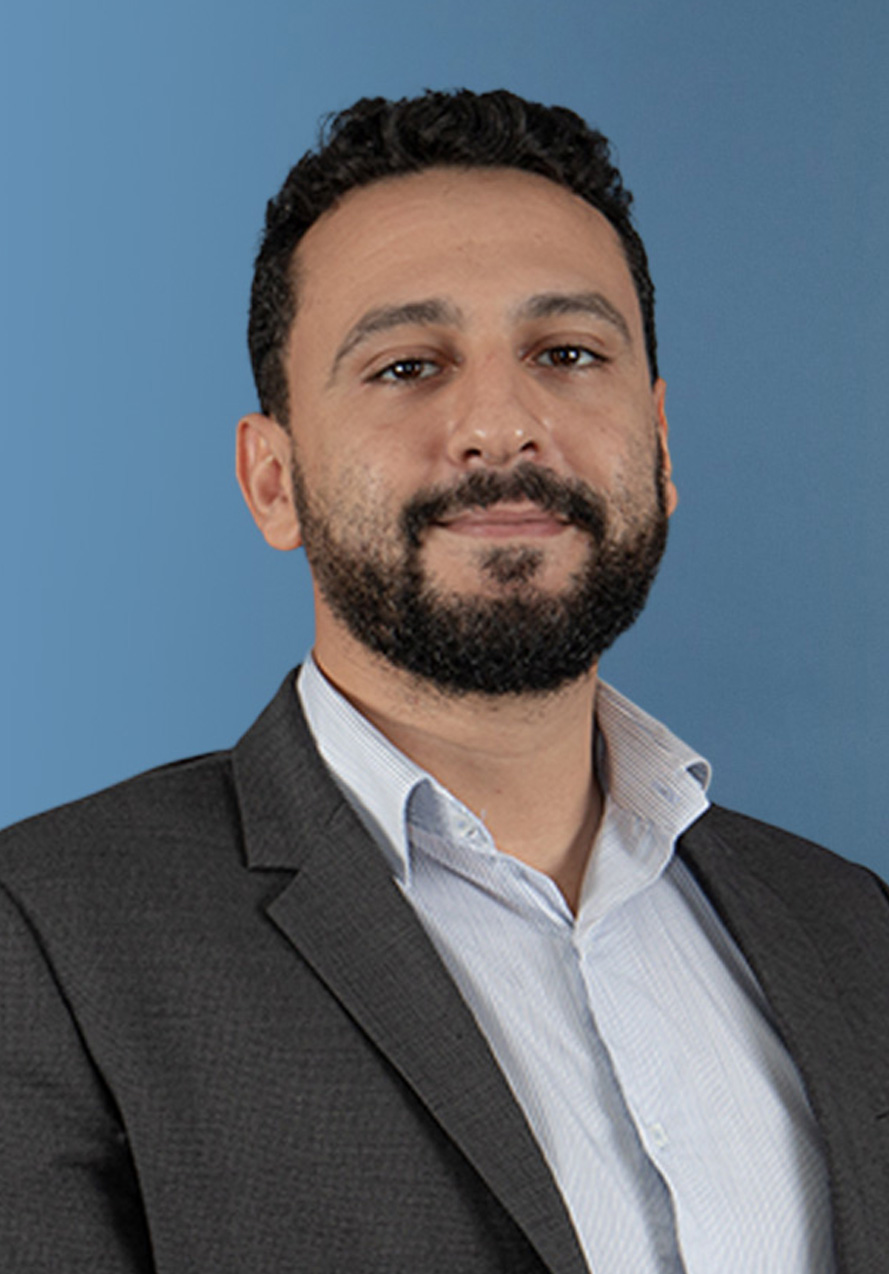
Akram Zaoui
Chargé de Mission to the Executive President
Akram Zaoui is a Senior International Relations Specialist and Chargé de Mission to the Executive President at the Policy Center for the New South (PCNS). Prior to this, he was Manager of Research Support and the Public Policy Lab at the PCNS. His main area of interest is the geopolitical economy of the Extended Middle East and North Africa (MENA) region. From 2018 to 2020, Zaoui was the coordinator of a network of 70+ civil society organizations (CSOs) across France, working with foundations, government, local communities, and the private sector. Zaoui holds a dual degree in corporate and public management from HEC Paris and Sciences Po, as well as a bachelor's degree (licence) in history from Université Paris 1 Panthéon-Sorbonne. He audited courses in Iranian and Shia Stud ...
RELATED CONTENT

  • Authors
    October 14, 2025
    Cementing the Position of a Global PowerNo doubt the news was unwelcome for Pentagon planners in Washington, who had long pressured the Venezuelan government. In August, the United States placed a $50 million bounty on the Venezuelan leader’s arrest. By late September 2025, multiple Chinese vessels, including a naval hospital ship, were detected in the Caribbean. These ships appear to be part of a broader Chinese diplomatic and military strategy in Latin America, heightening tension ...
  • Authors
    September 15, 2025
    The October 2025 general elections in Tanzania unfold within a political culture grounded in consensus and institutional continuity. President Samia Suluhu Hassan’s leadership has reopened political space by restoring elite dialogue, easing restrictions on rallies, and facilitating the return of exiled figures. Yet the exclusion of CHADEMA—the principal opposition party—highlights the enduring limits of pluralism. This paper analyzes the Tanzanian electoral process less as a convent ...
  • Authors
    Sous la direction de
    June 18, 2025
    Les différentes éditions du Rapport annuel de la géopolitique de l’Afrique, que le Policy Center for the New South publie chaque année, se suivent mais ne se ressemblent pas. Elles ne gardent en commun que leur inscription, dans une même ligne éditoriale, celle qui privilégie l’Afrique en particulier et le Sud en Général. Les différentes éditions se ressemblent en ce sens que leur objet, à toutes, est de permettre à des Africains de décrire et d’analyser les relations entre l’A ...
  • April 18, 2025
    In this episode, we discuss the Memorandum of Understanding between Ethiopia and Somaliland, exploring its key terms and strategic motivations. We assess how the deal reshapes the securit ...
  • Authors
    April 8, 2025
    The Russia–Ukraine war, while primarily perceived as a European security crisis, has triggered deep structural shocks globally, disproportionately affecting the developing world—the “New South.” This essay explores how historical legacies, global economic dependencies, and shifting geoeconomic paradigms have converged through the war to exacerbate existing vulnerabilities in Africa, Asia, Latin America, and the Middle East. It critically examines the war’s impact through four interc ...
  • Authors
    October 15, 2024
    This paper provides a comprehensive analysis of the role and impact of Yemen's Presidential Leadership Council (PLC), formed in April 2022, in navigating the complexities of Yemen's ongoing civil conflict. The PLC was created to unite various anti-Houthi factions under a single governance framework, with the support of Saudi Arabia and the UAE, and to steer Yemen toward peace and stability. However, the PLC has faced numerous obstacles, including internal divisions, resistance from ...