Secteur Aéronautique face au Covid 19 : Répercussions, Perspectives de sorties, Avenir ...

May 5, 2020

· Présentation de la situation actuelle du secteur aéronautique face au Covid 19 · Répercussions sur le secteur aéronautique · Perspectives de sorties de la crise · L’avenir du secteur aéronautique … Modérateur : Larabi Jaidi, Senior Fellow, Policy Center for the New South Intervenants : . Pedro Da Motta Veiga , Directeur , CINDES - Centre d'études sur l'intégration et le développement . Alfredo Valladao, Senior Fellow, Policy Center for the New South

Speakers

Larabi Jaïdi
Senior Fellow
Larabi Jaïdi is a Senior Fellow at the Policy Center for the New South and an Affiliate Professor at Mohammed VI Polytechnic University. His areas of expertise include international economy, economic policies, international economic relations, regional economies, social development, international relations, and Mediterranean studies. He also served on the Special Commission on the New Development Model of Morocco, a consultative body created in November 2019 to formulate the country's new developmental guidelines. Jaïdi is a former Professor at Mohamed V University in Rabat-Agdal and a founding member of both the Centre Marocain de Conjoncture and the Groupement d’Etudes et de Recherches sur la Méditerranée.   Prof. Jaïdi previously served as Advisor to the Prime Minist ...

Pedro da Motta Veiga
President, CINDES
Pedro da Motta Veiga is the President of CINDES – Centro for Studies on Integration and Development – an independent think tank based in Rio de Janeiro and working on trade, investment and global issues. He is also Senior Fellow at CEBRI – the Brazilian Center for International Relations, a non-resident fellow at Rice University’s Baker Institute for Public Policy – Latin America Initiative, and a partner at Ecostrat, a consulting firm. ...
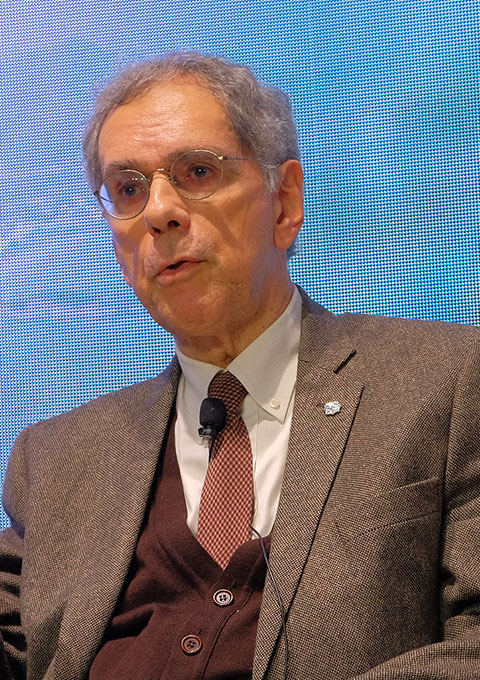
Alfredo Da Gama e Abreu Valladão
Senior Fellow
Alfredo G. A. Valladão is Senior Fellow at Policy Center for the New South and Professor at the Paris School of International Affairs (PSIA) of Sciences Po Paris, who focuses on international affairs, geopolitics, global economics, Brazil and Latin America. Alongside these positions, he is President of the Advisory Board at EU-Brazil association in Brussels, Member International Advisory Board of CEBRI (Brazilian Center for International Relations – Rio de Janeiro), Member of the Comité des Rencontres Internationales de Genève (RIG), Director of the Latin America Research Chair at CESEM-HEM in Morocco and a columnist for Radio France Internationale (RFI). Former member of the Board of Trustees of UNITAR (2009-1015), and former Director of the Mercosur Chair of Sciences Po (199 ...

RELATED CONTENT

  • April 26, 2021
    La Tunisie a fêté récemment le 10ème anniversaire de la révolution qui a mis fin à l’ancien régime bénalien et défini les principes de la IIème République. Ayant pour principales doléances la croissance économique et la justice sociale, la révolution tunisienne était exclusivement sociale. Or, l’appropriation de la révolution par l’Assemblée nationale constituante (ANC) et le quartet du dialogue national qui ont privilégié le chantier des réformes démocratiques au détriment des réfo ...
  • April 13, 2021
    Technologies and Big Data in Shaping African Public Services: Towards Efficient Digital Solutions for Africa Social Good Can technology and digitalization improve and enhance the value we get from public services? Data can change the experience that individuals get from a public service...
  • Authors
    March 24, 2021
    This report is part of a partnership between the Policy Center for the New South and the Atlantic Council’s Africa Center.   New technologies, such as automation, artificial intelligence and industrial robots, are often seen as a real danger for existing jobs and also for future job-creation prospects. There is a perception that they will make work redundant and lead to massive job destruction. However, others believe that automation, like previous technological waves , ...
  • Authors
    Fernando S. Perobelli
    Inácio F. Araújo
    Tomaz P. Dentinho
    March 16, 2021
    Angola’s prospects for reconstruction and development of its poor connectivity infrastructure are heavily dependent upon the export performance of its oil sector. Using an interregional inputoutput table for Angola, we estimate comprehensive measures of trade in value added revealing different hierarchies of interregional and international trade integration, with implications for regional inequality in the country. By encompassing the subnational perspective in the case study of an ...
  • Authors
    March 3, 2021
    Brazil, an oil-exporting nation, was still struggling to recover from the depression which started around 2014/15 when it was hit by a quick succession of shocks: the COVID-19 pandemic and the oil price collapse. The global pandemic triggered major economic dislocations and contractions in foreign and domestic markets, which further exacerbated the fall in demand for oil, sending world prices tumbling further. Poverty was already widespread in Brazil pre-pandemic. And despite recen ...
  • March 02, 2021
    The Covid-19 pandemic has severely damaged the global economy. Confinement policies, global value chains disruption and risk aversion in the financial systems markets have brought the glo ...
  • Authors
    February 26, 2021
    Economic development analysis must inevitably rely on a double methodological standpoint. On the one hand, it needs to search for common features, those general attributes that might be present in all national experiences of wealth accumulation, poverty reduction, and moving up the income ladder. On the other, in order to be meaningful, it must reckon with time and space. It must consider that those universal development traits will play out in specific historical and geographical c ...