Prix des matières premières : vers un nouveau super cycle ?

July 7, 2021

Durant les années précédant la crise sanitaire, l’inflation n’était pas un sujet de préoccupation pour les économies surtout occidentales, habituées depuis plusieurs décennies à une certaine stabilité. Vers fin 2019, l’évolution des prix à la consommation était contenue en dessous de 1,5% en Europe, et 2% aux Etats-Unis. Le cours du pétrole avait baissé de 10% sur l’année et les cours des métaux industriels et des matières premières agricoles étaient en recul. Cependant, la situation actuelle présage d’un renversement de tendance. Depuis le creux de juin 2020, les cours des céréales ont presque doublé pendant que ceux des métaux industriels ont progressé de plus de 80%. Le redressement des prix du pétrole était plus étonnant, avec un cours du Brent passé de 17 dollars le baril à près de 70 en l’espace d’un an. Ce mouvement a d’abord été initié par des contraintes pesant sur l’offre : il s’agit notamment de défis climatiques qui ont affecté les récoltes, la contraction de la production minière sous l’effet des mesures sanitaires, le durcissement des quotas de production par l’OPEP, etc. Depuis, la demande mondiale s’est raffermie, enflammée par un puissant mouvement de reconstitution des réserves de précaution, sous la crainte d’une pénurie mondiale. L’activité logistique a considérablement pâti de perturbations : conteneurs insuffisants ; hausse des prix des palettes en bois, voire même des emballages ; ainsi qu’une pression notable sur les coûts du fret maritime. Dans l’ensemble, les tensions inflationnistes commencent à se manifester tout au long de la chaine de production, augurant d’une hausse éventuelle des prix à la consommation. La trajectoire actuelle des prix des commodités, conjuguée à d’autres facteurs confluents, y compris des perspectives de croissance économique favorables, soutenues par des politiques monétaires et budgétaires accommodantes ; annoncerait peut-être un nouveau super cycle des matières premières.

Speakers
Yves Jégourel
Senior Fellow
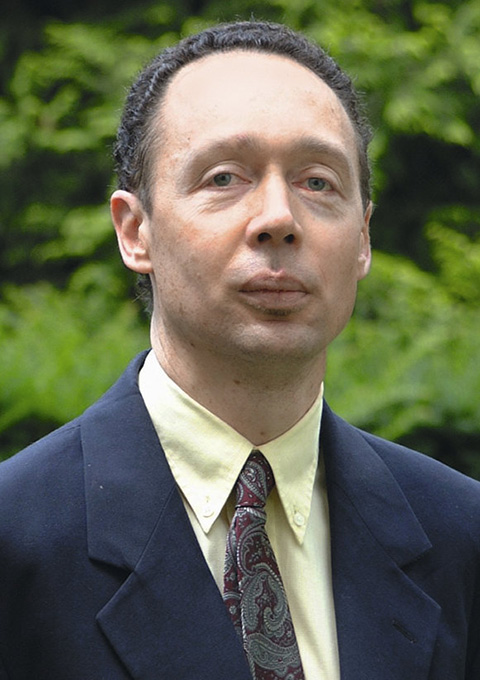
Yves Jégourel is Senior Fellow at Policy Center for the New South as well as Full Professor and head of the Chair in “Economics of Raw Materials and Sustainable Transitions”, at the Conservatoire national des arts et métiers. He was previously a professor at the University of Bordeaux, where he directed the Master program in Banking, Finance and Commodity Trading (BFCT) and was vice-dean in charge of relations with companies in the Faculty of Economics, Management and ESA (EGAES). He devotes his teaching and research activities to the economics of commodities, with a particular focus on the common dynamics that characterize the agricultural, energy, and mineral and metal sectors: the internationalization of physical markets, the macroeconomic dependence of exporting countries ...
Marie-Louise Djigbenou-Kre
Economist, Central Bank of West African States (BCEAO)
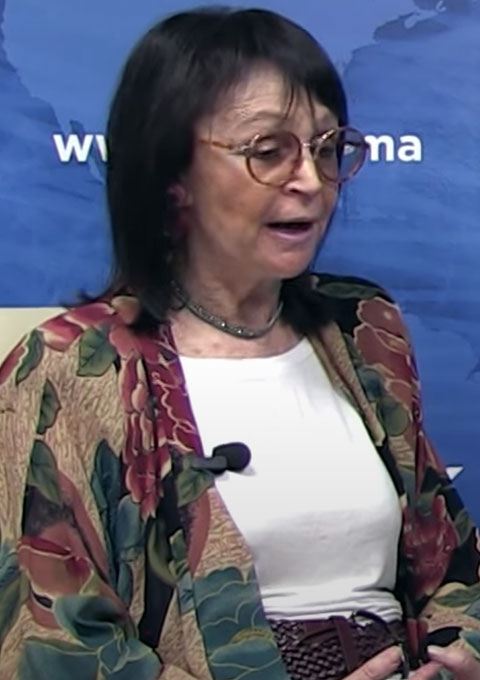
Marie-Louise Djigbenou-Kre is an economist-researcher at BCEAO and a professor at the Centre Ouest Africain of Training and Banking Studies (COFEB) and at Cheikh-Anta-DIOP University in Dakar. She was previously an economist at the Bank of France, where she worked specifically on issues related to global liquidity and its effects on financial markets and emerging economies. During the same period, she was a professor at Sciences-Po. In 2015, she joined the BCEAO, where she actively participated in the elaboration of growth forecasts and the main aggregates necessary for the economic policy decisions of the eight member states of the West African Economic and Monetary Union (WAEMU). ...
Helyette Geman
Senior Fellow
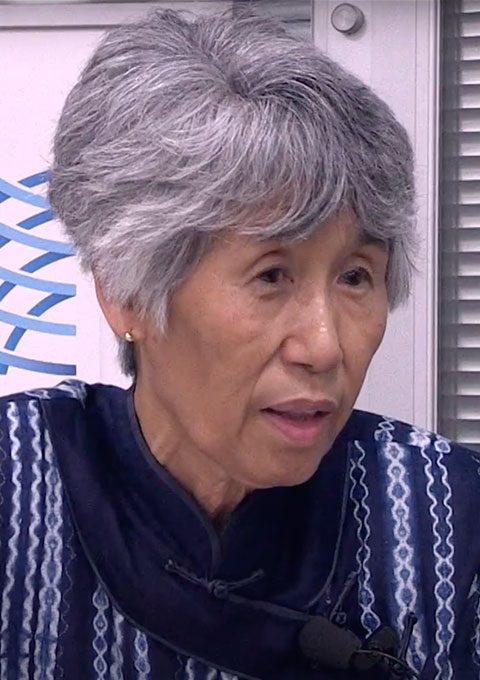
Helyette Geman is Senior Fellow at the Policy Center for the New South, Director of the Commodity Finance Center at Birkbeck, University of London, and a Research Professor at the Johns Hopkins University, who focuses on Probability, Commodities and Finance. She was Chairman of the Finance Department at ESSEC Business School from 1988 to 1995, and the Director of Dauphine Master 203 at the University of Paris Dauphine from 1995 to 2005. Helyette Geman is a Graduate from Ecole Normale Supérieure in Mathematics and holds a PhD in Probability and a PhD in Finance. She worked as a scientific expert for EDF Trading, Louis Dreyfus, BMP Billiton, Bunge Invivo and financial institutions. Her book “Commodities and Commodity Derivatives” published in 2005 by Wiley Finance has become th ...
Abdellah Mouttaqi
Secrétaire Général, ONHYM et Membre du CESE
Titulaire d’un Doctorat d’Etat en 1997, Abdellah Mouttaqi, actuellement Secrétaire Général de l’Office National des Hydrocarbures et des Mines (ONHYM), avait commencé sa carrière en tant qu’enseignant chercheur à la faculté des sciences de l’université Cadi Ayyad de Marrakech. Il a rejoint l’ONHYM en 1998 où il a occupé plusieurs postes de responsabilité. En 2011, il est nommé par Sa Majesté le Roi Membre du Conseil Economique, Social et Environnemental (CESE). Titulaire de plusieurs publications sur les ressources naturelles, le développement durable et le développement humain, il est également administrateur de plusieurs compagnies minières, de la Fédération de l’Industrie Minérale, Vice-Président de l’Institut Marocain des Relations Internationales, Président de l’Associati ...
Francis Perrin
Senior Fellow
Francis Perrin is a Senior Fellow at the Policy Center for the New South who focuses on energy.  Following studies in economics and political science at the University Pierre Mendès France (UPMF – today University Grenoble Alpes) at Grenoble (France), Francis Perrin worked for several years as a journalist and freelance consultant on energy and mining resources before joining in 1991 the Paris-based Arab Petroleum Research Center (APRC). He was editor in chief of Arab Oil & Gas (AOG) and Pétrole et Gaz Arabes (PGA) between 1991 and 2000 and editorial manager of the publications of the APRC from 2001 to the end of 2011. Francis Perrin set up at the beginning of 2012 Stratégies et Politiques Energétiques (SPE) and later Energy Industries Strategies Information (EISI).& ...
Isabelle Tsakok
Senior Fellow
Isabelle Tsakok, development practitioner, policy analyst, researcher, and teacher, is a Senior Fellow at the Policy Center for the New South. She grew up in the Republic of Mauritius, a multi- lingual, multi-ethnic and multi-cultural society. She holds a PHD in Economics from Harvard University, and a BA in Phil/Econ from the London School of Economics. As World Bank staff and consultant, she has focused on agricultural and rural development including on issues of agricultural transformation, food security, and poverty reduction. She has worked in most regions of the developing world, including Africa –North and South of the Sahara; Asia - South, Southeast and East; and Latin America. She has taught courses on agricultural policies and institutions at the World Bank; the Scho ...

RELATED CONTENT

  • Authors
    October 29, 2026
    Wars are decided by those who hold military power, but their costs are increasingly borne by those who have little or no voice in the decisions that start them. The US–Iran war shows this imbalance very clearly. Its economic consequences have gone far beyond the battlefield and have disrupted energy markets, trade routes, food supplies, public finances and investment in the Gulf, Europe, Africa and Asia. The most striking feature of the conflict, however, is not only the size of the ...
  • Authors
    Niagalé Bagayoko
    Eugène Berg
    Pierre Berthelot
    Vincent Campredon
    Christophe Chabert
    Alain Oudot De Dainville
    Emmanuel Veron
    October 28, 2026
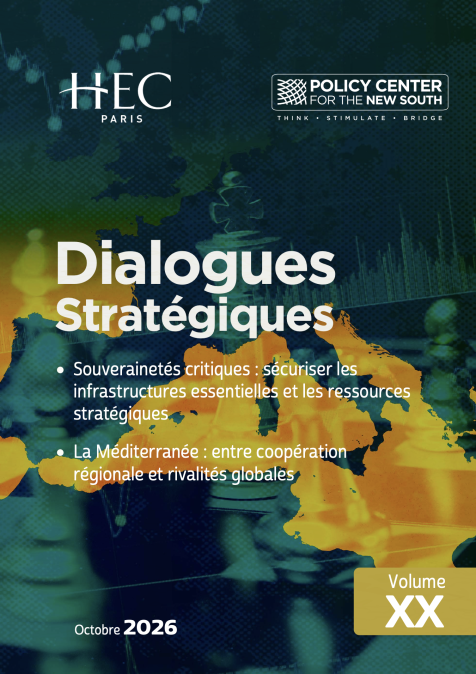
    Bientôt disponible en vente. Cet ouvrage est issu de la 20e édition des Dialogues Stratégiques, organisée le 6 mai 2026. Il s’articule autour de deux thématiques : « Souverainetés critiques : sécuriser les infrastructures essentielles et les ressources stratégiques » et « La Méditerranée : entre coopération régionale et rivalités globales ». La première partie examine les conditions dans lesquelles les États peuvent protéger leurs infrastructures et maitriser leur accès au ...
  • Authors
    October 27, 2026
    Mozambique’s extractive-industry development model is a textbook case of how enormous FDI funds derived from its rich mineral base have not been leveraged to   promote inclusive economic growth and generate food security for all. It is a textbook case of the resource curse.  Instead, only a few have benefitted, leaving the poor and vulnerable, who constitute the vast majority, to struggle unassisted. These include smallholders in subsistence-oriented agriculture ...
  • October 23, 2026
    In this episode, Mehran Haghirian explores the global economic consequences of disruptions in the Strait of Hormuz, beyond oil and gas. He examines their impact on trade, fertilizer suppl ...
  • October 22, 2026
    Strategic hedging is rational when it preserves a worthwhile choice at a tolerable cost while respecting existing commitments. Drawing on the literature on hedging and Latin American autonomy, this Policy Brief examines contrasting illustrations of that proposition. It distinguishes ambiguity about future alignment from uncertainty about existing obligations and explains how clearly bounded commitments can reconcile autonomy with credibility. The cases reveal different vulnerabiliti ...
  • October 22, 2026
    تتناول هذه الحلقة من «حديث الثلاثاء» تأثير تقلبات أسعار النفط والغاز في الأسواق العالمية على الاقتصاد المغربي، وانعكاساتها على القدرة الشرائية للأسر وتنافسية المقاولات. ونناقش مع ضيفنا السيد أمين سامي كيف تنتقل هذه التقلبات إلى أسعار السلع والخدمات، ولماذا لا تنخفض الأسعار دائمًا مع ترا...
  • October 14, 2026
    في ظل التوترات الجيوسياسية المتصاعدة، تتغير طرق التجارة العالمية وتتبدل معها موازين الممرات الاستراتيجية. تفتح هذه الحلقة من «حديث الثلاثاء» النقاش حول التقاء المسارات البحرية والبرية داخل هذه الممرات، والعوامل التي تتحكم في طبيعة السلع التي تعبرها. وتبحث كذلك في ما يمكن للمغرب أن يجنيه...
  • Authors
    October 13, 2026
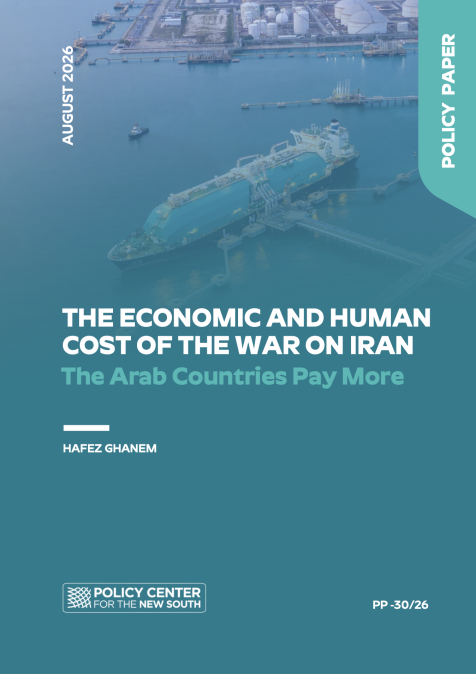
    “Every gun that is made, every warship launched, every rocket fired signifies in the final sense, a theft from those who hunger and are not fed, those who are cold and are not clothed.”President Dwight Eisenhower, April 16, 1953 This paper examines the economic and human impacts of the first six months of the Iran war—from February to the end of August 2026—on Iran’s Arab neighbors and compares these impacts with those on the three countries directly involved—Iran, Israel and t ...
  • October 09, 2026
    Can Nigeria’s Dangote refinery help strengthen Africa’s energy security amid disruptions to global supply routes? This discussion considers how expanding local refining capacity can reduc ...
  • Authors
    October 2, 2026
    Le Cameroun dispose d'importants gisements de minerais, notamment de fer, de la bauxite, d'or, de cobalt, de nickel, de manganèse, de calcaire, de marbre, de diamants, entre autres. L'industrie minière du pays est restée dominée par l'exploitation artisanale et à petite échelle, en particulier l'orpaillage, tandis que les hydrocarbures ont représenté l'essentiel des recettes issues des industries extractives. Le pays cristallise ainsi le paradoxe africain : malgré l’ampleur et la di ...