Présentation d'ouvrage: Capital humain et développement économique et social au Maroc

July 6, 2022

Le Policy Center for the New South et le Laboratoire d’Economie Appliquée de la Faculté des Sciences Juridiques, Economiques et Sociales, organisent un séminaire de présentation de l’ouvrage « Capital humain et développement économique et social au Maroc », lundi 4 juillet à 16h. La théorie du capital humain érige la connaissance accumulée et la santé au rang des investissements et recommande aux décideurs, et notamment à ceux des pays en développement, d’en faire le point d’ancrage de leurs politiques économiques et sociales. Ces investissements sont nécessaires non seulement pour mettre les nations sur la voie de la croissance économique, mais aussi en vue de doter les générations futures des qualités d’agilité et de flexibilité dont l’acquisition est rendue nécessaire par les exigences de plus en plus complexes du marché de travail. Le Maroc place l’investissement dans l’être humain au centre de son modèle de développement. En effet, son adhésion aux Objectifs du millénaire du développement (OMD, 2000-2015), puis aux Objectifs du développement durable (ODD, 2016-2030), témoigne d’une volonté à atteindre l’ensemble de ces cibles, dont celles qui concernent la promotion d’une éducation de qualité, l’amélioration du système de santé et la réduction des inégalités. Des avancées ont été réalisées en la matière et les efforts de massification d’accès ont permis de généraliser la scolarisation de base et d’élargir l’offre de soins. Néanmoins, ces efforts ne semblent pas être accompagnés par une amélioration de la qualité des prestations de services publics. Au-delà de ce constat général, la problématique du capital humain au Maroc comporte des ramifications bien plus complexes, qui nécessitent des analyses circonstanciées et approfondies. Ainsi, ce livre, à travers ses 17 chapitres, sélectionnés minutieusement selon les critères de qualité et d’approches méthodologiques, s’inscrit dans cette optique. Celle de creuser dans les questions les plus pointues qui gravitent autour de notre thématique, en particulier dans les secteurs de l’éducation et de la santé.
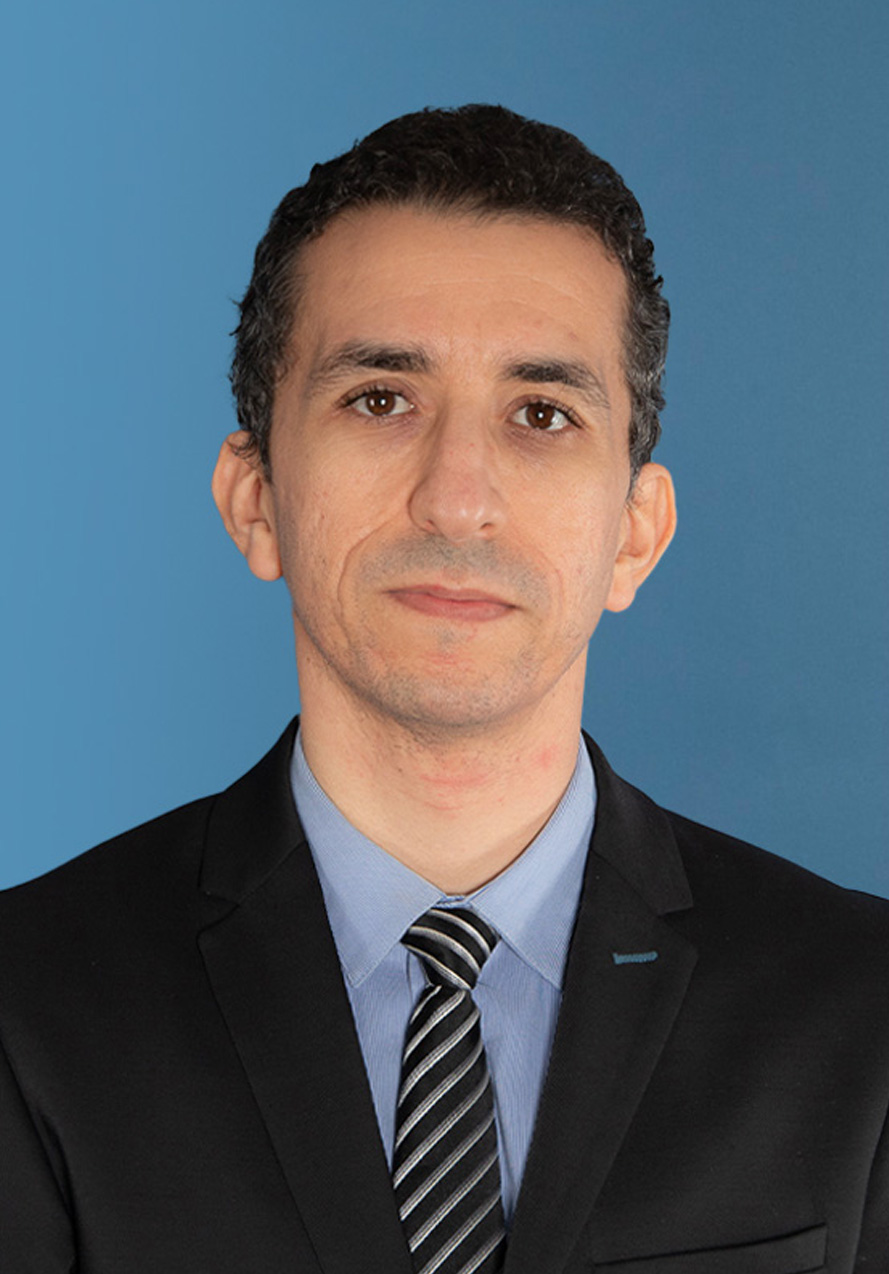
Speakers
Abdelaaziz Ait Ali
Head - Research in Economics
Abdelaaziz Ait Ali is a principal Economist and head of the Research Department at the Policy Center for the New South. He joined the Center in 2014 after five years of experience at the Central Bank of Morocco. He worked as an economist in the International Studies and Relations Department and was analyzing the real estate price index and financial asset prices for monetary policy and financial stability purposes. Since then, Abdelaaziz has focused on cyclical and structural issues of the Moroccan economy, including macroeconomic management and industrial policy design. He has published articles on the reform of the exchange rate regime in the Moroccan economy and its implications for macroeconomic regulation, as well as on the evolution of the macroeconomic framework over th ...
Saïd Tounsi
Professor and Researcher, Mohammed V University
Saïd Tounsi is a Professor and Researcher at Mohammed V University in Rabat. A specialistin economic policies, particularly fiscal policy, he has authored several studies onpublic debt sustainability and exchange rate regimes in developing countries. He has alsoco-edited collective volumes on macroeconomic policies in Morocco. A former trainer atthe IGF and Bank Al-Maghrib, he combines academic expertise with institutional experiencein analysing national and international economic dynamics. ...
Idriss El Abbassi
Professor of economics, Mohammed V University
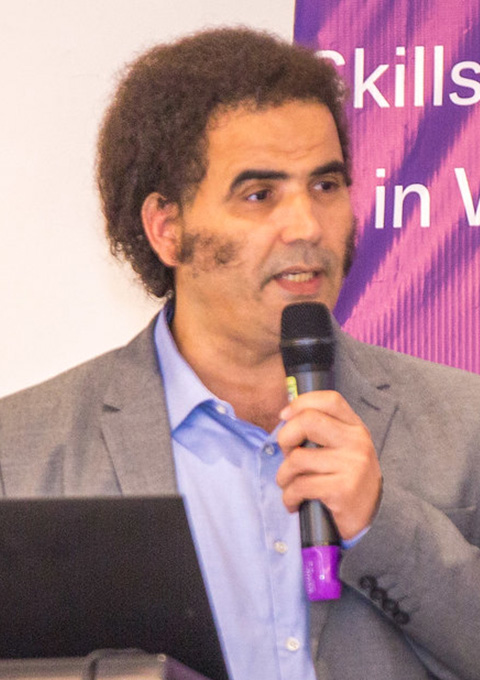
Idriss El Abbassi is a Professor of Economics at Mohammed V University in Rabat and coordinator of the Master’s programme in economics. He holds a PhD from Florida State University, and his research focuses on open-economy macroeconomics, growth, and structural transformation. He teaches at both the Master’s and PhD levels and is a founding member of the Laboratory of Applied Economics. A former director of the EMPRETEC/UNCTAD programme in Morocco, he has also been a visiting professor in London. He co-authored Human Capital and Economic and Social Development in Morocco and has recently published in The Economic and Labour Relations Review and Structural Change and Economic Dynamics. ...
Mariem Liouaeddine
Professor, Ibn Tofail University
Mariem Liouaeddine is a Professor of Economics at Ibn Tofail University and a lecturer at various international universities such as Jeonbuk National University and Rabat International University. Her primary research focuses on educational inequalities and development economics. In recognition of her contributions, she received the Best Online Course award from UNESCO-IIOE in 2020 and was honoured with the Best Thesis in Economics and Management in Morocco by L’Économiste in 2017 and she was recognizedas one of the top 15 researchers in economics in Morocco by the CNRST (2019–2023). ...
Abdelkhalek Touhami
Full Professor, Mohammed VI Polytechnic University, Rabat
Touhami Abdelkhalek is a Researcher in Applied Economics, specializing in econometrics, development and public policy analysis. Affiliated with the Africa Institute of Research in Economics and Social Sciences (AIRESS) and associated with several international centres (ERF, FEMISE, CRDE, etc.), his work focuses on modelling, economic policy evaluation, poverty, and inequality. He has published several articles in journalssuch as Review of Economics and Statistics and Applied Economics and contributed to the RDH50 report. A professor at the FGSES—UM6P since 2021, after more than 30 years at INSEA, he heads the Master’s and PhD programs in economics. He was awarded the Wissam Al Arch in 2017 and is member of the Competition Council since 2018. ...
Dorothée Boccanfuso
Full Professor, Mohammed VI Polytechnic University, Rabat
Dorothée Boccanfuso is a Professor and Researcher in Development Economics,specializing in the analysis of welfare, poverty, inequality, and the evaluation of publicpolicies. She has published more than 30 articles in scientific journals such as AppliedEconomics and Revue d’économie du développement. Affiliated with AIRESS, Centreinteruniversitaire de recherche en analyse des organisations (CIRANO), and EconomicResearch Forum (ERF), she has been conducting applied research in Africa and theFrancophone countries for over 25 years. She also chaired the Expert Committee on theGuaranteed Minimum Income in Quebec (2016–2018). Professor at UM6P since 2020, sheis Vice-Dean in charge of the economic pole of the FGSES. ...
Nada Bijou
Doctorante en économie, Faculté d’Economie et de Gestion, Université Ibn Tofail - Kenitra
...
Aomar Ibourk
Senior Fellow
Aomar Ibourk, is a professor of quantitative methods and social economics at the Cadi Ayyad University in Marrakech, an economist, as well as Senior Fellow at the Policy Center for the New South, who focuses on Applied econometrics, labor market, economics of education and development economics. He is also the director of GRES (Economic and Social Research Group) at the same university. His research focuses on econometric methodologies applied to social sciences (labor economics, economics of education and Development).  Mr. Ibourk's doctoral thesis looks into the "Contribution to Econometrics through the Labor Market Matching Process: Macro and Microeconometric Approaches to the Moroccan Labor Market." ...
Karim Benjlail
Chercheur en économie, Faculté des sciences juridiques économiques et sociales - Agdal, Université Mohammed V- Rabat
...
Aziz RAGBI
Professor and Researcher, Mohammed V University
Aziz Ragbi is a Lecturer and Researcher at Mohammed V University in Rabat-Agdal. Hisresearch focuses on monetary, financial, and development macroeconomics, with a particularinterest in macroeconomic sustainability and income inequality. His recent publicationsexamine both fiscal and external aspects of sustainability, as well as the impact ofeconomic policies on redistribution. He also worked for five years as a research economistin the Research Department of Bank Al-Maghrib, where he contributed to macroeconomicmodelling and policy analysis. ...

RELATED CONTENT

  • February 16, 2021
    خصص مركز السياسات من أجل الجنوب الجديد حلقته الاسبوعية لحديث الثلاثاء لمناقشة قانون الشغل والحماية الاجتماعية في ظل أزمة كوفيد 19 رفقة محمد طارق، أستاذ القانون الاجتماعي بجامعة الحسن الثاني بالدار البيضاء. في هذه الحلقة سيتم تحليل وضع المغرب فيما يتعلق بالمجال الحماية الاجتماعي خاصة خلا...
  • July 16, 2020
    La femme représente la moitié de la société. Côte à côte avec l’homme, elle a toujours contribué au développement des sociétés lorsque les facteurs de conversion lui ont permis de mettre à l’œuvre ses potentialités pour parler simple. Aujourd’hui, cette catégorie de la société marocaine, et mondiale, subit de manière disproportionnée les répercussions de la crise de la Covid-19, sur plus d’un aspect de la vie en société. Ceci est particulièrement vrai lorsqu’il s’agit des domaines ...
  • Authors
    Numéro spécial du cahier du plan - Volume 2
    December 18, 2019
    Lors du colloque autour du thème « Croissance économique au Maroc : théories, évidences et leçons des expériences récentes », organisé conjointement par le Haut-Commissariat au Plan (HCP) et le Policy Center for the New South et accueilli par le HCP en mai 2017 dans ses locaux à Rabat, des experts et praticiens de près de 30 institutions académiques et non académiques ont échangé et débattu de la croissance économique au Maroc dans un framework transverse alliant le théorique au pra ...
  • September 17, 2019
    INTERVIEW avec Patrick Plane 1/ Selon votre indice de compétitivité durable en matière d’attractivité, le Maroc occupait, en 2016, la 5ème place en Afrique, en même temps qu’il se situait en haut du tableau en termes de résistance aux vulnérabilités. Que révèlent pour vous ces classemen...
  • September 1, 2019
    Income inequality is high in Morocco. In 2013, the share of national income1  of the richest 10% in Morocco stood at nearly 32%, 12 times higher than the share of national income of the poorest 10% of the population. This paper argues that, drawing on international experience, there is much more that Morocco’s government can do to reduce inequality while at the same time enhancing growth and – possibly – doing so in a manner that is budget-neutral or even budget-positive. Top o ...
  • August 23, 2019
    Income inequality is high in Morocco. In 2013, the share of national income of the richest 10% in Morocco stood at nearly 32%, 12 times higher than the share of national income of the poorest 10% of the population. High inequality can adversely affect long-term growth as it tends to be associated with underutilization of human potential. This paper argues that, drawing on international experience, there is much more that Morocco’s government can do to reduce inequality while at the ...
  • Authors
    Sabine Cessou
    November 1, 2018
    Le séminaire de haut niveau, organisé par OCP Policy Center ce 2 novembre 2018 à Rabat, est axé sur « La migration : réconcilier les visions du Nord et du Sud ».  Il sera question dans cette rencontre, organisée en partenariat avec le Ministère délégué auprès du ministre des Affaires étrangères et de la Coopération internationale, Chargé des Marocains résidant à l’étranger, des affaires de la migration et l’IeMED, de la coopération internationale pour « lever les obstacle ...
  • November 1, 2018
    This policy brief shows that the downward trend of employment in manufacturing in Morocco is due primarily to labor productivity improvement and that the increased deficit in manufacturing trade also plays an important role. While recognizing the crucial importance of a vibrant manufacturing sector in Morocco, this brief argues that Morocco cannot rely primarily on manufactures to “pull” labor out of agriculture. To provide more jobs, Moroccan policies should pay more attention to s ...
  • Authors
    Mokhtar Ghailani
    May 2, 2018
    La conférence-débat, organisée par l’OCP Policy Center, en association avec Sciences Po Paris Alumni Maroc (AMASP), le 26 avril 2018, autour du livre « Les enjeux du marché du travail au Maroc », et co-dirigé par Karim el Aynaoui et Aomar Ibourk, ne pouvait mieux tomber.  Le  pavé, de quelques 450 pages, bien structuré et fourni en données et en analyses « différenciées mais complémentaires » développées par une brochette d’experts et d’analystes, intervient dan ...
  • Authors
    April 11, 2018
    Le récent échange entre deux institutions nationales sur la création d’emplois dans le secteur industriel pose de nouveau les questions du mode de conception et de production des statistiques mises à la disposition du public. Les informations statistiques constituent une base indispensable pour fournir au débat démocratique des références robustes. Or, le Haut-Commissariat au Plan (HCP), principal acteur du système statistique national, se trouve parfois confronté à des difficultés ...