Présentation d'ouvrage: Capital humain et développement économique et social au Maroc

July 6, 2022

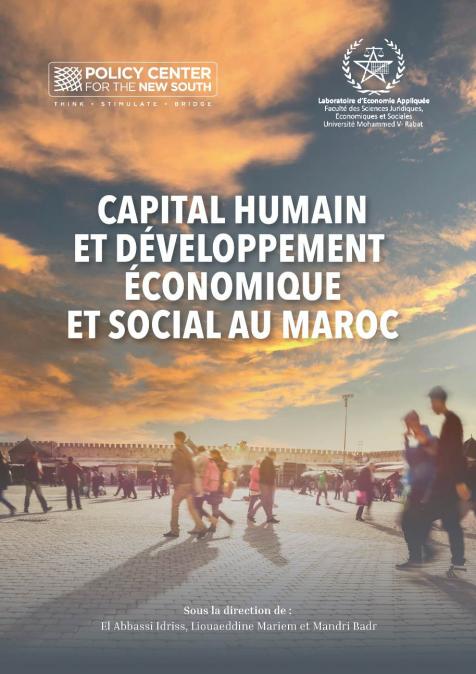
Le Policy Center for the New South et le Laboratoire d’Economie Appliquée de la Faculté des Sciences Juridiques, Economiques et Sociales, organisent un séminaire de présentation de l’ouvrage « Capital humain et développement économique et social au Maroc », lundi 4 juillet à 16h. La théorie du capital humain érige la connaissance accumulée et la santé au rang des investissements et recommande aux décideurs, et notamment à ceux des pays en développement, d’en faire le point d’ancrage de leurs politiques économiques et sociales. Ces investissements sont nécessaires non seulement pour mettre les nations sur la voie de la croissance économique, mais aussi en vue de doter les générations futures des qualités d’agilité et de flexibilité dont l’acquisition est rendue nécessaire par les exigences de plus en plus complexes du marché de travail. Le Maroc place l’investissement dans l’être humain au centre de son modèle de développement. En effet, son adhésion aux Objectifs du millénaire du développement (OMD, 2000-2015), puis aux Objectifs du développement durable (ODD, 2016-2030), témoigne d’une volonté à atteindre l’ensemble de ces cibles, dont celles qui concernent la promotion d’une éducation de qualité, l’amélioration du système de santé et la réduction des inégalités. Des avancées ont été réalisées en la matière et les efforts de massification d’accès ont permis de généraliser la scolarisation de base et d’élargir l’offre de soins. Néanmoins, ces efforts ne semblent pas être accompagnés par une amélioration de la qualité des prestations de services publics. Au-delà de ce constat général, la problématique du capital humain au Maroc comporte des ramifications bien plus complexes, qui nécessitent des analyses circonstanciées et approfondies. Ainsi, ce livre, à travers ses 17 chapitres, sélectionnés minutieusement selon les critères de qualité et d’approches méthodologiques, s’inscrit dans cette optique. Celle de creuser dans les questions les plus pointues qui gravitent autour de notre thématique, en particulier dans les secteurs de l’éducation et de la santé.
Speakers
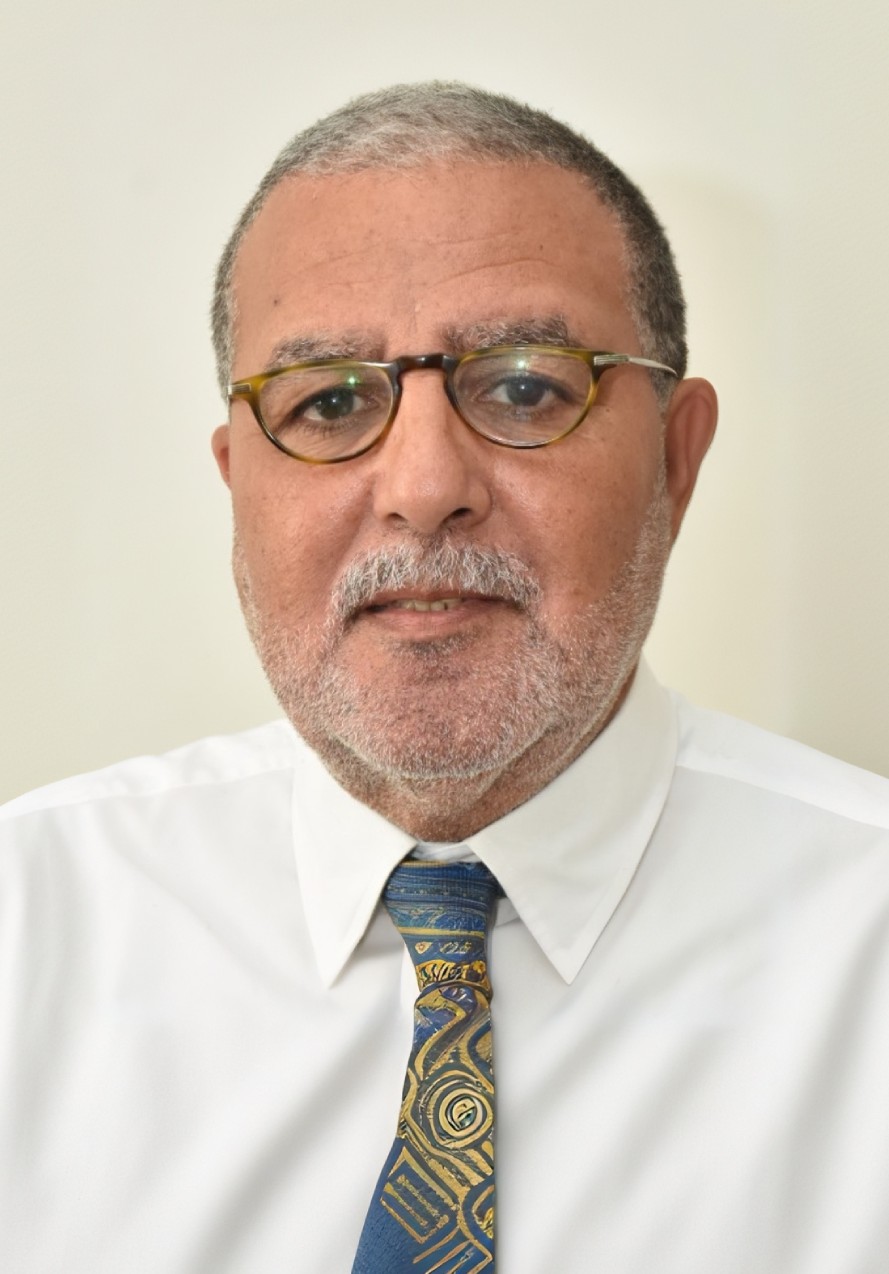
Abdelaaziz Ait Ali
Head - Research in Economics
Abdelaaziz Ait Ali is a principal Economist and head of the Research Department at the Policy Center for the New South. He joined the Center in 2014 after five years of experience at the Central Bank of Morocco. He worked as an economist in the International Studies and Relations Department and was analyzing the real estate price index and financial asset prices for monetary policy and financial stability purposes. Since then, Abdelaaziz has focused on cyclical and structural issues of the Moroccan economy, including macroeconomic management and industrial policy design. He has published articles on the reform of the exchange rate regime in the Moroccan economy and its implications for macroeconomic regulation, as well as on the evolution of the macroeconomic framework over th ...
Saïd Tounsi
Professor and Researcher, Mohammed V University
Saïd Tounsi is a Professor and Researcher at Mohammed V University in Rabat. A specialistin economic policies, particularly fiscal policy, he has authored several studies onpublic debt sustainability and exchange rate regimes in developing countries. He has alsoco-edited collective volumes on macroeconomic policies in Morocco. A former trainer atthe IGF and Bank Al-Maghrib, he combines academic expertise with institutional experiencein analysing national and international economic dynamics. ...
Idriss El Abbassi
Professor of economics, Mohammed V University
Idriss El Abbassi is a Professor of Economics at Mohammed V University in Rabat and coordinator of the Master’s programme in economics. He holds a PhD from Florida State University, and his research focuses on open-economy macroeconomics, growth, and structural transformation. He teaches at both the Master’s and PhD levels and is a founding member of the Laboratory of Applied Economics. A former director of the EMPRETEC/UNCTAD programme in Morocco, he has also been a visiting professor in London. He co-authored Human Capital and Economic and Social Development in Morocco and has recently published in The Economic and Labour Relations Review and Structural Change and Economic Dynamics. ...
Mariem Liouaeddine
Professor, Ibn Tofail University
Mariem Liouaeddine is a Professor of Economics at Ibn Tofail University and a lecturer at various international universities such as Jeonbuk National University and Rabat International University. Her primary research focuses on educational inequalities and development economics. In recognition of her contributions, she received the Best Online Course award from UNESCO-IIOE in 2020 and was honoured with the Best Thesis in Economics and Management in Morocco by L’Économiste in 2017 and she was recognizedas one of the top 15 researchers in economics in Morocco by the CNRST (2019–2023). ...
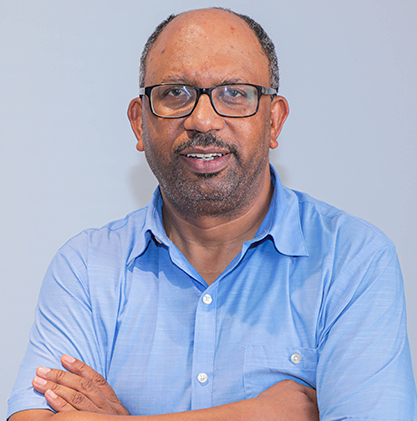
Abdelkhalek Touhami
Full Professor, Mohammed VI Polytechnic University, Rabat
Touhami Abdelkhalek is a Researcher in Applied Economics, specializing in econometrics, development and public policy analysis. Affiliated with the Africa Institute of Research in Economics and Social Sciences (AIRESS) and associated with several international centres (ERF, FEMISE, CRDE, etc.), his work focuses on modelling, economic policy evaluation, poverty, and inequality. He has published several articles in journalssuch as Review of Economics and Statistics and Applied Economics and contributed to the RDH50 report. A professor at the FGSES—UM6P since 2021, after more than 30 years at INSEA, he heads the Master’s and PhD programs in economics. He was awarded the Wissam Al Arch in 2017 and is member of the Competition Council since 2018. ...
Dorothée Boccanfuso
Full Professor, Mohammed VI Polytechnic University, Rabat
Dorothée Boccanfuso is a Professor and Researcher in Development Economics,specializing in the analysis of welfare, poverty, inequality, and the evaluation of publicpolicies. She has published more than 30 articles in scientific journals such as AppliedEconomics and Revue d’économie du développement. Affiliated with AIRESS, Centreinteruniversitaire de recherche en analyse des organisations (CIRANO), and EconomicResearch Forum (ERF), she has been conducting applied research in Africa and theFrancophone countries for over 25 years. She also chaired the Expert Committee on theGuaranteed Minimum Income in Quebec (2016–2018). Professor at UM6P since 2020, sheis Vice-Dean in charge of the economic pole of the FGSES. ...
Nada Bijou
Doctorante en économie, Faculté d’Economie et de Gestion, Université Ibn Tofail - Kenitra
...
Aomar Ibourk
Senior Fellow
Aomar Ibourk, is a professor of quantitative methods and social economics at the Cadi Ayyad University in Marrakech, an economist, as well as Senior Fellow at the Policy Center for the New South, who focuses on Applied econometrics, labor market, economics of education and development economics. He is also the director of GRES (Economic and Social Research Group) at the same university. His research focuses on econometric methodologies applied to social sciences (labor economics, economics of education and Development).  Mr. Ibourk's doctoral thesis looks into the "Contribution to Econometrics through the Labor Market Matching Process: Macro and Microeconometric Approaches to the Moroccan Labor Market." ...
Karim Benjlail
Chercheur en économie, Faculté des sciences juridiques économiques et sociales - Agdal, Université Mohammed V- Rabat
...
Aziz RAGBI
Professor and Researcher, Mohammed V University
Aziz Ragbi is a Lecturer and Researcher at Mohammed V University in Rabat-Agdal. Hisresearch focuses on monetary, financial, and development macroeconomics, with a particularinterest in macroeconomic sustainability and income inequality. His recent publicationsexamine both fiscal and external aspects of sustainability, as well as the impact ofeconomic policies on redistribution. He also worked for five years as a research economistin the Research Department of Bank Al-Maghrib, where he contributed to macroeconomicmodelling and policy analysis. ...

RELATED CONTENT

  • Authors
    Thomas Pereira da Silva
    March 7, 2018
    This proposal seeks to contribute to reduce, in a cost-effective way, Morocco’s unusually high, persistent and growing unemployment level for university graduates1. It complements and enhances the existing Université Internationale de Rabat (UIR) Public-Private Partnership (PPP). Tertiary enrolment in Morocco has been increasing above what seems to be labor market absorptive capacity. Over the past decade, the share of the unemployed with university degrees as a percentage of total ...
  • February 22, 2018
    Cet ouvrage a pour objectif de produire et d’accumuler des connaissances utiles sur le marché du travail marocain, notamment la situation des jeunes dont les traits ont été beaucoup documentés. Les axes qui sont traités dans le cadre de ce travail portent sur la capacité du système éducatif et de formation à transmettre les compétences techniques et non techniques (soft skills) aux jeunes dans leurs parcours de scolarisation et de formation, le rôle des programmes de l’emploi dans l ...
  • Authors
    November 30, 2017
    The jobs markets across the Middle East North Africa region vary greatly, with some oil-rich countries importers of labor while others, including Morocco, are the source of emigrants. Morocco exhibits structural underemployment despite having grown quite rapidly. The reasons for Morocco’s job-poor growth run deep. Policies can mitigate the problem but are unlikely to solve it in the foreseeable future. ...
  • Authors
    Thomas Awazu Pereira da Silva
    November 9, 2017
    This paper sheds light on the increasing and persistent skilled unemployment in Morocco over the past decade – oscillating around 20% of total unemployment. It identifies and estimates the role and significance of a skill mismatch between Morocco’s education system and its labor market, illustrated by the ratio between technical and general university degrees produced by the education system. The paper finds supporting evidence that a skill mismatch does play a significant role in e ...
  • Authors
    June 16, 2016
    L’écart entre filles et garçons en termes de scolarisation, au Maroc, a longtemps préoccupé tant les académiciens que les décideurs. En revanche, très peu d’études se sont penchées sur l’analyse de cet écart sous une toile de fond quantitative. Ce présent travail s’intéresse à l’écart genre en termes d’acquis scolaires en lecture. La finalité étant de mettre en exergue les facteurs influençant les différences de performance entre les genres ainsi que leur ampleur. Pour ce faire, une ...
  • Authors
    May 20, 2016
    The 2015-2030 strategic vision innovates the Moroccan educational system. Unlike previous reforms, this vision addresses problems that have long been ignored. Among these problems is the quality of education. Although educational quality may have been included in previous reform programs, it is considered as one of the priorities in this new vision. The purpose of this Policy Brief is to assess the status of learning achievement, which is an integral part of educational quality, of ...
  • Authors
    October 2, 2015
    Récemment parue parmi la série de Policy Briefs publiés par OCP Policy Center, une étude réalisée conjointement par Prakash Loungani et Saurabh Mishra a mis l’accent sur la réaction du chômage et l’emploi par rapport à la croissance économique dans les pays du G-20. L’objectif est de quantifier l’apport d’un point supplémentaire de croissance sur l’évolution du taux d’emploi, et sur le taux du chômage sur la période 1980-2014.  Sur la période 1980-2007, les ...