Marchés de capitaux et marchés financiers : quels leviers de développement au Maroc ?

May 11, 2026

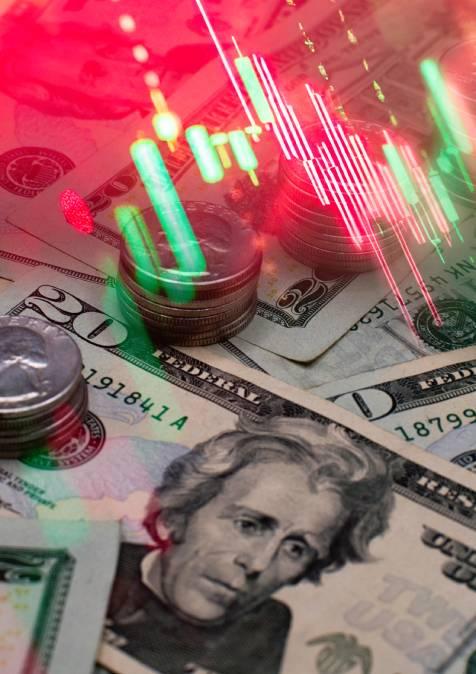
Cet épisode interroge la capacité du Maroc à atteindre ses ambitions économiques avec un système de financement encore largement dominé par les banques. Dans un contexte de besoins croissants en investissement et de transformation du tissu productif, les marchés de capitaux apparaissent comme un levier stratégique pour mobiliser l’épargne, soutenir les entreprises et diversifier les sources de financement. À travers l’analyse de Mohammed Benmoussa, l’épisode met en lumière les réformes et dynamiques nécessaires pour faire des marchés de capitaux un moteur durable de croissance et de compétitivité pour le Maroc.

Speakers

Ahmed Ouhnini
Economist, Policy Center for the New South
Ahmed Ouhnini is an Economist at the Policy Center for the New South. His research area covers agricultural economics, human and social development. Previously, he has worked as a researcher at the Paris School of Economics (PSE) and has also a record of working in consulting services in Morocco. Ahmed holds an engineering Diploma in Agriculture and Rural Development from the National School of Agriculture of Meknes and a Master’s Degree in Law, Economics and Management from the Paris 1 Pantheon Sorbonne Institute of Development. ...

Mohammed Benmoussa
Affiliate Professor, Mohammed VI Polytechnic University, Rabat
Mohammed Benmoussa is a Moroccan economist and senior consultant in economic policy, taxation, and public finance, as well as a former banker and capital market practitioner. He is Professor of Corporate and Market Finance at Mohammed VI Polytechnic University. In December 2019, he was appointed by HM King Mohammed VI to the Special Commission on the New Development Model. He is also President of the Forum of Progressive Economists, President of the Damir Movement and the La Samir Front. He previously served as President of the Brokerage Firms Association and Vice-President of the Casablanca Stock Exchange. ...
RELATED CONTENT

  • October 7, 2025
    Global economic growth has been more resilient than expected, as the artificial intelligence-led growth seems to be compensating for the negative impacts of trade conflicts. Overstretched asset values and slowing jobs growth may be signaling that the balanced crossing of those two paths...
  • Authors
    October 3, 2025
    Global economic growth has been more resilient than expected, as the artificial intelligence-led growth seems to be compensating for the negative impacts of trade conflicts. Overstretched asset values and slowing jobs growth may be signaling that the balanced crossing of those two paths will be challenged. ...
  • September 8, 2025
    In this episode, we explore how today’s trade regime shapes inequality through a Southern lens. The conversation sheds light on blind spots in mainstream debates, the resurgence of industrial policy in the North, and the tools Southern countries need to reclaim policy space within globa...
  • August 22, 2025
    This episode explores the opportunities and challenges of achieving deeper economic integration under the African Continental Free Trade Area (AfCFTA). We discuss the potential for boosting intra-African trade, industrialization, and investment flows. The conversation highlights the nee...
  • Authors
    Bruno Saraiva
    July 21, 2025
    This article assesses the economic performance of the original BRICS economies, relative to the growth and currency appreciation projections presented in the papers that introduced the acronym, prior to the grouping becoming a diplomatic, political, and economic reality. It also discusses the BRICS agenda in the current challenging geopolitical context, in which economic fragmentation tends to raise costs for the global economy and presents considerable obstacles for emerging and de ...
  • Authors
    Edited by
    July 14, 2025
    Available soon on livremoi. The 2025 edition of the African Economic Report continues in the spirit of previous versions. It presents a broad overview of the continent’s economic evolution and offers insights into Africa’s relationship with the rest of the world. In other words, it explores how Africa navigates the effects of global fragmentation within its regional spaces while pursuing its ambition of continental integration. ...
  • Authors
    Aram Belhadj
    June 24, 2025
    Les politiques industrielles semblent marquer leur retour, aussi bien dans les grandes puissances économiques que dans les pays émergents et en voie de développement, notamment après la pandémie de la Covid-19, l’accroissement des tensions géopolitiques et commerciales et les effets du changement climatique.L’Afrique n’est pas en reste, surtout qu’une prise de conscience des enjeux liés à la position continentale dans un monde multipolaire est en train de naître. Même au niveau de l ...
  • June 23, 2025
    President Donald Trump's "Reciprocal Tariff" policy, announced on April 2, 2025 (dubbed "Liberation Day"), represents one of the most significant shifts in U.S. trade policy in nearly a century. Trump’s policy imposes a baseline 10% tariff on all imports and additional country-specific tariffs that range from 10% to 50% for countries designated as having "non-reciprocal trading practices" with the U.S. These specific tariffs are determined based on each country’s bilateral trade bal ...
  • Authors
    El Hussein Fouad
    June 17, 2025
    This paper analyses the stabilization experience in the MENA region, focusing on Egypt, Morocco, Tunisia, and Jordan over the past century. It seeks to answer the question: To what extent have these countries succeeded in achieving resilience to shocks and stresses? Key policy elements included significant fiscal adjustments—varying in scale across countries—and exchange rate developments supported by monetary policies aimed at combating inflationary pressures. The outcomes involved ...